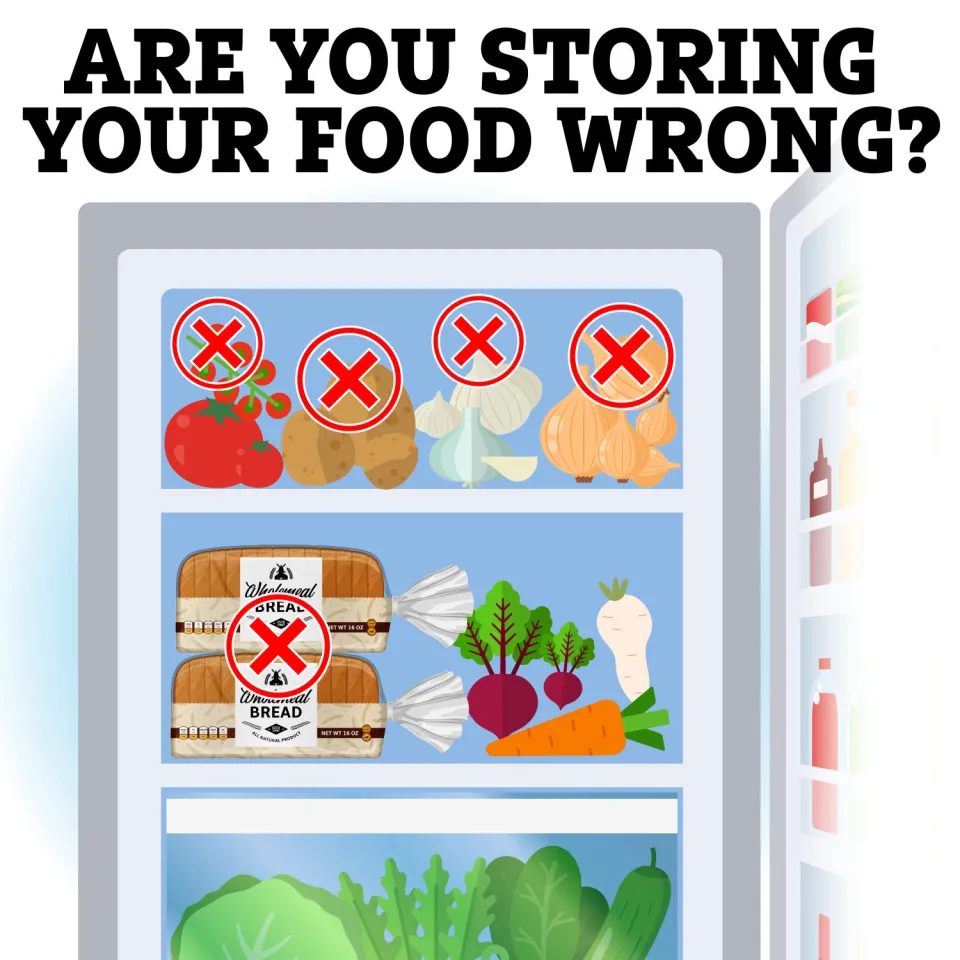

Keeping food fresh isn’t just about refrigeration — the type of container and storage method also matter. Many foods last longer and taste better when stored in the right environment. Using the wrong container can sometimes lead to faster spoilage, texture changes, or flavor loss. The good news is that small adjustments can make a big difference.
Below are common foods that people often store in less-than-ideal ways, along with simple tips to help maintain freshness and quality. These suggestions focus on general food-storage best practices used in many kitchens.
1. Tomatoes
Tomatoes can lose flavor and become soft when sealed in plastic. They do best at room temperature with some airflow. A bowl or basket on the counter works well.
2. Cheese
Wrapping cheese tightly in plastic can trap moisture. Many people prefer parchment or wax paper first, then a loose bag or container to balance airflow and humidity.
3. Bread
Plastic bags can encourage moisture buildup. A bread box or paper bag at room temperature often helps preserve texture. For long-term storage, freezing is a practical option.
4. Lettuce
Sealed bags can make lettuce damp. Storing it washed, dried, and wrapped in paper towels inside a container with slight ventilation can help it stay crisp.
5. Coffee Beans
Freezers can introduce moisture and odors. A sealed container in a cool, dark pantry is commonly recommended to protect aroma and flavor.
6. Olive Oil
Light and heat can affect olive oil quality. Dark bottles or tins stored away from direct light are often preferred.
7. Nuts
Because nuts contain natural oils, warmth and light can affect freshness. Many people store them in airtight containers in the fridge or freezer.
8. Honey
Honey can crystallize faster in the fridge. A sealed container at room temperature is typically suitable.
9. Avocados
Unripe avocados usually ripen better at room temperature. Once ripe, refrigeration can slow further ripening for a short time.
10. Onions
Onions prefer dry, ventilated spaces. A mesh bag or basket in a cool pantry is a common approach.
11. Potatoes
Cold temperatures can change potato texture and taste. Storing them in a cool, dark place like a pantry is often recommended.
Making simple storage adjustments can help reduce waste and keep groceries enjoyable longer. While storage needs can vary by climate and household, these general tips provide a helpful starting point for everyday kitchen organization.