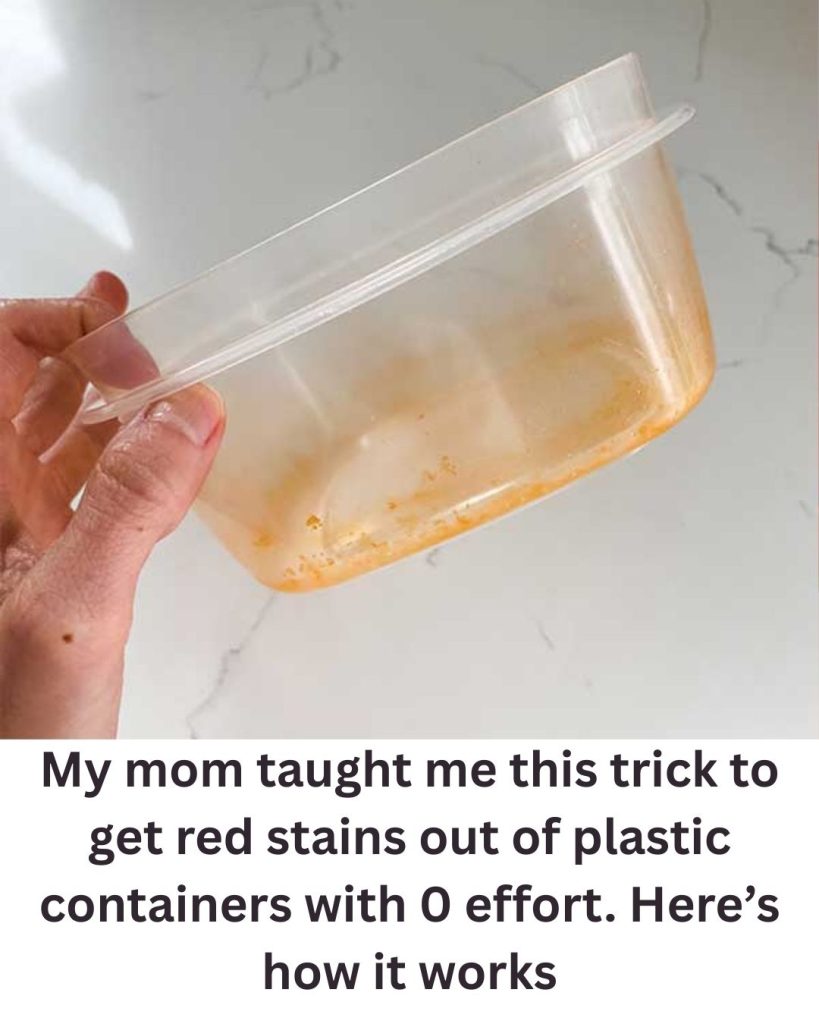

We’ve all opened a kitchen cabinet and sighed at the sight of plastic containers stained orange or red from pasta sauce or curry. Even after washing, those marks seem to stick around forever. Many people end up throwing containers away, thinking they’re ruined for good.
But there’s an easy fix.
My mom showed me a simple method that takes almost no effort and uses something most people already have at home. It can help lift those stubborn stains and make containers look fresh again — without harsh chemicals or heavy scrubbing.
Let’s break down how it works and how you can try it yourself.
Why Red Stains Stick to Plastic
Red and orange foods like tomato sauce, chili, and curry contain natural pigments (like lycopene) that are oil-soluble. These pigments bond easily with plastic.
Plastic also has tiny pores that can absorb oils and colors. Heat from microwaving can open these pores even more, allowing pigments to settle deeper into the material.
That’s why normal dish soap sometimes isn’t enough.
The One-Ingredient Trick
The secret ingredient is baking soda.
Baking soda is known for gentle cleaning and deodorizing. It’s mildly abrasive and naturally alkaline, which helps loosen oily, acidic food pigments from plastic.
Best of all, it’s safe and inexpensive.
How to Do It (No Scrubbing Required)
Step-by-Step
- Rinse the container with warm water to remove residue.
- Sprinkle baking soda over the stained areas.
- Add a few drops of water to form a paste (optional but helpful).
- Let it sit. No scrubbing needed.
- Rinse and wash normally.
That’s it.
How Long to Let It Sit
• Light stains: 15–30 minutes
• Deeper stains: up to 1 hour
• Very stubborn stains: soak overnight with water + baking soda
The waiting time allows baking soda to break down the oils and pigments.
Why This Method Works
Baking soda helps in two ways:
✔ Gentle abrasion lifts surface stains
✔ Alkaline action neutralizes acids and loosens pigments
When it sits on the stain, it can reach into tiny pores and help draw out discoloration.
Containers This Works Best On
This trick works well on common food-storage plastics like:
• Polypropylene (PP)
• High-density polyethylene (HDPE)
If a container is very old or heavily scratched, stains may be harder to remove.
Mistakes to Avoid
Some cleaning habits can actually worsen staining:
✖ Using rough scrubbers that scratch plastic
✖ Repeated high-heat dishwasher cycles
✖ Letting sauces sit too long before rinsing
✖ Using very strong chemicals that damage surfaces
Gentle cleaning keeps plastic in better shape.
If the Stain Doesn’t Fully Come Out
Try repeating the method once or twice. Some stains need more than one treatment.
You can also:
• Add a drop of dish soap to the baking soda paste
• Soak overnight in baking soda water
Patience usually pays off.
How to Prevent Future Stains
Simple habits can help reduce staining:
✔ Rinse containers soon after use
✔ Store tomato-based foods in glass when possible
✔ Avoid microwaving heavily stained containers
✔ Use liners or parchment for messy foods
Prevention is easier than deep cleaning.
Final Thought
You don’t need to throw away stained containers or buy special cleaners. Sometimes the simplest kitchen staples work best.
This baking soda trick is easy, low-effort, and budget-friendly. It won’t magically fix every stain, but it can make a big difference for many everyday containers.
Small household tips like this can save money and reduce waste — and that’s always a win in the kitchen.