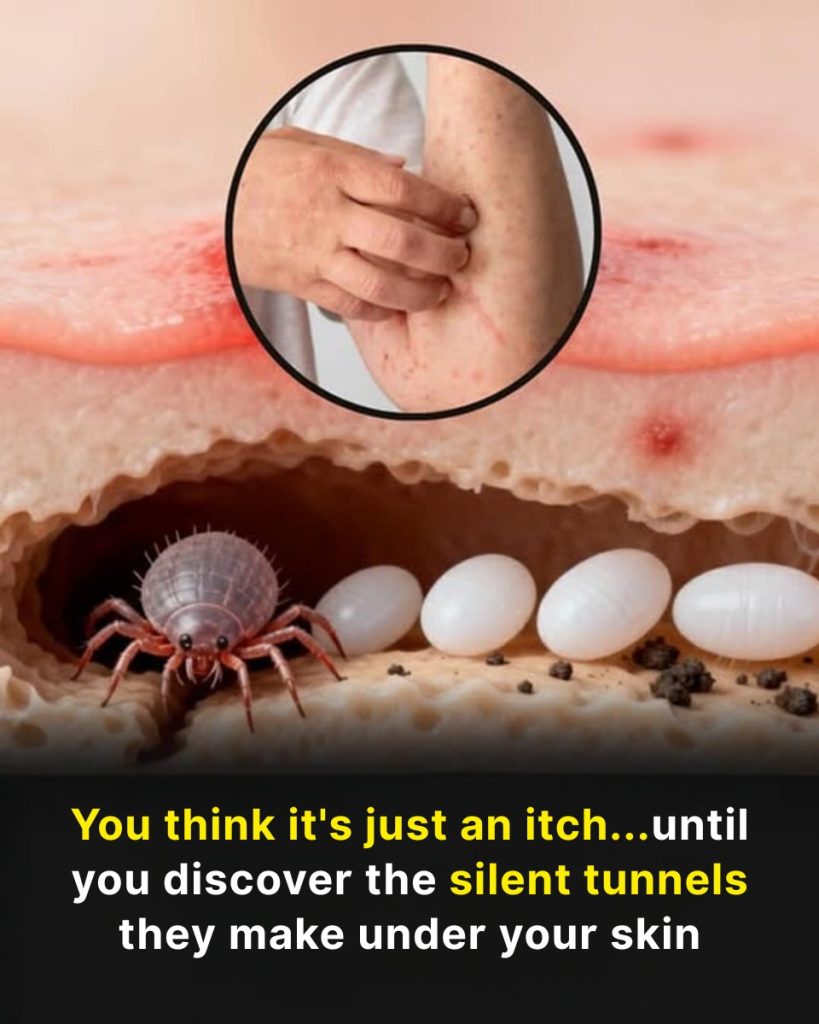

Recognizing the difference between an allergy and scabies may sound simple, but in practice it’s not always easy.
Both can cause significant skin discomfort, itching, and disruption to daily life, yet their causes and treatments are completely different. Understanding each condition clearly is essential for taking the right action and avoiding complications.
What Scabies Really Is — and What It Isn’t
Scabies, known medically as scabiosis, remains far more common than most people realize. While many believe it appears due to poor hygiene, the truth is that it can affect anyone, regardless of their cleaning habits or lifestyle. The reason is simple: it doesn’t come from dirt, but from a microscopic mite called Sarcoptes scabiei, an organism in the arachnid family that settles on the skin’s surface.
Why the Itching Gets Worse at Night
One of the most characteristic symptoms is intense itching, especially at night. Many people report that once nighttime arrives, the discomfort becomes far more noticeable and difficult to ignore. This can be related to natural increases in body heat, a warm bed environment, and the lack of distractions, which makes the brain focus more on the sensation. Long periods of rest also make you more aware of the feelings on your skin.
The behavior of the female mite explains a lot: when it comes into contact with human skin, it burrows tiny tunnels into the outermost layer. As it moves, it lays eggs and leaves behind waste—substances that trigger the immune response. It’s this defensive reaction that causes the intense itching, not the movement of the mite itself.
How Scabies Spreads
Scabies spreads mainly through direct, prolonged contact with an infested person. Everyday activities like sharing a bed, frequent hugging, or spending long periods in close quarters can increase the risk of transmission. Less commonly, it can also spread through clothing, towels, or bedding that have touched the affected skin.
When a case of scabies is confirmed in a household, treating only the person with symptoms is not enough. Health professionals typically recommend that everyone living in the home follow medical instructions, as this is the only way to stop the mite from circulating among household members.
How Allergies Differ Completely
In contrast, a skin allergy can arise from many different causes: contact with irritants, reactions to food, sensitivity to cosmetics, or even environmental exposure. While allergies can also cause itching, they are not caused by parasites but by an immune reaction to something the body sees as harmful. For this reason, the treatment and medical approach are entirely different.
Why You Shouldn’t Self-Medicate
If scabies is suspected, self-medicating is strongly discouraged. Only a healthcare professional can confirm the diagnosis and prescribe the appropriate treatment, which may include topical medications or specific drugs depending on the case. Complementary steps also help prevent reinfection or spread, such as washing bedding in hot water, keeping shared spaces clean, and avoiding the sharing of personal items.
Early Detection Makes All the Difference
Information and early detection are key to managing the condition. Understanding the differences between allergies and scabies allows you to take quick action, protect those who share your home, and reduce the impact of a condition that—although uncomfortable—has effective treatments when addressed promptly.
This article is for informational purposes only and does not replace a consultation with a healthcare professional.