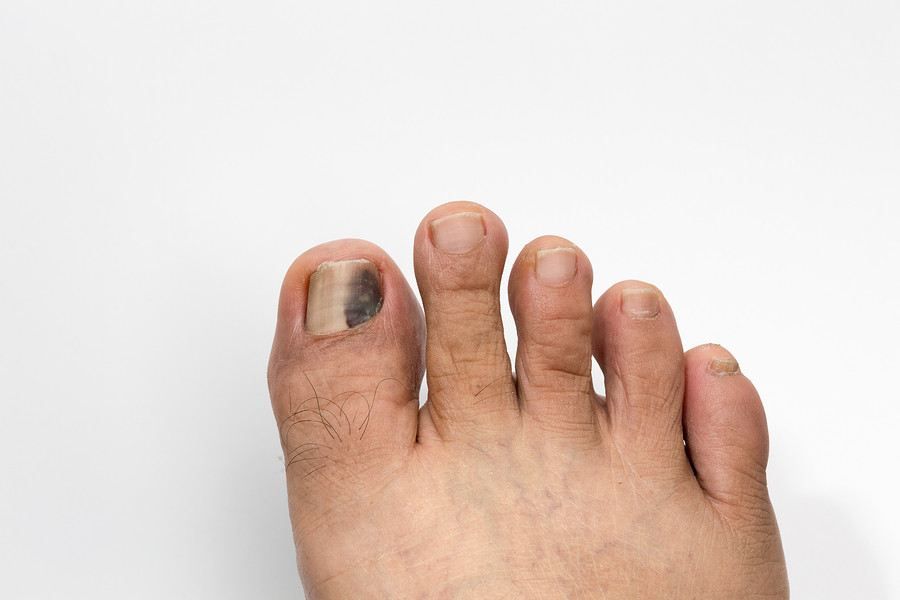

A black toenail can be concerning when you first notice it. As shown in the image above, one toe has a dark bluish-black discoloration beneath the nail plate, while the surrounding nails look normal. This kind of change is often linked to bleeding under the nail, but there are multiple possible explanations. Understanding potential causes, symptoms, and common next steps can help you decide whether it’s likely minor or worth getting checked by a healthcare professional.
What Causes a Black Toenail?
The most common cause of a black toenail is a subungual hematoma, which is essentially a bruise under the nail. This usually occurs after an injury to the toe. You might have dropped something on it, stubbed it, or experienced repeated pressure from tight shoes during running or sports. Even if you don’t recall a specific incident, ongoing friction can cause small blood vessels under the nail to break and bleed.
When blood becomes trapped beneath the nail, it can create a dark red, purple, or black discoloration. Over time, as the nail grows, the dark area typically moves forward and can eventually be trimmed away.
Another possible cause is a fungal infection. In that situation, the nail may not only darken but also become thicker, more brittle, or crumbly. Discoloration related to fungus often begins as yellow or brown and can appear darker as it progresses.
In rare cases, a dark streak or spot under the nail can be linked to subungual melanoma, a serious condition that needs prompt medical evaluation. Unlike a bruise, this type of discoloration may not shift forward as the nail grows and may extend to the surrounding skin.
Symptoms to Watch For
A black toenail caused by trauma is often painful at first. Pressure from trapped blood can lead to throbbing discomfort, especially within the first 24–48 hours after an injury. Swelling and tenderness around the toe may also occur.
If the discoloration is related to infection, you might notice additional signs such as:
Thickened or misshapen nail
Unpleasant odor
White or yellow streaks
Crumbling edges
For more serious concerns, possible warning signs include:
A dark line that becomes wider over time
Pigment extending onto the skin around the nail
No history of injury
Ongoing pain that doesn’t improve
If you notice any of these warning signs, it’s important to consult a healthcare professional.
What Should You Do?
1. If It’s a Recent Injury
If the black toenail appeared after a toe injury and the pain is mild, it can often be managed at home. Elevate your foot, apply a cold compress to help reduce swelling, and rest the toe. Over-the-counter pain relievers may help ease discomfort.
If the pain is severe or throbbing, a clinician may need to release the pressure by draining trapped blood. This is typically a quick procedure and can provide significant relief.
Avoid trying to puncture the nail yourself, as doing so can increase the risk of infection.
2. If It’s Likely a Fungal Infection
Keep your feet clean and dry. Change socks regularly and choose breathable footwear. Over-the-counter antifungal products may help, but persistent infections often require evaluation and prescription treatment.
Treatment can take time because toenails grow slowly, and improvement may take several months.
3. Monitor Nail Growth
With bruising, the dark area should gradually move forward as the nail grows. Toenails often grow about 1–2 millimeters per month, so full replacement can take around 9–12 months.
If the discoloration does not move, stays fixed, or changes shape, seek medical advice.
Can the Nail Fall Off?
Yes. After more significant toe injuries, the nail may loosen and eventually detach. In many cases, a new nail grows back, although it can take months and may look uneven at first.
If the nail comes off, keep the area clean and protected. Cover it with a sterile bandage and watch for signs of infection such as redness, warmth, swelling, or drainage.
When to See a Doctor
Consider seeing a healthcare provider if:
Pain is severe or getting worse
There are signs of infection
The discoloration appears without an injury
The dark area spreads or becomes a streak
You have diabetes or circulation issues
People with underlying conditions should be especially careful, since even minor foot problems can become more complicated.
Prevention Tips
To help reduce the chance of black toenails:
Wear shoes that fit properly
Trim nails straight across
Use protective footwear for sports or heavy work
Practice good foot hygiene
Avoid prolonged pressure on the toes
Final Thoughts
A black toenail is often related to minor injury and usually improves as the nail grows out. However, not every case is harmless. Noticing additional symptoms and tracking changes over time can help you decide what to do next. If you’re unsure or symptoms persist, it’s safest to have a healthcare professional evaluate it.