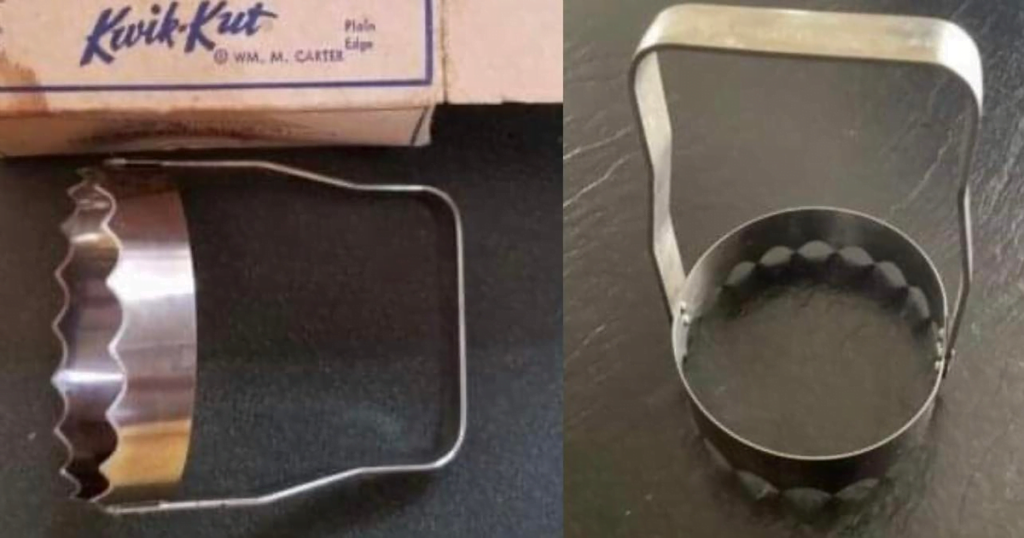

Vintage kitchen tools often leave people guessing about their purpose, especially when they come from a time before electric appliances became common in every home. One such item that continues to attract attention is the Kwik-Kut Deluxe Food Chopper, a hand-operated kitchen tool that once played an important role in food preparation across American households.
Introduced in the early 20th century, the Kwik-Kut quickly became a practical addition to many kitchens. At a time when cooking required more manual effort, this compact device offered a convenient way to chop and mince ingredients without the need for electricity. Its simple design and dependable performance made it especially popular among home cooks who wanted to save time while preparing meals.
The purpose of the Kwik-Kut Deluxe Food Chopper was straightforward. It was designed to chop vegetables, fruits, nuts, and other ingredients into smaller pieces with minimal effort. The gadget featured a metal container with a rotating blade wheel inside. To use it, food was placed into the cylinder and the handle was turned by hand. As the crank moved, the internal blades chopped the contents into fine pieces, making it easier to prepare fillings, relishes, salads, and other homemade dishes.
Over time, the design of the Kwik-Kut changed to better suit household needs. In later decades, manufacturers made adjustments such as wider bases for stability and longer handles for improved leverage. Some versions introduced lighter materials and updated shapes, reflecting the style and preferences of their era. These small changes helped the tool remain useful as kitchen habits evolved.
Despite its practicality, the Kwik-Kut gradually lost its place in everyday cooking. As electric food processors, blenders, and modern chopping tools became more common, hand-crank devices like this one started to disappear from kitchens. They were no longer heavily advertised, and newer generations often grew up without seeing them in regular use.
Even so, the Kwik-Kut Food Chopper still holds a special place in many homes. Some families have kept theirs for decades, passing it down from one generation to the next. Others may no longer use it daily, but still value it as a reminder of traditional cooking methods and family history.
Today, the Kwik-Kut stands as more than just an old kitchen gadget. It is a piece of culinary history that reflects a time when durable, hand-powered tools were built to last. For collectors, antique lovers, and anyone curious about vintage homemaking tools, it remains a charming and memorable reminder of the past.