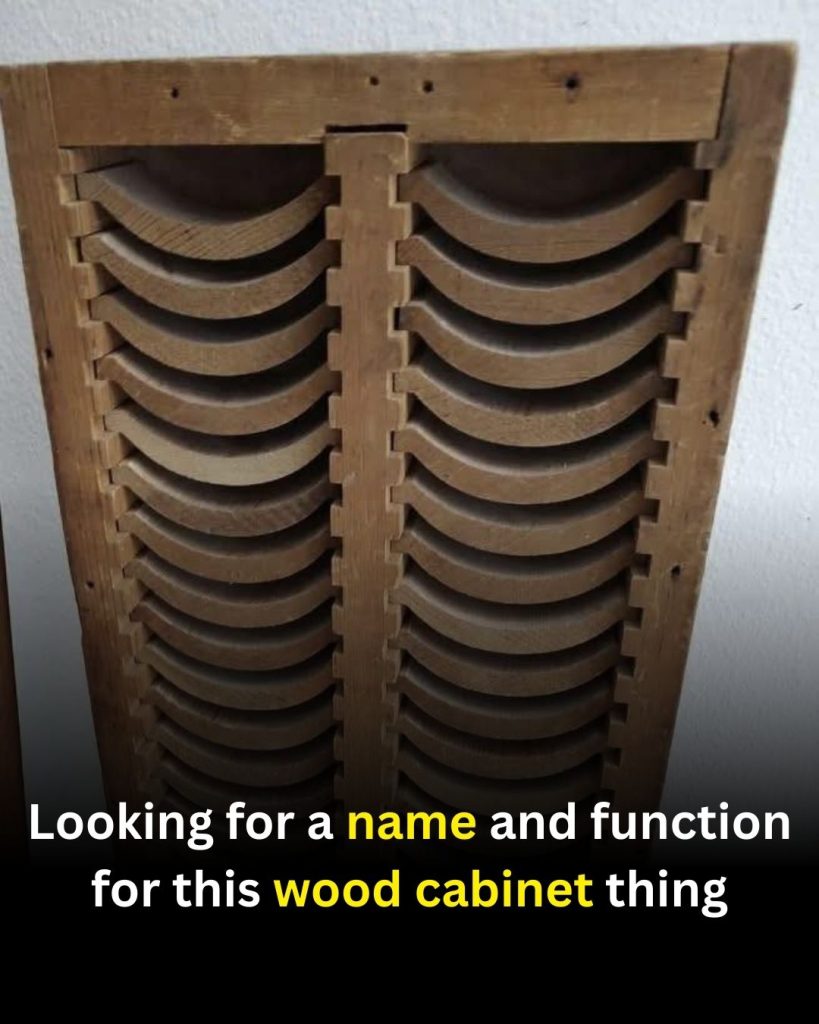

At first glance, it looks like a simple wooden frame — worn, notched, and dotted with pegs. No labels. No decoration. Just old wood and quiet mystery. Yet this humble object, often spotted in antique stores or barns, once played an important role in traditional craftsmanship.
So what exactly is an “ancient craftsman’s rack,” and why does it matter?
What It Was Used For
Historically, racks like these were used by potters and tile makers to dry and cure handmade clay roof tiles before they were fired in a kiln.
Long before modern roofing materials existed, each tile was shaped by hand. Fresh clay holds a lot of moisture, and if it goes into a kiln too wet or dries unevenly, it can crack or break. The rack solved this problem.
Craftsmen would carefully place tiles across the wooden supports so air could circulate around them. This allowed the clay to dry slowly and evenly — a crucial step for durability.
In short, this rack helped ensure a strong roof over someone’s head.
Not One-Size-Fits-All
These racks weren’t standardized. Each artisan often built their own version depending on:
- Tile size
- Local clay type
- Climate and humidity
- Workshop space
Some racks were large and sturdy for heavy tiles. Others were compact for smaller pieces. This customization shows the practical ingenuity of traditional makers.
A Tool in a Delicate Process
Tile-making was a high-risk craft. If clay dried too fast → cracks.
If it dried too slow → warping.
If it went into the kiln wrong → total loss.
The rack was part of a careful workflow that required patience and experience. Every successful batch represented hours — sometimes days — of attentive work.
Why It Still Matters Today
In a world of instant production and next-day delivery, objects like this remind us how much craftsmanship once depended on time, skill, and care.
There were no shortcuts. No automation. Just knowledge passed down through generations.
For historians and collectors, these racks are small windows into everyday working life of the past. For many people, they’re also nostalgic symbols of slower, more hands-on living.
More Than Just Wood
An old craftsman’s rack isn’t flashy. But it tells a story about:
- Pride in manual skill
- Functional design over decoration
- Creating things meant to last
The roofs those tiles formed may be gone, but the tools remain as quiet witnesses to the effort behind them.
A Piece of Living History
Today, some people repurpose these racks as decor, shelving, or workshop displays. Others simply appreciate them as historical artifacts.
Either way, they spark curiosity — and sometimes long conversations about how people built and created before modern convenience.
Because sometimes the simplest objects carry the richest stories.