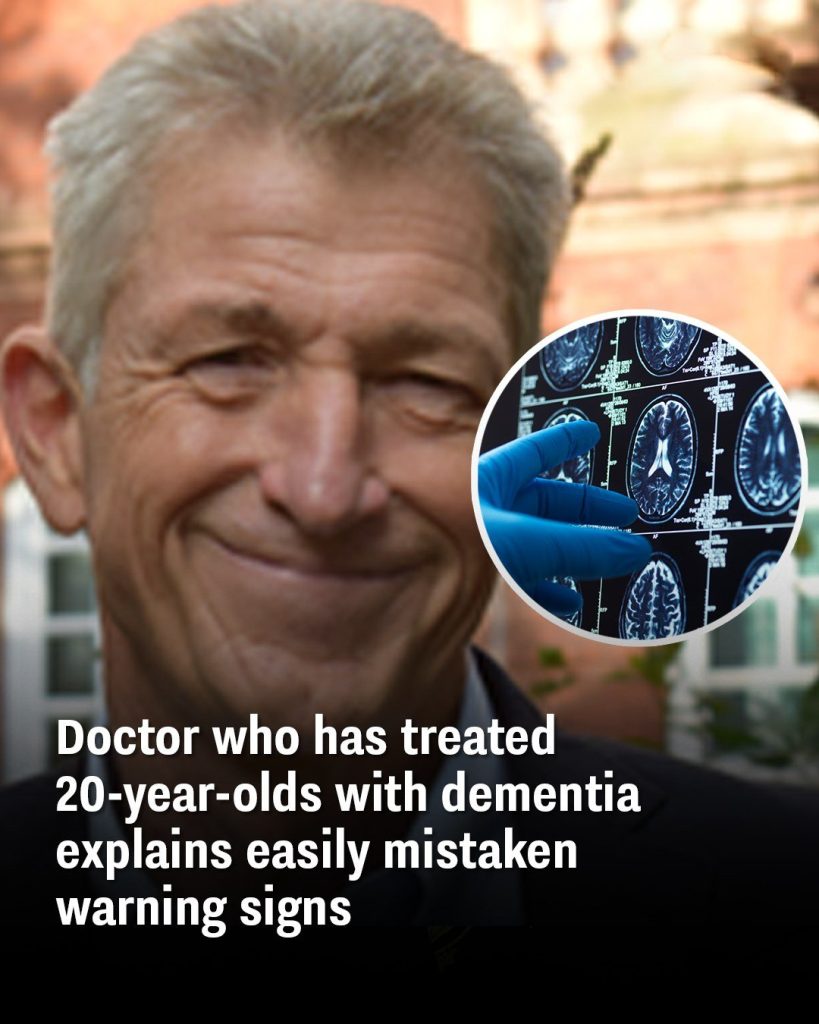

A healthcare professional who’s treated some people in their twenties with dementia has detailed some of the early warning signs many people miss.
You may often associate dementia or Alzheimer’s with the older generation, and while the disease is most common in those 65+, it also affects younger people too.
Last month, we heard about Brit Andre Yarham, who was diagnosed with a rare form of dementia at the very young age of 22. Sadly, Andre died recently aged 24 after receiving a devastating diagnosis of frontotemporal dementia.
Any patient diagnosed with dementia under the age of 65 have a form of the disease known as ‘early-onset’, which can present different symptoms compared to those aged 65+.
Nick Fox, described as a ‘leading expert in young-onset’, has treated people with early-onset dementia for the past 30 years, with the youngest patient being just 23.
In a first-person piece for The Telegraph, Fox described some of the symptoms to look out for.
Lack of motivation
It’s perfectly normal to experience times in your life when you suffer from a lack of motivation, but this could be a cause for concern if such is occurring for prolonged periods of time.
“Our frontal lobes are important for motivation, so people with frontotemporal dementia (FTD) may simply not want to do anything at all, even if someone else organises it for them,” Fox explained.
Those with early-onset Alzheimer’s ‘may lose their get up and go and become apathetic’, according to the doctor.
Changes in personality
This is perhaps one of the more obvious signs you would likely spot regarding a loved one, though you probably wouldn’t expect a change in the typical outfit to be a warning sign.
Fox explained: “Someone might start wearing unusually bright clothes, develop rigid routines, or become obsessed with certain foods, activities or television programmes.”

There are many different signs of dementia (Getty Stock Photo)
The health expert went on to say others may resort to excessively eating sweet foods, an obvious change in habits.
A lack of empathy
I mean, some people may not have any form of empathy anyway – but if an individual has suddenly forget to consider the thoughts and feelings of other then it could be a sign of dementia.
That’s because people who have early-onset dementia can lose the ability to read other people’s emotions, Fox stated in his piece for The Telegraph.
Explaining one story he heard, the doctor recalled: “One woman told me she was finding it so hard to cope with becoming a carer in her 30s that she had been sitting on the kitchen floor sobbing. Her once very caring partner simply stepped over her to get to the washing machine.”
The health expert went on to say a loss of self-control and people failing to understand the consequences of their actions as another