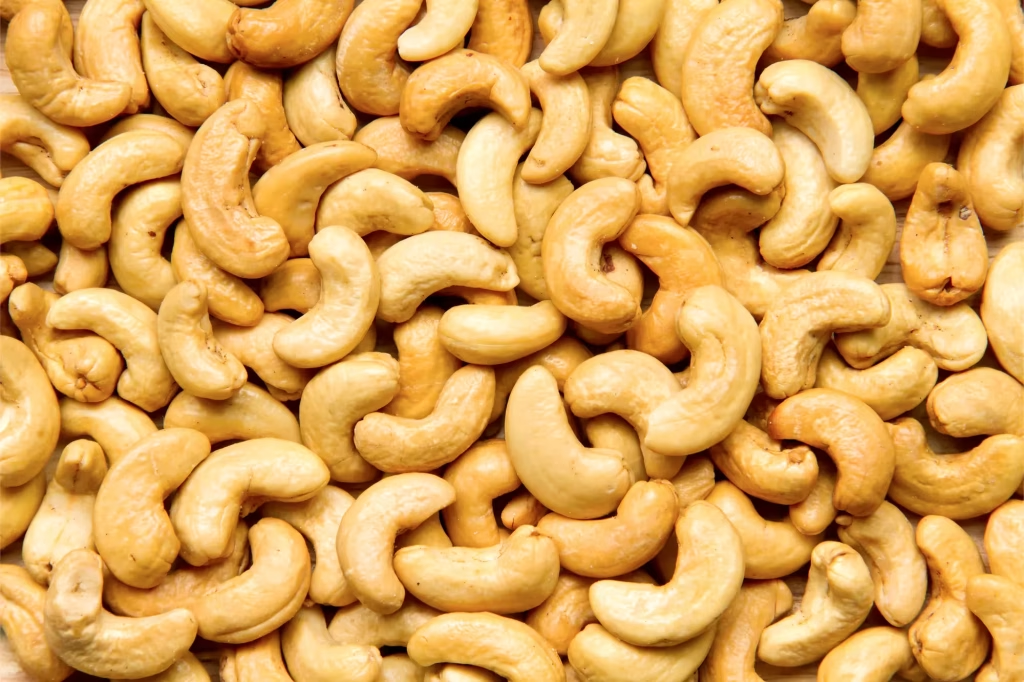

Cashews are creamy, flavorful, and nutrient-dense. You may have seen dramatic headlines suggesting that cashews “cause” certain health problems, but the reality is more nuanced.
Health professionals generally say cashews can be a nutritious choice for most people — however, like any food, they may cause concerns for some individuals depending on allergies, portions, and specific medical conditions. Here’s what clinicians and widely cited health organizations typically note about potential benefits and situations where caution is sensible.
🥜 1. Cashews May Support Heart Health
Cashews contain nutrients commonly linked to cardiovascular support, including:
- Monounsaturated and polyunsaturated fats (often described as heart-supportive fats)
- Magnesium
- Copper
- Plant-based protein
Many clinical nutrition sources note that nuts, when eaten in moderation as part of an overall balanced diet, may help support healthy cholesterol levels and heart function. Organizations such as the American Heart Association often include nuts in heart-conscious eating patterns because they provide healthy fats, fiber, and antioxidants.
What this means: For many people, moderate portions of unsalted cashews can fit into a heart-supportive diet rather than being harmful.
🍬 2. Cashews May Help With Blood Sugar Management
Nutrition experts often point out that swapping refined carbohydrates for foods that contain fiber, healthy fats, and protein — including nuts — may help support more stable blood sugar levels, particularly for people managing type 2 diabetes.
Cashews provide:
- Fiber
- Healthy fats
- Protein
These nutrients can slow digestion and may help reduce rapid blood-sugar spikes for some individuals.
However: Portion size still matters. Cashews are calorie-dense, and routinely overeating them can contribute to weight gain, which may negatively affect blood sugar and overall health over time.
⚠️ 3. Cashews Can Trigger Serious Allergic Reactions in Some People
For certain individuals, eating cashews can be unsafe.
Cashews are classified as tree nuts, which are among the most common food allergens. Medical allergy organizations note that tree nut allergies can lead to reactions such as:
- Hives
- Swelling of the lips, face, or throat
- Breathing difficulty
- A severe allergic reaction requiring emergency care
If you have a known tree nut allergy — or suspect you might — it’s important to avoid cashews and seek guidance from a qualified healthcare professional.
💎 4. Cashews Contain Oxalates and May Matter for Some People Prone to Kidney Stones
Cashews naturally contain oxalates, compounds that can contribute to certain types of kidney stones (such as calcium oxalate stones) in susceptible individuals.
Some nutrition guidance sources note that people with a personal history of oxalate-related kidney stones may be advised to moderate high-oxalate foods, which can include certain nuts.
For people without a history of kidney stones, moderate cashew intake is generally not considered a concern — but individual risk varies, so medical guidance can be helpful if you’re unsure.
5. “Truly Raw” Cashews Aren’t Typically Sold for Eating — Store-Bought ‘Raw’ Cashews Are Generally Safe
Cashews grow in shells that contain urushiol, a compound also found in poison ivy. Because of this, cashews sold for eating are processed to remove the irritant.
Cashews labeled “raw” in stores are usually heat-treated (such as steaming) as part of safe handling. In other words, standard store-bought cashews from reputable retailers are generally considered safe for consumption.
How Much Is Reasonable to Eat?
Many nutrition guidelines suggest a serving of nuts is about one ounce (roughly 28–30 grams), which is often around 18–20 cashews depending on size.
To get the benefits while limiting downsides:
- Choose unsalted varieties when possible
- Limit heavily salted, candy-coated, or sugar-glazed options
- Keep an eye on portion sizes, especially if you snack mindlessly
The Bottom Line
Health professionals generally do not describe cashews as “dangerous” for the average person. Many nutrition sources suggest they can be part of a balanced eating pattern and may support heart health and steadier blood sugar when eaten in appropriate portions.
That said, cashews may cause problems if:
- You have a tree nut allergy
- You routinely overeat them
- You are prone to certain kinds of kidney stones and have been advised to limit oxalates
For most healthy adults, cashews are typically considered a safe, nutritious food when eaten in moderation as part of an overall balanced diet.