Most people believe the refrigerator is the safest place to store any food. However, this habit, while seemingly logical, can be slowly harming your health. Some common foods react negatively to the cold, losing nutrients, altering their chemical composition, and, in some cases, promoting the formation of substances harmful to the body.
The most worrying thing is that these changes aren’t always noticeable. They don’t smell bad, they don’t taste different immediately, but over time they can affect the digestive system, the brain, and the body’s inflammatory processes.
Below you’ll discover five foods that should never be stored in the refrigerator and why.
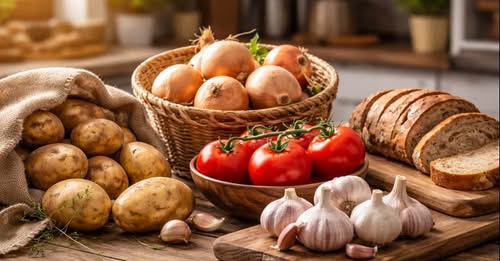
1. Potatoes
When potatoes are stored in the cold, their starch converts to sugar. This change may seem harmless, but when cooked at high temperatures, that sugar transforms into potentially harmful compounds.
Furthermore, refrigerated potatoes can cause spikes in blood glucose, which affects energy levels and can aggravate metabolic problems. Cold temperatures also accelerate the appearance of green spots and sprouts, signs of naturally occurring toxins.
How to store them correctly:
In a dark, dry, and well-ventilated place, such as a cupboard or pantry, away from sunlight.
2. Onions
The refrigerator is a humid environment, and onions readily absorb this moisture. This causes them to soften, spoil more quickly, and promote the growth of invisible microorganisms.
Furthermore, the cold destroys some of their natural antioxidants, which are essential for fighting inflammation and protecting cells from aging.
How to store them correctly:
In a cool, dry place with good air circulation, such as a basket or paper bag.
3. Tomatoes
Cold temperatures halt the natural processes that allow tomatoes to retain their flavor and nutrients. The flesh becomes mealy, loses firmness, and its antioxidants are reduced, especially those that protect the heart and brain.
Cold tomatoes may look normal on the outside, but inside they have lost much of their nutritional value.
How to store them correctly:
At room temperature, away from direct sunlight, preferably with the stem facing up.
4. Garlic
When garlic is refrigerated, it begins to sprout and its composition changes. This reduces its protective properties and can produce substances that irritate the digestive system.
In addition, the humid environment of the refrigerator encourages the proliferation of invisible microorganisms.
How to store it correctly:
In an open container or basket, in a dry, cool, and well-ventilated place.
5. Bread
The refrigerator does not preserve bread; it ages it. The cold hardens its structure, destroys its natural fiber, and increases the likelihood of invisible mold developing, which can produce toxins.
Removing the visible part of damaged bread does not make it safe, as these substances are dispersed throughout the loaf.
How to store it correctly:
At room temperature in a cloth or paper bag. If you won’t be eating it soon, it’s best to freeze it.
Why this matters more than you think: The body doesn’t get sick overnight. Inflammatory, digestive, and neurological problems develop over time, accumulating from small daily choices. One of these is how you store your food.
When food is stored incorrectly, it not only loses nutrients but can also generate substances that disrupt the body’s balance.
Practical tips:
Check your pantry and reorganize what you have in the refrigerator.
Buy smaller quantities to prevent food from spoiling.
Use paper bags, mesh bags, or ventilated containers.
Keep food away from moisture and direct sunlight.
If food changes texture, smell, or color, discard it.
Small changes in how you store your food can have a huge impact on your health. Protecting the natural nutrients in what you eat is one of the simplest and most effective ways to take care of your body and mind every day.