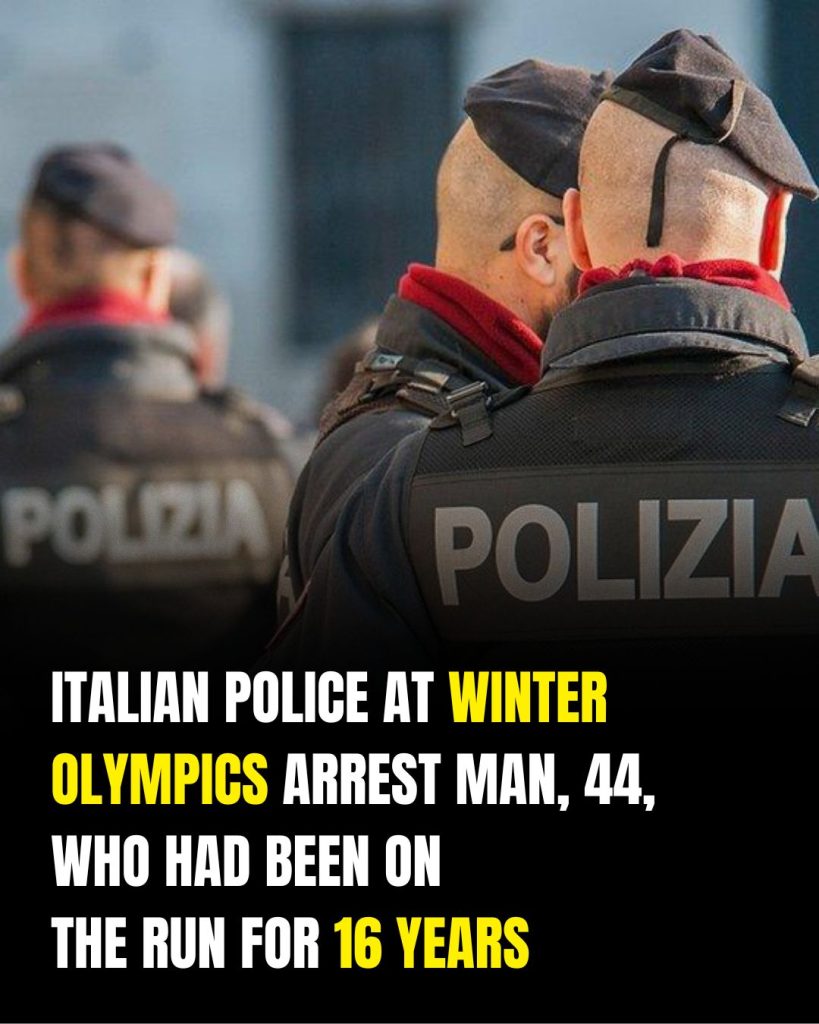

Italian authorities have arrested a 44-year-old Slovak man who had reportedly been evading justice for more than a decade, after he returned to Italy to attend a Winter Olympics ice hockey match.
According to reports cited by Associated Press, the arrest was carried out by Italy’s national military police force, the Carabinieri, on Wednesday, February 11, following a tip-off about the man’s presence in the country. Officials said he had been wanted since 2010 in connection with a series of thefts.
Authorities did not publicly release the suspect’s name. They said he had originally been sentenced to 11 months and one week in prison for crimes committed when he was 28, but he failed to serve the sentence and left the country, remaining at large for years.
Ironically, police said the man returned to Italy for the same reason as many other international visitors: to support his national team at the Winter Olympics. He had planned to watch Slovakia’s ice hockey match in Milan, where Slovakia narrowly defeated Italy 3–2.
His trip was cut short when the campsite where he was staying triggered what police described as an “automatic alert” during check-in procedures. That alert led officers to track him down and make the arrest before he could attend the game.
After being detained, the man was transferred to San Vittore prison in Milan, where he is expected to serve his outstanding sentence.
The arrest unfolded against the backdrop of an active Olympic hockey tournament that has drawn strong interest from fans across Europe. Slovakia’s team has recently enjoyed competitive form, building on momentum from its historic bronze medal in 2022. Early matches in the current tournament included a 4–1 win over Finland and the close victory over Italy.
However, Slovakia later fell 5–3 to Sweden. Swedish forward Adrian Kempe, who also plays in the NHL for the Los Angeles Kings, praised Slovakia’s style of play after the game, describing the team as physical, fast, and difficult to face.
For the arrested fan, though, the focus has shifted from hockey back to the legal troubles he had left behind years ago. His case serves as a reminder that major international events can draw global crowds — and sometimes bring long-running cases to a close.