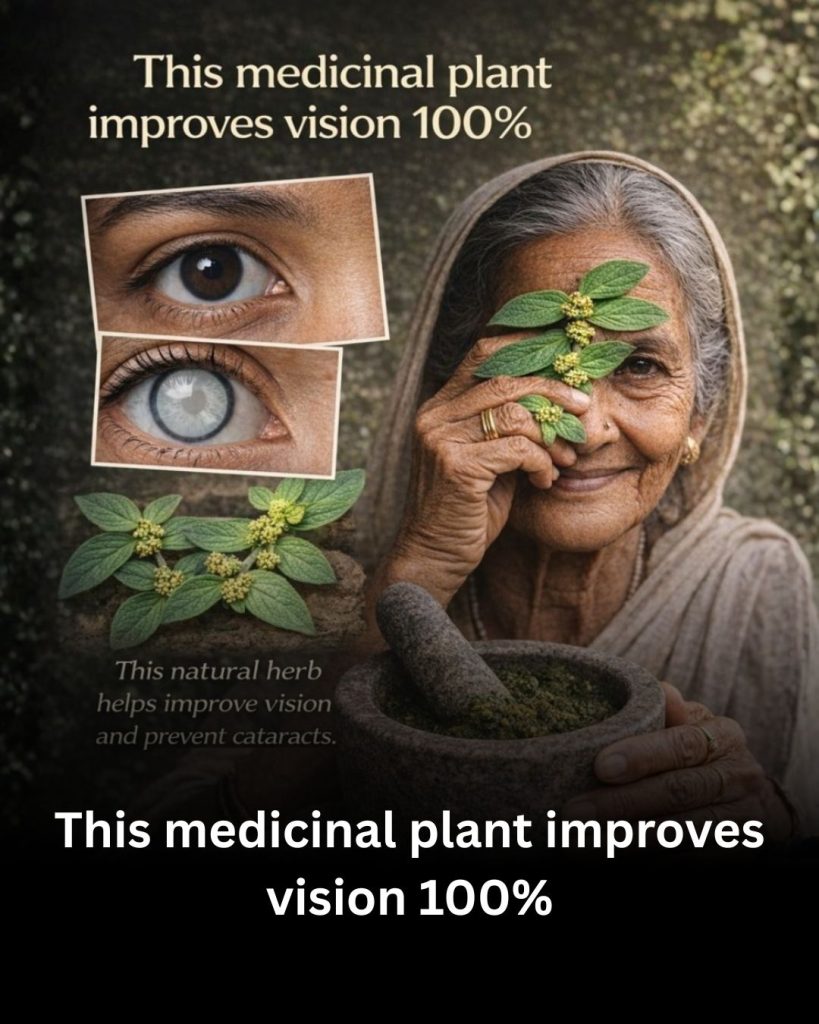

Tired, overworked eyes are becoming increasingly common. Long hours in front of screens, extended reading, and everyday fatigue often lead to dryness, heaviness, or mild irritation that can make even simple tasks uncomfortable. While many people rely on eye drops or rest, the relief is not always long-lasting.
As a result, there is growing interest in gentler, nature-based approaches that may help support overall eye comfort. Alongside modern, evidence-based care, traditional plant knowledge has long highlighted certain herbs valued for their calming and soothing qualities. One such plant — often dismissed as a simple weed — has drawn attention in folk traditions for its potential role in easing eye strain when used carefully and externally.
That plant is Euphorbia hirta.
What Is Euphorbia hirta (Often Called Asthma Weed or Santa Luzia Herb)?
Euphorbia hirta is a small, resilient annual herb commonly found in tropical and subtropical regions. It grows easily in gardens, fields, roadsides, and slightly moist soils, which is why it is often overlooked or considered invasive.
You can recognize it by a few distinctive features:
-
Oval, slightly fuzzy leaves
-
A reddish central vein on each leaf
-
Small clustered flowers
-
Pinkish or reddish stems
-
A white, milky sap released when the stem is broken
Low-growing and spreading close to the ground, the plant usually reaches up to about 40 cm (16 inches) in height. Despite its humble appearance, it has a long history in traditional wellness practices across parts of Asia, Africa, and the Americas.
Why Traditional Practices Associate This Herb With Eye Comfort
In several traditional systems, Euphorbia hirta has been used as part of external, supportive routines aimed at reducing eye fatigue and promoting relaxation around the eyes. Cultural knowledge often describes the plant as having a cooling and calming effect, which may help ease the sensation of tired or strained eyes after daily activities.
An important point is consistently emphasized in traditional use:
The plant is not applied directly into the eyes.
The milky sap, common to many plants in the Euphorbia genus, can be irritating. For this reason, traditional practices focus on diluted, external applications only, such as compresses or use around — not inside — the eye area.
Ethnobotanical records mention its historical use for mild discomforts like tired eyes or small external irritations, always with caution and respect for its potency.
Traditionally Attributed Properties
According to folk use and preliminary scientific observations, Euphorbia hirta is traditionally associated with properties that may indirectly support eye comfort:
-
Calming and soothing effects – traditionally used to ease mild irritation or puffiness
-
Anti-inflammatory potential – laboratory studies suggest activity related to inflammation modulation
-
Antioxidant compounds – contains natural flavonoids and polyphenols linked to oxidative balance
-
Cooling sensation – often associated with relaxation after eye strain
While early research is promising, more human studies are needed to fully understand its effects. These traditional uses should be viewed as complementary, not curative.
Traditional Ways It Has Been Used for Eye Relaxation
(Always consult a qualified professional before trying herbal practices.)
1. Warm Leaf Compress
-
Wash fresh leaves thoroughly.
-
Warm gently — never hot.
-
Place over closed eyelids for 10–15 minutes to help relax tired eyes.
2. Mild Herbal Infusion for General Well-Being
-
Prepare a very diluted tea using the plant.
-
Consumed occasionally as part of a balanced routine, supporting overall vitality, which may reflect in eye comfort.
3. Gentle External Paste
-
Crush clean leaves into a soft paste.
-
Apply carefully to the temples or around the eye area — never inside the eyes — for a refreshing sensation.
Quick summary:
-
Warm compress → ideal after long screen time
-
Infusion → general wellness support
-
External paste → localized relaxation
Why Did This Plant Go Viral on Social Media?
Toward the end of 2025, social media posts and videos began circulating with exaggerated claims such as “100% vision improvement.” While eye-catching, these statements misrepresent the plant’s true, traditional role.
Natural remedies often go viral because they are accessible and familiar, and vision-related topics attract strong interest. However, science is clear: no herb can replace professional eye care or permanently correct vision problems.
Practical Safety Tips for Curious Users
If you’re interested in learning from traditional knowledge responsibly:
-
Make sure the plant is correctly identified
-
Test a small amount on the skin first
-
Use only clean, pesticide-free plants
-
Combine with proven habits like the 20-20-20 rule
(every 20 minutes, look at something 20 feet away for 20 seconds) -
Seek guidance from a healthcare provider or trained herbalist
Final Thoughts
Euphorbia hirta may look like an ordinary weed, but its place in traditional wellness — particularly for eye comfort — spans generations. Its calming and antioxidant qualities may offer gentle, supportive benefits when used responsibly and externally.
It does not promise miracles or restored vision, but it serves as a reminder that nature often plays a subtle, complementary role in everyday self-care.
Frequently Asked Questions (FAQ)
Is Euphorbia hirta safe for everyone?
External traditional use is generally well tolerated, but the sap may irritate sensitive skin. Avoid use during pregnancy, breastfeeding, or if you have known allergies.
Can this plant permanently improve eyesight?
No scientific evidence supports permanent vision improvement. It may help with relaxation and comfort, but eye conditions should be evaluated by a professional.
Where can Euphorbia hirta be found?
It grows naturally in many tropical regions. If harvesting, do so responsibly or source from trusted suppliers.
Important Disclaimer
This content is for informational purposes only and does not replace medical advice. Always consult a qualified healthcare professional before using any medicinal plant, especially for eye-related care. Results vary, and some plants may cause irritation or allergic reactions. Never apply substances directly into the eyes without professional supervision.