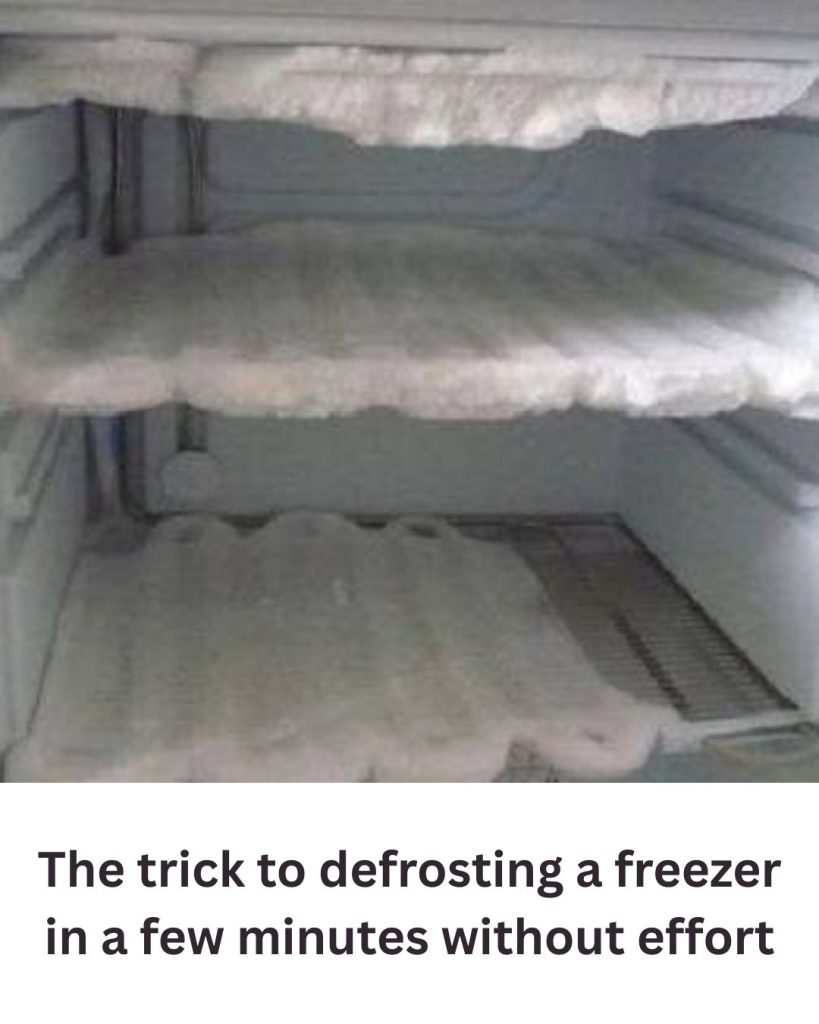

A freezer covered in thick ice isn’t just annoying — it reduces storage space, forces your appliance to work harder, and can quietly increase your electricity bill. Many people delay defrosting because they expect it to be messy and time-consuming, but with the right approach, it can be fast and surprisingly simple.
Here’s how to clear ice buildup in minutes without chiseling, scraping, or straining your arms.
Why Ice Builds Up in Freezers
Ice forms when moisture enters and freezes inside. Common causes include:
• Opening the door frequently
• Weak or dirty door seals
• Putting warm food straight into the freezer
• Overloading shelves and blocking airflow
• Going too long between defrosting sessions
Over time, this buildup reduces cooling efficiency and wastes energy.
The Simple Steam Method (Fast & Effective)
Steam helps loosen ice naturally, so it slides off instead of needing to be chipped away.
What You Need
• A heat-safe bowl or pot
• Boiling water
• A dry towel or cloth
Step-by-Step
- Unplug the freezer for safety.
- Place a bowl of boiling water inside.
- Close the door to trap the steam.
- Wait 5–10 minutes.
- Ice will soften and detach.
- Wipe away moisture with a towel.
💡 If ice is very thick, replace the water once and repeat.
Optional Speed-Up Tricks
These can help if you’re short on time:
Fan method:
Point a household fan toward the open freezer to circulate warm air.
Hair dryer method (carefully):
Use a low setting, keep distance from water, and never touch interior surfaces with the dryer.
⚠️ Important: Never use knives, screwdrivers, or metal tools. They can puncture cooling lines and permanently damage the freezer.
How to Prevent Ice Buildup
A few small habits can slow future icing:
• Clean and dry the door seal regularly
• Let food cool before freezing
• Avoid overpacking
• Do light defrosting every 1–2 months
The Bottom Line
Defrosting doesn’t have to be a chore. With steam and a little patience, you can clear ice in under 15 minutes — no force, no damage, and far less mess.
A clean freezer runs more efficiently, saves energy, and gives you back valuable space. Sometimes, the simplest tricks make the biggest difference.