In today’s health-conscious world, sugar has become a major topic of concern. While many people are aware of the obvious sugar-laden treats like candies and desserts, few realize the hidden sugars lurking in everyday foods. These hidden sugars can contribute significantly to our daily intake, often without us even realizing it. This article aims to shed light on some surprising sugar comparisons that might make you rethink your dietary choices.
Understanding Sugar Content: A Brief Overview
Sugar is a type of carbohydrate that provides energy for our bodies. It is naturally present in many foods, such as fruits and vegetables, but it is also added to a wide range of processed foods. The World Health Organization recommends that sugars should make up less than 10% of our total energy intake, yet many people consume far more than this. Understanding where sugars are hiding in our diets is crucial for making healthier choices.
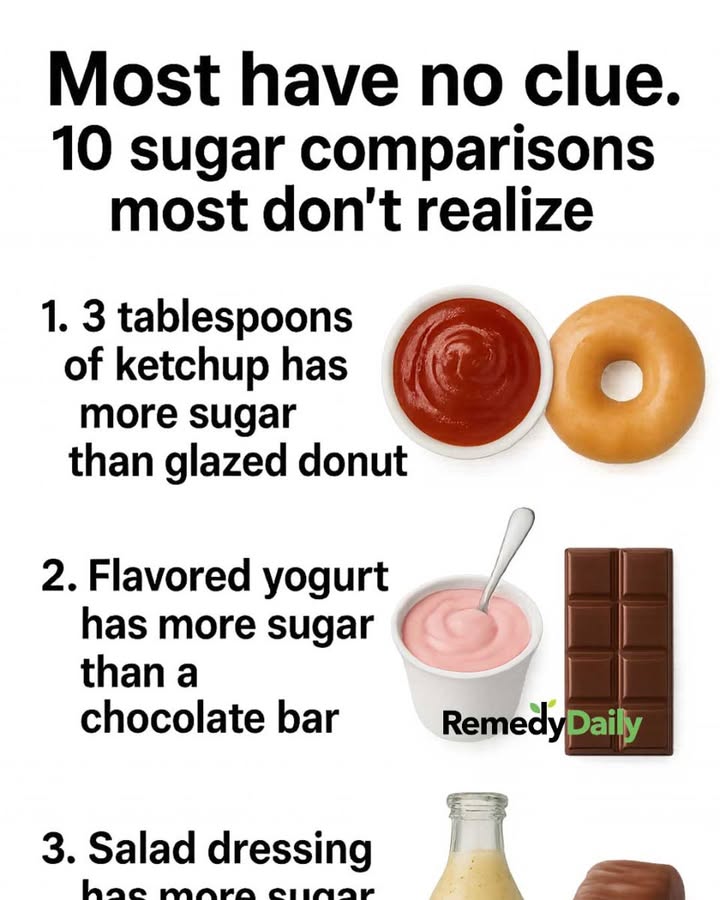
1. Ketchup Versus Glazed Donut: The Surprising Sugar Battle
Ketchup is a staple condiment found in many households, but did you know that a tablespoon of ketchup contains about 4 grams of sugar? This is almost as much sugar as found in a glazed donut, which contains around 10 grams of sugar per serving. While we might expect a donut to be sugary, the sugar content in ketchup often goes unnoticed.
2. Flavored Yogurt Versus Chocolate Bar: A Sweet Deception
Flavored yogurts are often marketed as a healthy snack, but they can contain as much sugar as a chocolate bar. A typical serving of flavored yogurt can have up to 20 grams of sugar, while a standard chocolate bar contains around 25 grams. This comparison highlights the importance of checking labels, even on foods perceived as healthy.
3. Granola Bar Versus Ice Cream Cone: The Unexpected Sugar Spike
Granola bars are often seen as a convenient and healthy snack option, but some can contain as much sugar as an ice cream cone. A single granola bar can have up to 15 grams of sugar, similar to a small ice cream cone. This is a reminder that not all ‘health’ foods are as wholesome as they seem.
4. Salad Dressing Versus Candy Bar: A Dressing Dilemma
Salad dressings, especially those that are creamy or sweetened, can be surprisingly high in sugar. A serving of salad dressing can contain up to 8 grams of sugar, comparable to a small candy bar. Opting for vinaigrettes or making your own dressing can help reduce sugar intake.
5. Smoothie Versus Soda: The Liquid Sugar Trap
Smoothies, especially those made with fruit juices or added sweeteners, can contain as much sugar as a can of soda. A typical smoothie can have upwards of 30 grams of sugar, similar to a can of soda. Choosing smoothies made with whole fruits and no added sugars can help mitigate this.
6. Breakfast Cereal Versus Cookie: Morning Sugar Shock
Many breakfast cereals, particularly those aimed at children, can contain as much sugar as a cookie. A serving of some cereals can have up to 12 grams of sugar, which is comparable to a chocolate chip cookie. Starting the day with a high-sugar breakfast can lead to energy crashes later on.
7. Protein Bar Versus Cupcake: The Protein Paradox
Protein bars are often marketed as a healthy snack or meal replacement, but some contain as much sugar as a cupcake. A typical protein bar can have up to 20 grams of sugar, similar to a small cupcake. It’s important to read labels and choose bars with lower sugar content.
8. Fruit Juice Versus Soft Drink: The Juicy Truth
Fruit juices, even those labeled as ‘100% juice,’ can contain as much sugar as a soft drink. A glass of fruit juice can have around 24 grams of sugar, comparable to a can of soda. Whole fruits are a better option as they contain fiber that helps slow sugar absorption.
9. Barbecue Sauce Versus Doughnut: The Saucy Surprise
Barbecue sauce is a popular condiment, but it can be surprisingly high in sugar. Just two tablespoons of barbecue sauce can contain up to 16 grams of sugar, similar to a doughnut. Using it sparingly or opting for low-sugar versions can help reduce sugar intake.
10. Sports Drink Versus Ice Cream Sundae: The Hydration Illusion
Sports drinks are often consumed for hydration and energy, but they can contain as much sugar as an ice cream sundae. A typical sports drink can have up to 34 grams of sugar, similar to a small ice cream sundae. For most people, water is sufficient for hydration during exercise.
Conclusion: Rethinking Our Sugar Assumptions
These comparisons reveal that sugar can be hiding in unexpected places, often in foods we consider healthy or harmless. By being more aware of the sugar content in everyday foods, we can make more informed choices and better manage our sugar intake. Reading labels, choosing whole foods, and being mindful of portion sizes are key strategies in reducing hidden sugars in our diets.