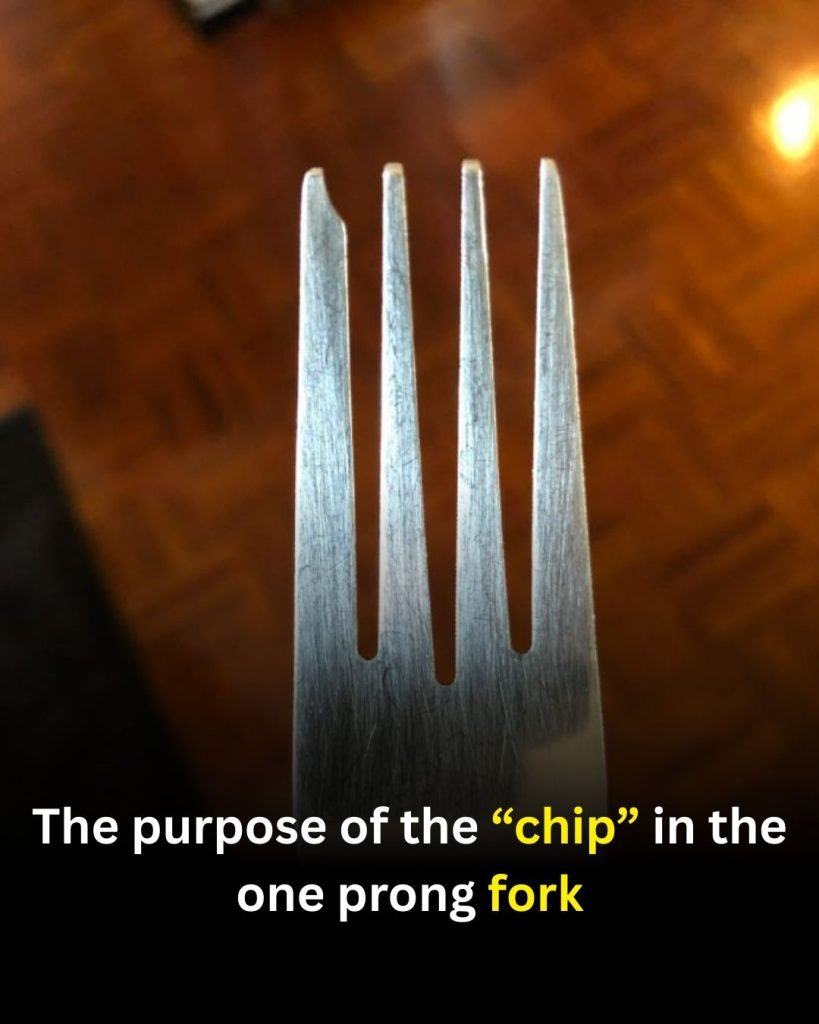

Have you ever noticed a fork where one prong looks slightly shorter, wider, or shaped differently? At first glance, it can seem like a manufacturing flaw or damage from years of use. But if you’ve seen this feature on multiple forks, it’s usually not an accident — it’s a purposeful design.
Meet the Cutting Fork
This style is often called a cutting fork. One tine is made a bit wider and slightly flattened compared to the others. While it may look “chipped,” the shape is intentional.
The idea behind it is practicality. The broader tine can help gently separate or cut softer foods like pasta, cooked vegetables, or tender fish. It’s not meant to replace a knife entirely, but it can make simple meals more convenient. The other prongs stay narrow and pointed so the fork still works normally for picking up food.
A Practical Design from the Past
Cutting forks were especially popular in the mid-20th century. During that time, many households valued utensils that could serve more than one purpose. A fork that could both spear and lightly cut food reduced the need for extra tableware at casual meals.
You can still find this design in some vintage or retro-style flatware sets today.
Small Detail, Smart Design
So if you spot a fork with a slightly different prong, it’s likely by design. It’s a small example of how everyday kitchen tools are often created with thoughtful details to make dining easier.
Sometimes what looks unusual is simply a clever bit of practical design hiding in plain sight. 🍴