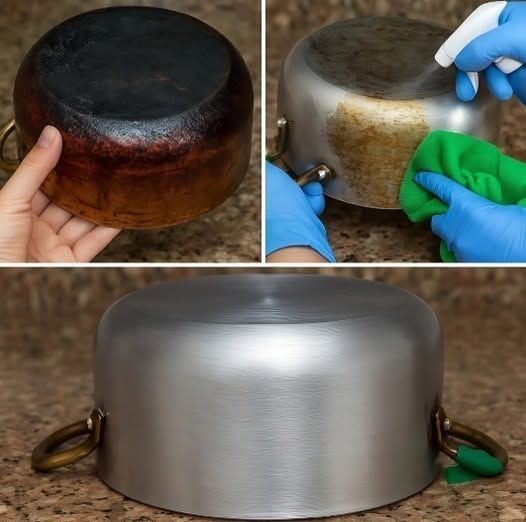

Burnt stains on pots and pans can be one of the most frustrating kitchen cleaning problems. Often, regular dish soap is not enough to loosen stubborn residue, leaving you scrubbing for far too long. The good news is that you can make a simple homemade cleaning paste using common household ingredients that may help make the job much easier.
This practical DIY cleaner is affordable, easy to prepare, and useful for removing tough grime from cookware and other kitchen surfaces.
A Simple Homemade Cleaning Paste
You do not need expensive products or complicated ingredients to make an effective cleaning paste. This homemade recipe uses a few basic items that many people already have in their kitchen:
- baking soda
- salt
- a bar of solid soap
- water
When combined correctly, these ingredients form a thick paste that can help loosen burnt residue and restore the appearance of your cookware.
How to Prepare the Paste
Start by pouring a little water into a bowl. Add the baking soda and salt, then stir well so the mixture blends together as smoothly as possible.
Next, take the bar of soap and grate it using a coarse grater. The goal is to create medium-sized flakes that will melt easily.
Place the grated soap into a small saucepan with a splash of water. Heat it over low heat and stir regularly to keep it from sticking. Continue until the soap melts completely and becomes smooth.
Once the soap has fully melted, remove it from the heat. Immediately add the baking soda and salt mixture, then stir well until everything combines into a creamy, even paste.
While the mixture is still warm, transfer it into a clean glass or plastic container. Leave it uncovered until it cools. As it rests, it will gradually thicken into a dense paste that is perfect for cleaning.
How to Use It
To clean burnt cookware, place a small amount of the paste onto a soft sponge. Apply it directly to the stained or burnt area of the pot or pan.
Rub gently and consistently. The paste can help loosen stuck-on residue, making it easier to remove without excessive scrubbing. Once the surface is clean, rinse the cookware thoroughly with water.
Many people also use this paste on other kitchen items such as oven racks, stovetop grates, and surfaces where grease and burnt buildup tend to collect.
Cleaning Tips Based on Cookware Type
To protect your cookware, it is important to clean each material carefully.
Enamel, Teflon, aluminum, and stainless steel should be handled gently. Avoid rough scrubbers that may scratch or damage the surface.
Ceramic cookware also needs extra care. Use only soft sponges and avoid harsh tools or strong abrasion.
Teflon pans with stubborn residue may benefit from soaking first in warm water for several hours before applying the paste.
Cast iron cookware should be dried completely after cleaning. Afterward, apply a thin layer of oil to help prevent rust and preserve the surface.
Final Thoughts
This homemade cleaning paste is a simple, low-cost, and practical alternative to many store-bought cleaners. It can help remove burnt stains, reduce the need for heavy scrubbing, and give your cookware a fresher, cleaner look.
With just a few basic ingredients and a little preparation, you can make a useful kitchen cleaner that helps bring pots, pans, and other surfaces back to life.