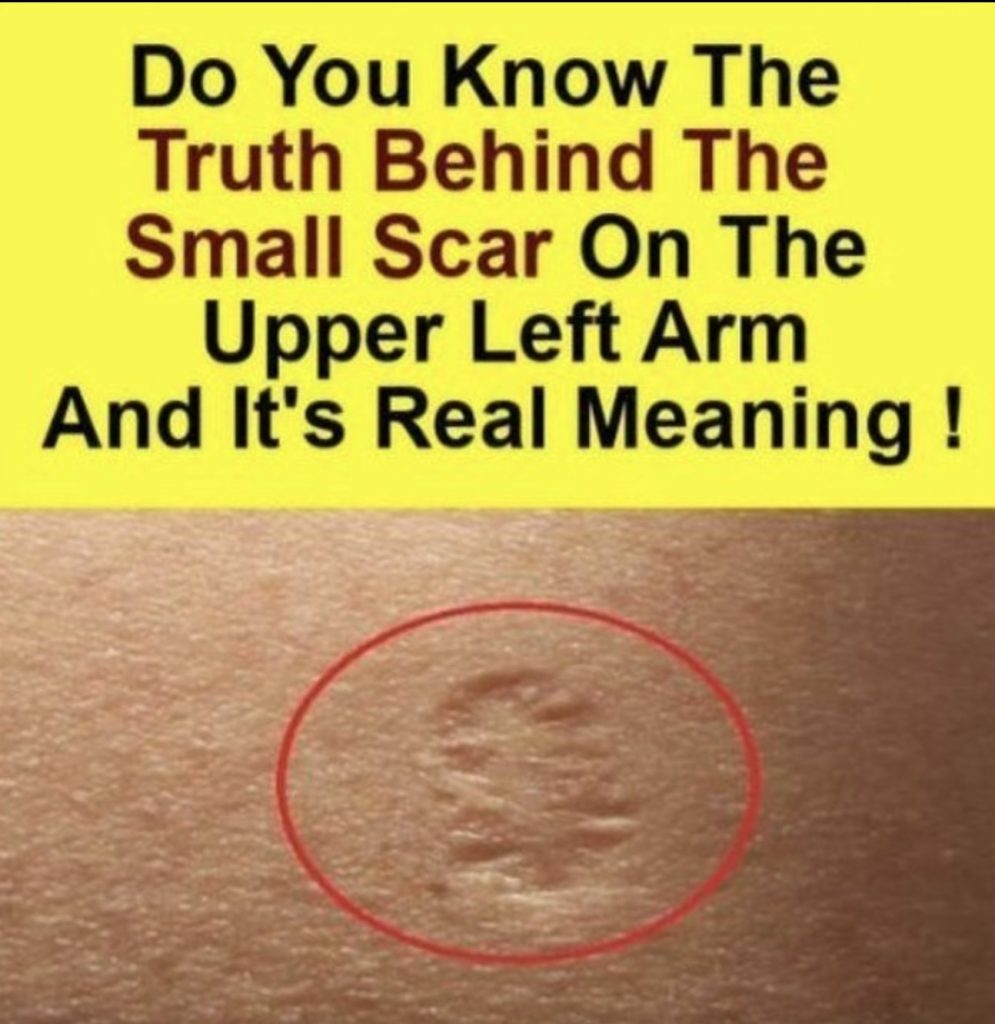

I have a clear memory of noticing a distinct scar on my mother’s arm when I was a child. It sits high up, close to her shoulder, taking the appearance of what looks like a ring of small indents in her skin around a larger indent.
Don’t ask me why that specifically attracted my attention all those years ago; I don’t remember. I recall only that it did, but as is so often the case, I sort of forgot it existed over the following years.
Well, obviously I didn’t forget it existed (it’s still in the same place it always was, of course), but I did forget that at one point in time I was fascinated with what had caused it. Perhaps I asked my mother once and she explained. If she did, though, I forgot that as well.
That was until I helped an elderly woman off of a train one summer a few years back, and I happened to catch sight of the very same scar, in the very same place as my mother’s. Needless to say my interest was piqued, but with the train about to rumble on to my destination, I couldn’t exactly ask her about the origins of her scar.
Instead I called my mother, and she revealed that she in fact told me more than once – obviously my brain didn’t deem the answer important enough information to retain – and that her scar had come courtesy of the famous smallpox vaccine.
Smallpox is a viral, infectious disease that once terrorized us humans. It causes a significant skin rash and fever, and during the most rampant outbreaks in the 20th century, killed an estimated 3 out of 10 victims according to the Centers for Disease Control and Prevention. Many other sufferers were left disfigured.
Thanks to a successful, widespread implementation of the smallpox vaccine, the virus was declared “extinct” in the United States in 1952. In fact, in 1972, smallpox vaccines ceased to be a part of routine vaccinations.
Up until the early ’70s, though, all children were vaccinated against smallpox, and the vaccinations left behind a very clear mark. Think of it as the very first vaccine passport, if you will: a scar that told everyone you had been successfully vaccinated against smallpox.
And yep, you guessed it, it’s that very scar that my mother bears (just as virtually all others in her age range).
Why did the smallpox vaccine scar?
The smallpox vaccine caused scars due to the body’s healing process. The vaccine itself was delivered in a rather different way to many other vaccines given today, using a special two-pronged needle.
The person administering the vaccine made multiple punctures in the skin (rather than just the one you usually get with today’s vaccines) to deliver the vaccine to the skin’s dermis (the layer below the epidermis).
The virus within the vaccine then got to work, multiplying and causing round bumps to develop. The bumps then developed into vesicles (small, fluid-filled blisters), which would then burst and scab over in time.
The result is the infamous scar we’ve talked about in this article.
Are you old enough to have a scar from the smallpox vaccine? Let us know in the comments!