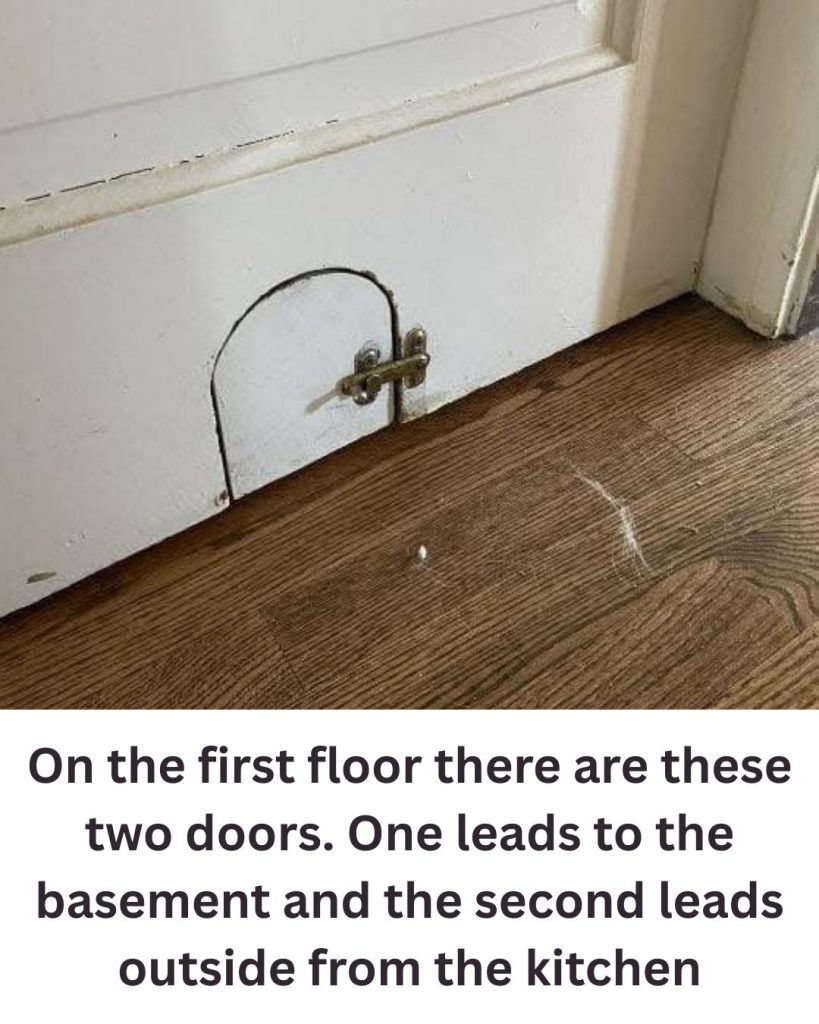

If you’ve ever explored an older home, you might have noticed something curious: tiny doors, small wall openings, or low little passages that seem too small for people. These charming features often spark wild theories — secret tunnels, hidden storage, or even folklore. In many cases, however, the explanation is much simpler and far more heartwarming.
In centuries past, homes were designed around daily life in a very practical way. Families lived closely with their animals, especially cats, which were valued for keeping mice and pests away from food stores. Before modern pet products existed, homeowners sometimes built small openings or low-access doors so cats could move freely between rooms, basements, and kitchens. It helped maintain cleanliness and food safety in an era when pest control options were limited.
Older houses were also full of handcrafted details. Builders often customized homes to match a family’s lifestyle, and that included their pets. Small wooden hatches, discreet wall cut-outs, or low-set doors could be added without disrupting the look of a room. These features weren’t luxury items — they were simple, thoughtful solutions that made everyday life easier.
Gardens and yards played a big role in household routines too. Cats often moved between indoor and outdoor spaces, and low windows or sheltered entry points helped them roam while staying close to home. These small architectural touches reflected how integrated animals were in family life. Pets weren’t just companions; they had practical roles in the household.
Today, modern cat flaps and pet doors serve the same purpose, but those tiny doors in old homes remain a charming reminder of the past. They show how people adapted their living spaces with creativity, care, and practicality. What looks mysterious at first glance often turns out to be a sign of a warm, lived-in home where both people and pets belonged.
Sometimes, the simplest explanations carry the richest stories — and these little doors are a perfect example of how everyday life shaped the homes we now call historic.