The Special Purpose of the Two Small Holes on Flat Plug Prongs That Many People Don’t Know
When you look closely at a flat electrical plug, you may notice two small round holes on the metal prongs. Why are flat plugs designed this way?
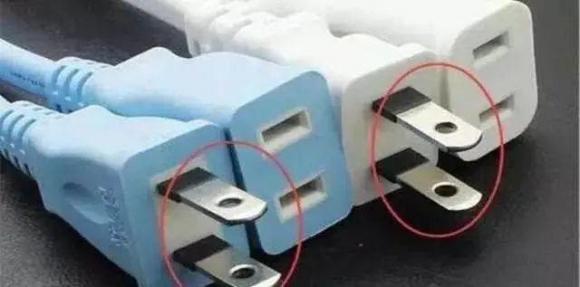
Electrical plugs are everyday items that we use constantly. In general, plugs come in two common forms: round-pin plugs and flat-pin plugs. Flat plugs are widely used, and each metal prong typically has a small circular hole. This detail is not decorative—it serves several important purposes.
To help the plug fit more securely
Harvey Hubbell Jr., an American inventor, laid the foundation for the design of holes in flat plug prongs. In his original design, he did not create holes that went all the way through the prongs, but instead made small indentations. The purpose was to improve contact and ensure a better grip with the internal components of the socket. Over time, to simplify the structure and improve efficiency, these indentations were redesigned into the round holes we see today.
The two holes help increase the stability of the plug when it is inserted into an outlet. The round edges align with raised contact points inside the socket, allowing the plug to sit firmly in place. This reduces looseness and minimizes poor electrical contact—a common cause of sparking, overheating, and in more serious cases, fire hazards.
Thanks to this design, flat plugs tend to stay in the outlet more securely and are less likely to slip out compared to some round-pin plugs.
Improved safety
The small holes also serve as a safety feature. In certain industrial settings or laboratories, supervisors can insert a pin or small padlock through these holes to prevent the plug from being connected to a power source while equipment is being repaired or maintained. This helps avoid accidental power-on situations that could cause injury or damage.
Saving materials during manufacturing
On a large manufacturing scale, drilling small holes in the plug prongs helps reduce the amount of steel or copper alloy used. While the material saved on each individual plug is minimal, the total savings become significant when produced in large quantities.
In short, the small holes in flat plug prongs are not merely decorative. They are the result of careful design and research aimed at improving usability, safety, and manufacturing efficiency.
For consumers, there is no strict requirement to use flat or round plugs, or two-prong versus three-prong designs—it all depends on practical needs. However, it is important to choose products from reputable sources that meet safety standards, with sturdy prongs and no signs of wear or deformation.