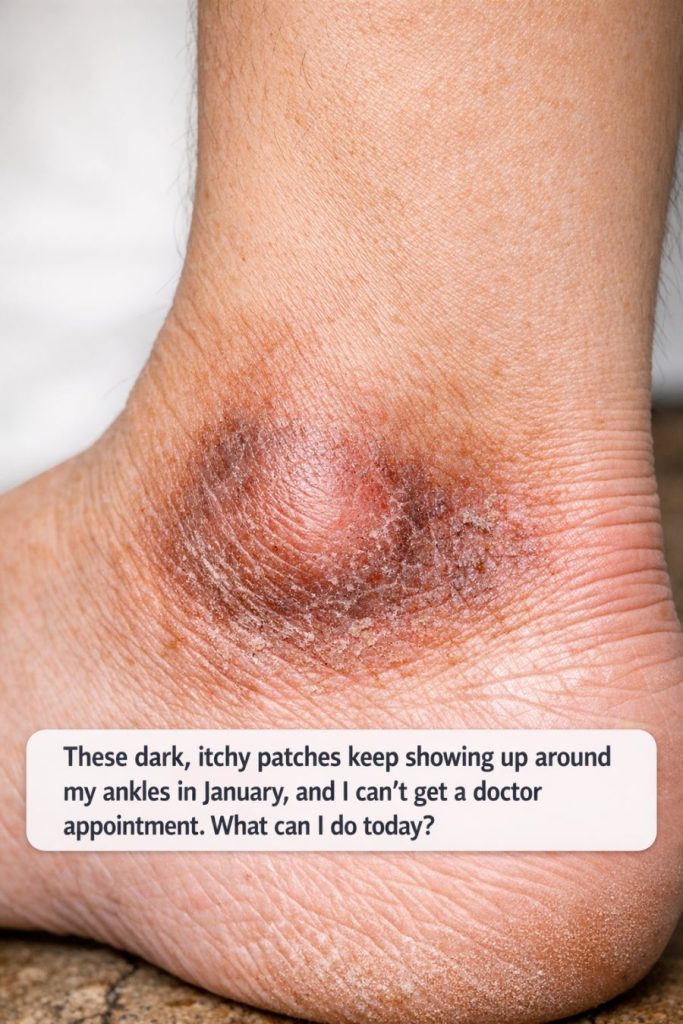

As winter settles in and the temperatures drop, many people notice unusual changes in their skin, especially around the ankles. These changes often include dark, itchy patches that can be both uncomfortable and concerning. While a doctor’s appointment is the ideal way to address these symptoms, it can be challenging to get a timely visit, especially during the busy winter months. However, there are steps you can take at home to alleviate these symptoms and potentially improve your condition.
Understanding why these patches appear and how to manage them can empower you to care for your skin effectively until you can see a healthcare professional. This article will explore possible causes for these dark, itchy patches and provide practical advice on how to manage them from the comfort of your home.
1. Spot the Signs: Is It Stasis Dermatitis or Something Else?
Stasis dermatitis is a common condition that occurs when blood flow in the veins of the lower legs is poor, leading to swelling and skin changes. It often presents as red, itchy patches that can darken over time. These patches might appear around the ankles and are accompanied by symptoms such as swelling, varicose veins, and leg pain.
However, other conditions can mimic stasis dermatitis, such as eczema, psoriasis, or even fungal infections. It’s essential to note the specifics of your symptoms—such as whether the patches are scaly, the presence of any discharge, or if they’re symmetrical—as these details can help differentiate between conditions.
2. Do an At-Home Ankle Check: Color, Swelling, and Skin Changes
Conduct a thorough self-examination of your ankles. Check for any discoloration, ranging from red to brown, and note any swelling. Measure the circumference of your ankles with a flexible tape measure at the same time each day to monitor changes.
Look for other skin changes such as dryness, scaling, or open sores. Describing these observations in detail will be helpful when you consult with a healthcare provider.
3. Elevate Your Legs the Right Way to Reduce Swelling Today
Elevating your legs can significantly reduce swelling by encouraging blood flow back to the heart. Lie down and prop your legs on pillows so that they are above the level of your heart for about 15-30 minutes, several times a day. This position helps decrease the pressure in your veins and can alleviate some of your symptoms.
4. Try Simple Compression (Safely) When You Can’t See a Doctor
Compression socks or stockings can help manage swelling and improve circulation in your legs. Select socks that fit snugly but are not too tight, as overly tight compression wear can exacerbate symptoms. Aim for a mild to moderate compression level (15-20 mmHg) for daily use. Avoid wearing them overnight unless directed by a doctor.
5. Moisturize Like a Dermatologist: Repairing a Damaged Skin Barrier
Moisturizing regularly can help repair your skin’s barrier and reduce itchiness. Choose a thick, fragrance-free moisturizer or ointment containing ceramides or petroleum jelly. Apply it immediately after bathing to lock in moisture. Reapply throughout the day as needed, especially if your skin feels dry.
6. Calm the Itch Without Scratching Your Skin Raw
To alleviate itching, apply a cold compress or use over-the-counter anti-itch creams containing hydrocortisone. Resist the urge to scratch, as this can lead to further irritation and potential infection. Instead, gently pat the area if you need relief, and keep your nails short to minimize damage if you do scratch unconsciously.
7. Viral TikTok Hacks to Avoid: What Actually Makes Ankles Worse
Social media is rife with quick-fix solutions, but be cautious of advice not backed by medical science. Hacks like applying apple cider vinegar or lemon juice can irritate the skin and worsen your symptoms. Sticking to dermatologist-recommended treatments is the best course of action.
8. Move More, Sit Smarter: Micro-Workouts for Better Leg Circulation
Incorporate small bursts of activity throughout your day to promote circulation. Simple activities like ankle circles, calf raises, or walking in place for a few minutes every hour can make a difference. Avoid sitting or standing for prolonged periods without movement.
9. Quick Home Checks for Red-Flag Symptoms That Need Urgent Care
Be vigilant for symptoms that require immediate medical attention, such as severe pain, a significant increase in swelling, open sores that do not heal, or signs of infection (like warmth, redness, or pus). If you experience these symptoms, seek care promptly.
10. What to Ask a Pharmacist When You Can’t Reach Your Doctor
Pharmacists can be a valuable resource for advice on over-the-counter treatments and general care tips. Ask about the best topical medications for itch relief, the correct use of compression stockings, and recommendations for moisturizers suitable for sensitive skin.
11. Using Telehealth and Patient Portals to Get Faster Help
If an in-person appointment is not possible, consider using telehealth services. Many healthcare providers offer virtual consultations where you can discuss symptoms and receive guidance. Use patient portals to communicate with your doctor, ask questions, and access educational resources.
12. Winter-Proof Your Routine: Socks, Showers, and Room Humidity
Cold weather can exacerbate skin conditions, so protect your skin by wearing soft, breathable socks and avoiding hot showers that strip moisture. Use a humidifier to maintain indoor air moisture levels, aiming for around 30-50% humidity to prevent skin from drying out.
13. Long-Term Habits to Protect Your Veins and Prevent Flare-Ups
Adopting a healthy lifestyle can prevent future flare-ups. Maintain a balanced diet rich in fruits and vegetables, exercise regularly to improve circulation, and avoid smoking, which can damage blood vessels. Manage your weight to reduce pressure on your veins and consult your doctor about long-term preventive measures.