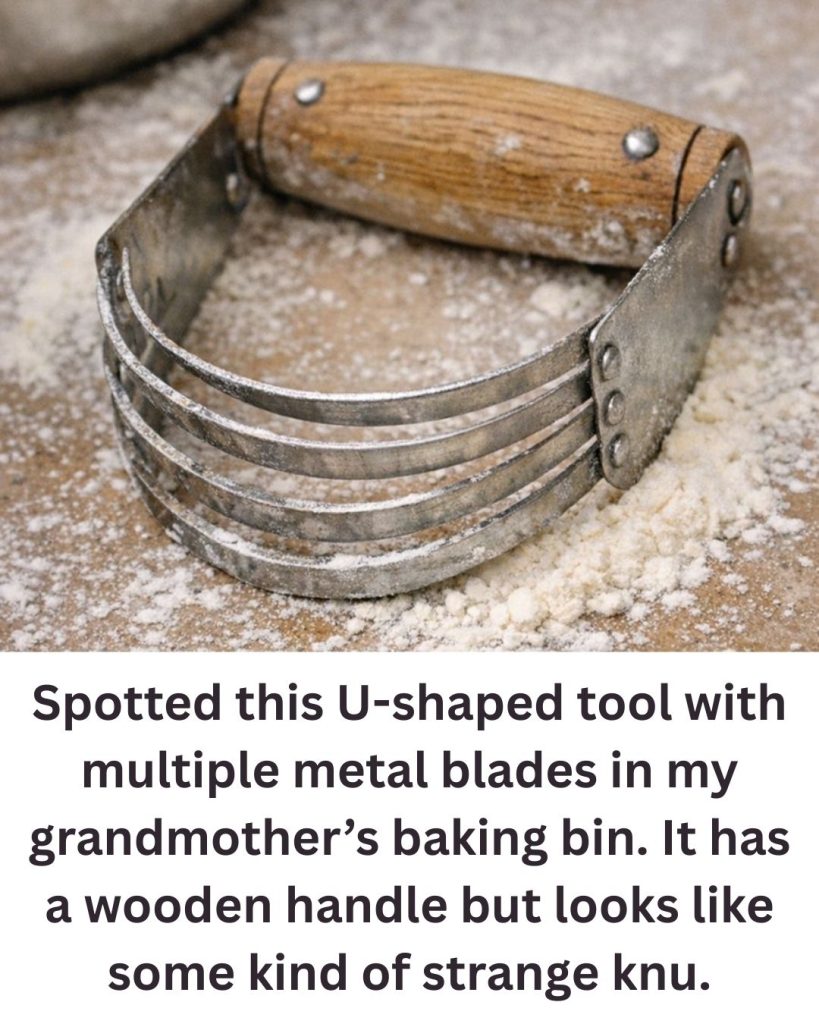

Finding old kitchen tools in a grandparent’s baking supplies can feel like uncovering little pieces of history. Some gadgets look so unusual that it’s hard to guess their purpose at first glance. One such item is a U-shaped tool with a wooden handle and several metal loops or blades — often mistaken for something far less friendly.
But this curious object isn’t for self-defense. It’s actually a classic baking tool that once played a big role in homemade pastries.
A Closer Look at the Unusual Design
The tool usually has:
• A sturdy wooden handle
• Several curved metal blades or wires
• A U-shaped frame
• A comfortable grip that fits in one hand
The blades are not sharp like knives. Instead, they’re firm and slightly flexible, designed to press and mix rather than slice.
This shape allows a rocking or pressing motion when used in a bowl.
The Real Identity: A Pastry Blender
This mystery gadget is called a pastry blender (also known as a pastry cutter). For decades, it was a baker’s go-to tool for making dough.
Its main job is to mix cold butter or shortening into flour when preparing:
• Pie crusts
• Biscuits
• Scones
• Shortbread
Before food processors became common, this simple tool helped bakers achieve light, flaky textures by hand.
How It Works
A pastry blender “cuts” fat into flour. Instead of blending smoothly, it breaks butter into tiny pieces that stay separate in the dough.
Those small bits of fat melt during baking, creating steam pockets that make pastries flaky and tender.
Using fingers can warm the butter too quickly, and knives can be slow or uneven. The pastry blender solves both problems.
Why Wood and Metal?
The materials are practical:
Wooden handle
• Comfortable to hold
• Doesn’t transfer heat or cold
• Durable for long use
Metal blades
• Strong enough to press through cold butter
• Rust-resistant when cared for properly
• Maintain shape over time
Why People Mistake It for “Knuckles”
At a glance, the grip and loops can resemble brass knuckles. But that’s where the similarity ends.
A pastry blender is designed for gentle mixing, not force. Its rounded edges and flexible wires make it safe for food prep.
Vintage Versions in Grandma’s Kitchen
Older pastry blenders sometimes feature:
• Carved or polished wood handles
• Decorative metalwork
• Different blade counts (3–7 blades)
These small design differences often reflect the era they came from and the craftsmanship of the time.
How to Tell It’s a Pastry Blender
You likely have one if it has:
✔ A U-shaped frame
✔ Multiple curved blades or wires
✔ No sharp edges
✔ A rocking or pressing motion when used
Modern Alternatives
Today, many people use:
• Food processors
• Stand mixers
• Forks or knives
However, machines can overmix dough easily. Many bakers still prefer pastry blenders for better control.
Caring for a Vintage Pastry Blender
To keep it in good condition:
• Wash blades with warm, soapy water
• Dry immediately to avoid rust
• Wipe the wooden handle gently
• Occasionally oil the wood to prevent cracking
It can also be displayed as a charming vintage piece in the kitchen.
More Than a Tool — A Memory
Old baking tools often carry stories. A pastry blender might remind you of homemade pies, holiday baking, or time spent in the kitchen with loved ones.
Keeping and using it isn’t just practical — it’s a way to continue family traditions.
Sometimes the most ordinary objects hold the warmest memories.