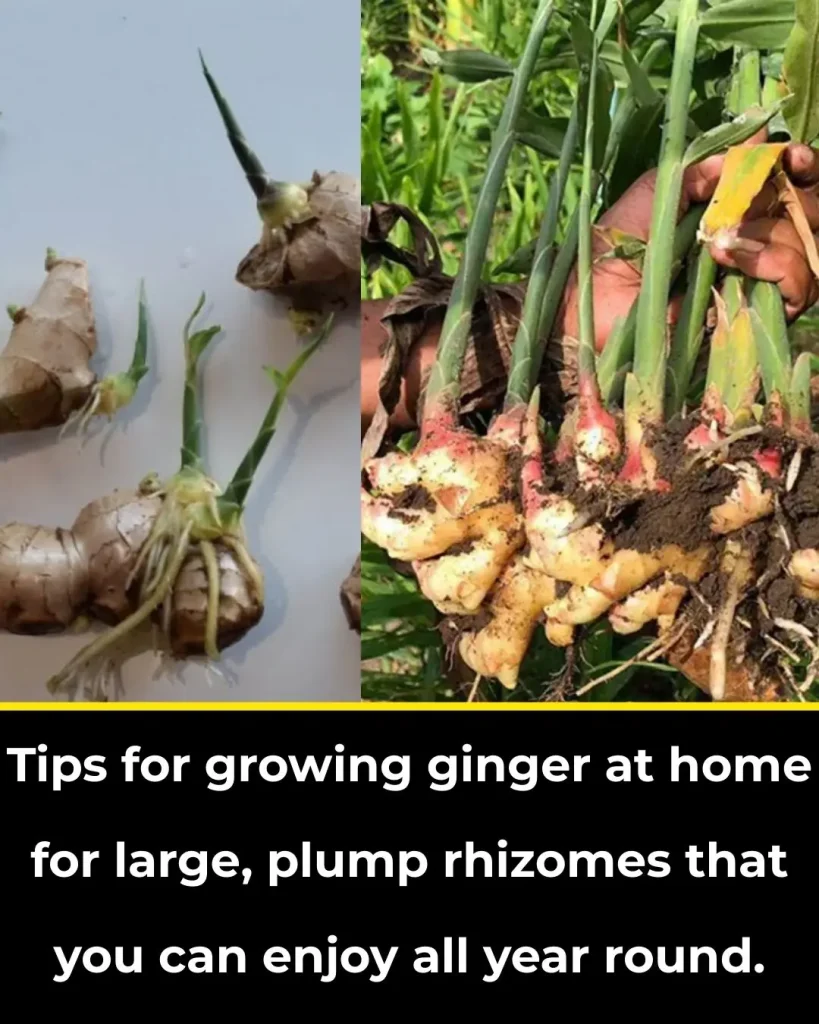

Ginger is a familiar spice to Vietnamese people. Learn how to grow ginger at home to use it for medicinal purposes and cooking in the safest way.
How to grow ginger at home
Moreover, growing ginger at home is extremely simple. Learn how to grow ginger now so that you always have ginger for your family without having to run to the market.
Select ginger varieties
You should choose small ginger varieties (like ginger, ginger), not large ones, because small ginger has a more spicy and aromatic taste and the ginger plant has a moderate height, without broken leaves.
Choose thick, smooth ginger roots to plant. Do not choose roots with chipped or withered skin. Discard the base of each ginger root.

Prepare pot and soil
Choose a plastic or ceramic pot about 35-40 cm high and 30-35 cm wide.
Ginger is suitable for loose, humus-rich and well-drained soil. Therefore, to grow ginger indoors with tubers, you should mix clean soil and nutritious soil in a ratio of 2:1, or mix raw rice husks, rice husk ash and earthworm castings in a ratio of 1:2:1.
In addition, we can grow ginger in sacks instead of using plastic or ceramic pots. Planting ginger in sacks also helps this plant grow very well.
Steps to grow ginger
Step 1: Soak ginger root in water and leave overnight
Step 2: Then, use a knife to cut the ginger into small pieces (from 40 – 60g to provide enough nutrients to feed the young plant), be careful not to cut into the ginger eyes and remove the ginger roots that do not have buds.
Step 3: Take the soil after mixing well and put it in ½ pot, compact the soil moderately, then take 2 ginger seeds and bury them 2.5 – 3 cm deep from the ground.
Step 4: Water lightly 2-3 times/day, avoid burying the ginger root deeply to avoid waterlogging and root rot.
Ginger Plant Care
After 20 days of incubation, the ginger will sprout. When the ginger plant has many leaves, water thoroughly once a day. Keep the soil moist, especially during the ginger rooting stage, but not too wet. Stop watering after 7-8 months, when the ginger leaves fall and is ready to be harvested.

You should place the pot on the porch or in the room; occasionally place the pot in a place with soft sunlight for photosynthesis (place the plant in a place with light for 5 to 6 hours/day, the ginger will produce more tubers).
Apply a 3-4 cm layer of mixed soil when the ginger root emerges. Use worm castings or other safe organic fertilizers available on the market.

Harvest:
Ginger can be harvested after about 7-8 months of planting to get the root. When digging, you must be gentle to avoid scratching the root, creating wounds and making it easier for pests to invade.