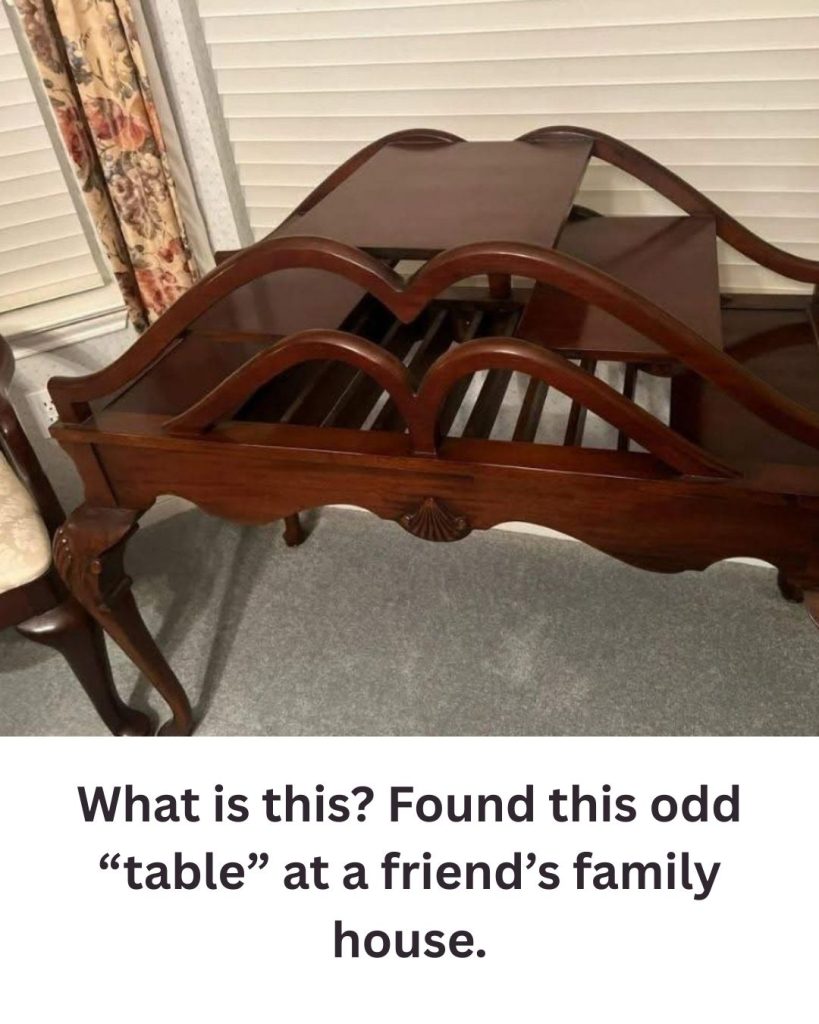

There I was—lukewarm coffee in hand, scrolling through a vintage furniture site I definitely didn’t need to bookmark—when I saw it.
Not just elegant.
Not just refined.
Alive.
An antique quarter-sawn solid mahogany dessert table, glowing with a deep honeyed patina only time can create. It didn’t just sit in the photo. It seemed to breathe. As if it had witnessed candlelit dinners, whispered secrets, children sneaking sweets when no one was looking.
In a world of flat-pack convenience and disposable décor, it felt like a relic from an era when objects were built to outlive their makers.
And it made me wonder: what makes traditional woodworking so irreplaceable?
🪵 Why Mahogany? A Wood That Defies Time
Mahogany has long been prized by master cabinetmakers. Its reputation isn’t just about beauty—it’s about performance.
Stability: It resists warping and cracking.
Workability: It carves smoothly yet holds crisp detail.
Luster: Over decades, it develops a rich, warm glow.
Longevity: Properly cared for, it can last centuries.
Mahogany has been used in historic buildings, fine cabinetry, and even maritime construction during the Age of Sail. It isn’t simply durable—it matures gracefully.
✋ The Soul of Handmade Craft
That dessert table wasn’t “assembled.” It was crafted.
Look closely at true handmade furniture and you’ll notice:
- Hand-cut dovetail joints
- Mortise-and-tenon construction
- Subtle tool marks from planes and chisels
- A hand-rubbed finish that glows from within
Machines can create uniformity. Hands create nuance.
Modern mass-produced furniture often relies on veneers over composite boards, cam locks, and synthetic finishes. They serve a purpose—but they rarely carry a story.
🔍 How to Recognize Genuine Craftsmanship
When examining a potential antique piece, consider:
| Feature | Handmade Antique | Mass-Produced |
|---|---|---|
| Joints | Dovetail or mortise-and-tenon | Staples, screws, cam locks |
| Wood Grain | Natural, continuous flow | Veneer seams |
| Finish | Shellac or oil, warm depth | Thick polyurethane coating |
| Underside | Carefully finished | Rough or unfinished |
A simple trick: turn it over. Craftsmen who cared finished every surface—even the parts rarely seen.
❤️ Why Handmade Is Making a Comeback
In our digital, disposable age, many people are rediscovering the value of objects that last. Woodworking channels are thriving. Artisans are reviving traditional joinery. Collectors are restoring instead of replacing.
Why?
Because we crave permanence.
We crave authenticity.
We crave objects that age with us.
An antique piece isn’t “used.” It’s seasoned—like wisdom.
🌿 Caring for Antique Wood
To preserve its glow for generations:
- Dust weekly with a soft cloth
- Wax lightly a few times per year (avoid silicone-based products)
- Keep away from direct sunlight and extreme heat
- Avoid ammonia or harsh cleaners
- Accept minor marks as part of its story
Patina is not damage—it’s history made visible.
Final Thought
Traditional woodworking reminds us that some things aren’t meant to be rushed. They’re meant to be felt.
A hand-carved leg, a dovetailed drawer, a mahogany surface catching the light—these are more than design details. They are quiet proof that craftsmanship once valued time over speed.
The best furniture doesn’t just hold your belongings.
It holds memory.
It holds presence.
It holds time itself.