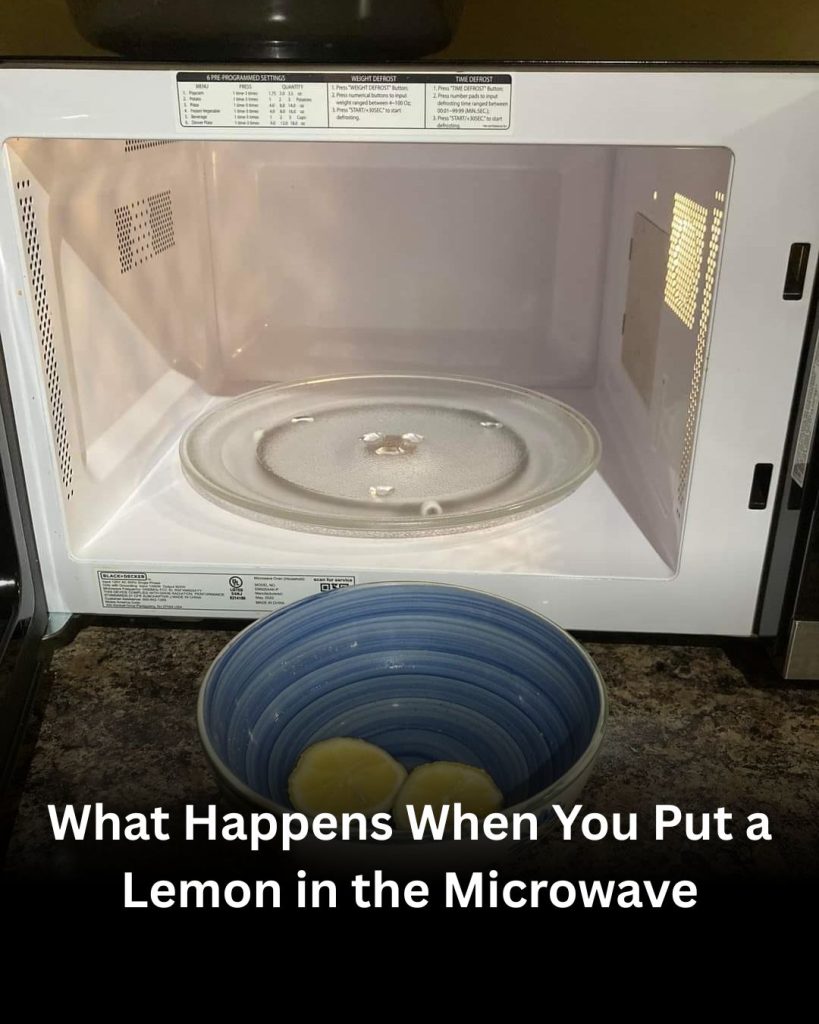

It sounds like the start of a strange experiment.
A lemon.
A microwave.
Two minutes.
Most people would assume nothing useful comes from that combination. But this simple trick has been quietly used for years by people who want a cleaner kitchen, fresher air, and less scrubbing — without chemicals.
And once you understand what actually happens inside the microwave, it makes perfect sense.
Why Microwaves Get So Dirty
Microwaves don’t get dirty from crumbs.
They get dirty from splatter.
Steam, grease, and food particles stick to the walls and ceiling every time you heat leftovers. Over time, that residue hardens and traps odors.
Scrubbing it off is annoying, time-consuming, and usually requires strong cleaners.
That’s where the lemon comes in.
What the Lemon Actually Does
When you cut a lemon and heat it in the microwave with water, three things happen at once:
-
Steam is released
-
Citric acid vaporizes
-
Essential oils disperse
The steam softens dried-on food residue, while the citric acid breaks down grease and neutralizes odors. Lemon oils help loosen grime and leave a fresh scent behind.
You’re not “cleaning” in the traditional sense.
You’re loosening everything so it wipes away easily.
Why Lemon Works Better Than Water Alone
Hot water alone creates steam — but it doesn’t cut grease effectively.
Lemon contains natural acids that dissolve fatty residue. That’s why lemon juice is commonly used to clean cutting boards, sinks, and stovetops.
In the microwave, those acids travel with the steam and reach places a sponge can’t easily touch.
Corners.
Ceilings.
Hidden splatter spots.
What You’ll Notice Immediately
After microwaving lemon water, most people notice:
-
Condensation on the microwave walls
-
Softened food residue
-
A fresh, clean smell
-
Grime that wipes away effortlessly
No scraping.
No chemicals.
No strong fumes.
Just a paper towel or cloth and a few wipes.
How to Do It Properly
This matters more than people think.
Here’s the method that works best:
-
Cut a lemon in half
-
Place it in a microwave-safe bowl
-
Add 1 cup of water
-
Microwave for 2–3 minutes
-
Let it sit (door closed) for 2 minutes
-
Carefully remove the bowl
-
Wipe the interior clean
The resting time allows steam to fully loosen residue.
Skipping that step reduces effectiveness.
The Odor-Eliminating Bonus
Microwaves often hold onto stubborn smells — fish, popcorn, sauces.
Lemon doesn’t just cover those smells. It neutralizes them.
Citric acid reacts with odor-causing compounds, breaking them down instead of masking them. That’s why the microwave smells neutral afterward — not lemon-scented forever.
Fresh, not perfumed.
Why This Trick Is Safer Than Sprays
Many commercial microwave cleaners contain harsh chemicals.
When heated, those chemicals can leave residues that contact food later — especially in small, enclosed spaces.
Using lemon and water avoids that entirely.
No residue.
No risk.
No labels to read.
Just food-safe ingredients doing the work.
The Extra Uses People Discover
Once people try this trick, they often reuse the lemon water to:
-
Wipe countertops
-
Clean sink drains
-
Freshen garbage disposals
Nothing goes to waste.
Even the lemon peel still has value.
Why This Habit Sticks Around
The reason this trick survives is simple:
It works every time.
It’s cheap.
It’s fast.
It’s effective.
And it turns one of the most annoying kitchen chores into a two-minute routine.
The next time your microwave smells “off” or looks grimy, don’t reach for a spray bottle.
Grab a lemon.
Two minutes later, you’ll wonder why you ever scrubbed in the first place.