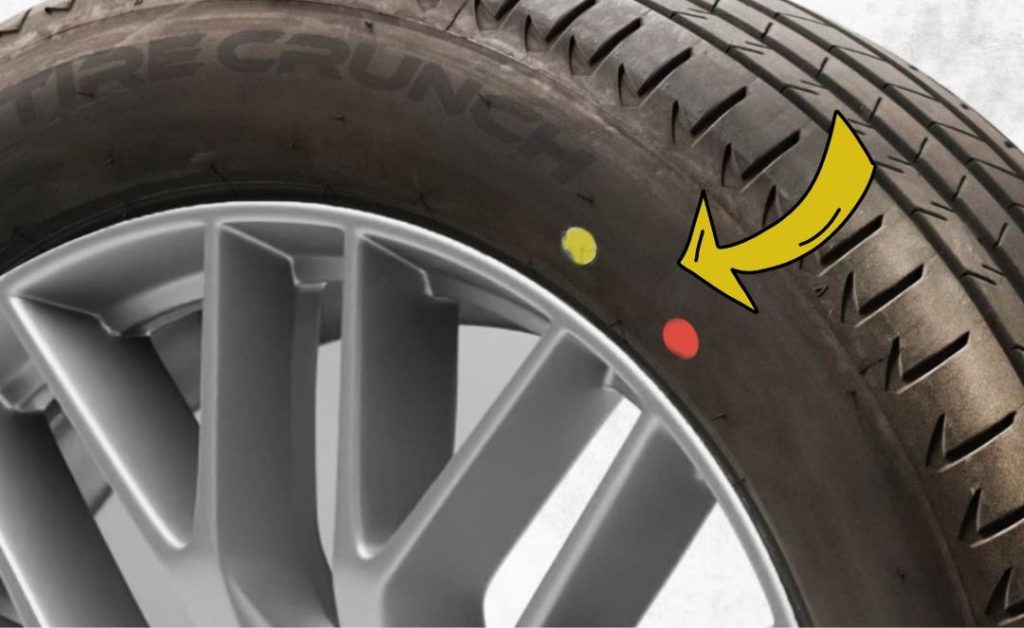

If you have ever looked closely at a new tire, you may have noticed small red or yellow dots marked on the sidewall. At first glance, they may seem unimportant or purely decorative, but they actually serve a practical purpose.
These colored dots help technicians mount and balance tires more accurately. Proper tire balance is essential for a smoother ride, more even tire wear, and better overall vehicle performance.
What the Yellow Dot Means
The yellow dot usually marks the lightest point of the tire. This matters because when a tire is mounted on a wheel, the goal is to create the most even weight distribution possible.
In many cases, the heaviest point of the wheel is near the valve stem. By aligning the yellow dot with the valve stem, the technician can help offset the difference in weight between the tire and the wheel. This makes balancing easier and may reduce the amount of extra weight needed during the balancing process.
What the Red Dot Means
The red dot has a different purpose. It generally marks the flattest or lowest point of the tire. This is important because wheels can also have slight high and low spots.
To improve uniformity, the red dot is often aligned with the wheel’s highest point. On some wheels, this high point may be marked with a small notch or colored mark. Matching these points can help the tire and wheel fit together more evenly.
Why Tire Balance Is Important
No tire is made with absolutely perfect weight distribution or perfectly uniform shape. Small variations are normal during manufacturing. Without proper balancing, these minor differences can lead to problems over time.
A well-balanced tire can help:
- reduce vibrations while driving
- improve ride comfort
- prevent uneven tire wear
- protect suspension components from extra stress
- support safer and smoother handling
When tires are not balanced correctly, you may notice shaking in the steering wheel, faster wear on certain parts of the tire, or a rougher driving experience.
What Can Cause Tires to Go Out of Balance
Even if tires are balanced correctly when installed, they can still lose balance later. Some common reasons include:
Normal wear
As tires wear down, their weight distribution can gradually change.
Potholes and road impacts
Hitting potholes, curbs, or rough road surfaces can affect the balance of a tire and wheel assembly.
Uneven loads
Frequently carrying heavy or unevenly distributed weight in your vehicle can also influence tire balance.
Tire damage
Punctures, bulges, or other damage may create imbalance and should be inspected as soon as possible.
Incorrect mounting
If a tire is not mounted carefully, the colored dots may not be aligned as intended, which can make balancing less effective.
A Small Detail That Matters
Those red and yellow dots on your tires are not random. They are simple but important guides used during installation to help achieve better balance and more even performance.
Paying attention to details like tire mounting and balancing can make a real difference in how your vehicle feels on the road. Regular tire maintenance not only helps improve comfort, but may also extend the life of your tires and support better driving safety.