I don’t know about you, but there’s nothing more annoying than pulling your favorite pair of jeans out of the wash and finding strange ripples all over them. Like, what happened in there? Were they battling for their lives in the spin cycle? One day they fit perfectly, and the next, they’re clinging and twisting like the washing machine chewed them up and spat them out.
If you’ve ever found yourself wondering why your jeans come out wrinkled, puckered, or wavy, this one’s for you.
And no, this isn’t just some random fabric malfunction. There are real reasons behind it — several, actually. Most jeans today are woven with a bit of stretch, which makes them comfortable but also a little more delicate. The biggest culprit? Heat. But the dryer isn’t the only thing to blame — how you wash, dry, and even store your jeans can make a big difference.
So, if you’ve ever stared at your formerly smooth jeans and wondered where things went wrong, you’re in the right place. Let’s break it down.
Why Do Jeans Ripple, Pucker, or Wrinkle in the Wash?
After ruining more than one pair myself, I did some digging to find out what’s really going on. It turns out those fibers are doing a lot when they go for a spin in the washer and dryer.
1. Heat Deteriorates the Lycra in Your Jeans
These days, most jeans aren’t 100% cotton. They usually contain a bit of Lycra (or elastane) to give them that perfect amount of stretch. But here’s the problem: Lycra hates heat.
At high temperatures in the washer or dryer, Lycra begins to break down. When that happens, the denim fibers around it start to warp too. That’s why you end up with those strange ripples or puckers in random spots — not uniform shrinkage like with pure cotton.
Once Lycra loses its elasticity, there’s really no going back.
And it’s not just heat — washing jeans too often wears down the fibers over time. Most of us wash them far more than necessary. Experts actually recommend washing jeans much less frequently than you’d think, since overwashing shortens their lifespan and ruins that perfect fit.
2. The Washer Twists and Stretches the Fabric
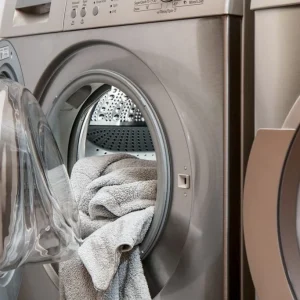
Even if heat isn’t the issue, the way your jeans move inside the washer can cause problems. Think about it — your jeans aren’t just soaking gently in water. They’re being tossed, twisted, and stretched in every direction.
It gets even worse if you overload your washing machine — everything tangles up, and the fabric gets pulled unevenly.
Stretch denim is especially prone to this. When it’s wet and heavy, different areas dry under varying tension: some sections stay taut, others loosen. The result? Those annoying wavy ripples that make your jeans look like they’ve aged a decade overnight.