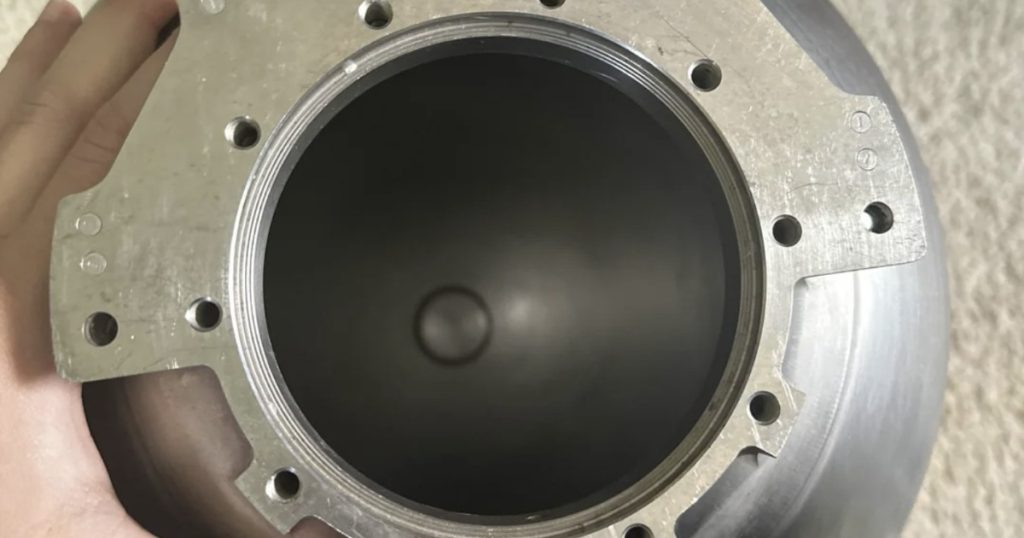

For five years, a strange metal tank sat quietly in our bedroom without much attention. It had come from my fiancée’s parents’ house after they sold the property. Her father had always claimed it came from an airplane and that it was made of titanium, but no one really took the story seriously.
Like many family stories, it sounded a little too unbelievable.
Then one day, I picked it up and noticed a number stamped on the surface: 1330-471116-3. Out of curiosity, I searched for it.
What I discovered was far more surprising than I expected. It turned out to be an Apollo RCS tank — an actual piece of NASA spacecraft hardware.
What Is an Apollo RCS Tank?
This tank was part of the Reaction Control System used in the Apollo Service Module. That system played a key role in controlling the spacecraft’s orientation while it orbited the Moon during missions in which the Lunar Module descended to the lunar surface.
Inside the tank, a flexible bladder and helium pressurization system helped push propellant toward the small thrusters responsible for steering and stabilizing the spacecraft in space.
The design of this tank matches known examples almost exactly, from its shape and bolt pattern to the visible signs of wear. It was reportedly built from lightweight titanium and weighs only a few pounds, despite being a highly specialized aerospace component.
He Was Telling the Truth After All
At first, it was easy to assume that the story had been exaggerated. But it turns out her father was right all along.
These tanks were genuinely used in connection with real space missions. After certain programs ended, some pieces of aerospace hardware were removed from service, cleared, and later sold off as surplus. This tank appears to be one of those rare items that somehow made its way into private hands.
Although the internal bladder is no longer there, the outer tank itself remains intact and unmistakably authentic.
How Did It End Up in a House?
The most likely explanation is that it was purchased years ago through a surplus sale or obtained by someone with access to aerospace-related materials.
After the Apollo era ended, many pieces of hardware were sold, stored, donated, or passed along in unexpected ways. Some ended up in museums, while others found their way into workshops, garages, and private collections.
In this case, one of those objects somehow ended up in a family home — and eventually in a bedroom.
Why It Matters
What makes this object so remarkable is that it was not built as decoration or for display. It was designed for one of the most demanding environments imaginable: outer space.
It once held fuel, functioned under extreme conditions, and contributed to missions that remain some of the most important achievements in human history.
It is not just an unusual metal tank. It is a surviving piece of space exploration history.
What Happens Next?
For now, it may stay right where it is. Maybe it will eventually be displayed more properly, but one thing is certain: it is not being sold.
Some of the most extraordinary objects can sit unnoticed for years, hiding in plain sight. And sometimes, all it takes is a closer look to realize you have been living beside a small piece of history.