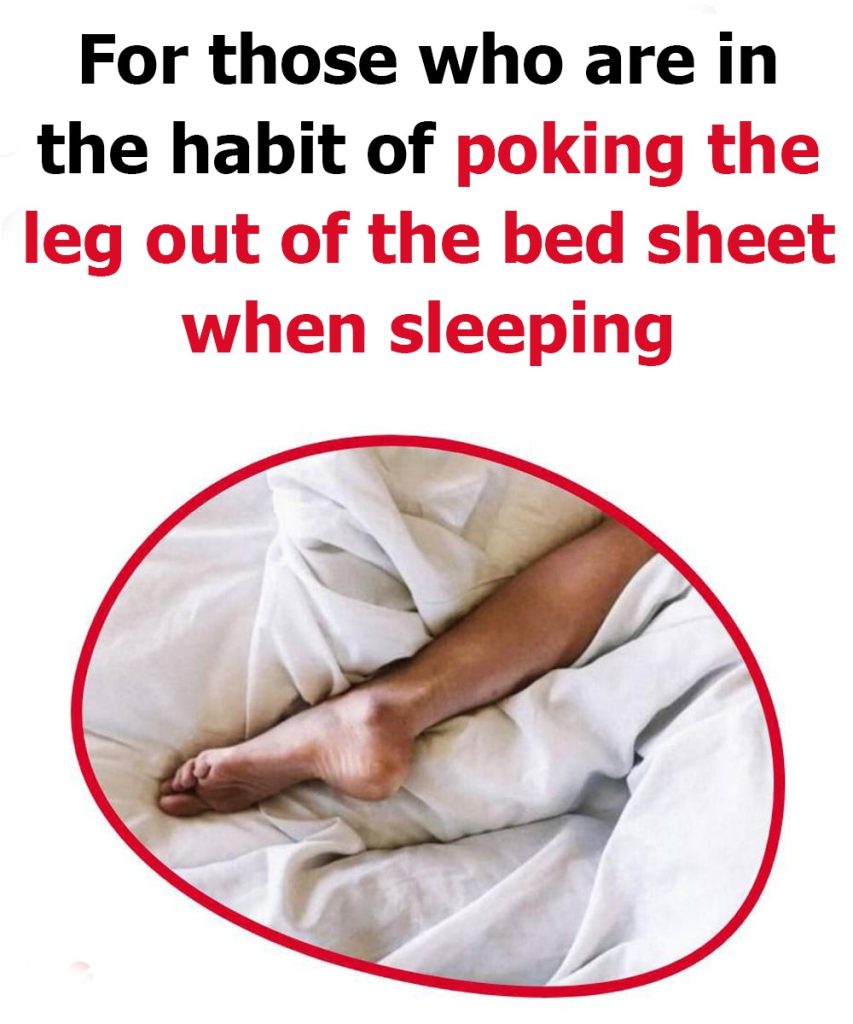

You’ve probably done it without giving it much thought—sliding one foot out from under the covers to cool off at night.
But this familiar sleep habit isn’t just about comfort. Science suggests it may be one of the easiest and most effective ways to help your body drift into sleep more quickly and naturally.
So why does the “dangling foot” trick work so well? The answer lies in how your body regulates temperature before sleep—and how your feet play a surprisingly important role in that process.
Heat, feet and sleep
As night approaches, your body begins preparing for rest by gradually lowering its core temperature. This cooling process is a key part of your circadian rhythm and is essential for falling into deep, restorative sleep.
“The drop in temperature starts about two hours before you go to sleep, coinciding with the release of the sleep hormone melatonin,” writes the Sleep Foundation. “During sleep, body temperature continues to fall, reaching a low point in the early morning and then gradually warming up as the morning progresses.”
To support this shift, your body redirects warm blood away from the core and toward the surface—especially the hands and feet. When these areas are exposed to cooler air, they act like natural vents, releasing excess heat and helping your system switch into sleep mode more efficiently.
Perfect heat-release tools
Feet and hands are uniquely suited for temperature regulation because they contain specialized blood vessels known as arteriovenous anastomoses. These vessels allow warm blood to bypass capillaries and move directly to the skin’s surface, making heat loss faster and more effective.
Letting just one foot slip out from under the blanket creates a simple, adjustable cooling mechanism. It’s comparable to opening a window slightly in a warm room—minimal effort, noticeable effect.
“I think it’s likely in service of trying to cool our bodies down because we’ve gotten too warm to sleep,” Natalie Dautovitch, a sleep health researcher and professor at Virginia Commonwealth University, told New York Magazine. “Sticking your toe out or your foot out could bring you to a more restorative sleep.”
Fall asleep faster
Sleep researchers often look at something called the distal-to-proximal gradient (DPG), which compares the temperature of your extremities—like hands and feet—to your core body temperature. A higher DPG means more heat is being released from the body, and this is strongly associated with falling asleep faster.
A study published in the Journal of Physiology found that people with warmer hands and feet—and therefore a higher DPG—fell asleep much more quickly than those with cooler extremities.
Exposing one foot can raise this gradient almost instantly, helping your body settle into sleep without removing all your bedding or lowering the thermostat.

Other ways to support natural cooling
Letting one foot breathe is a simple trick, but combining it with other temperature-friendly habits can further improve sleep quality:
Take a warm bath or shower one to two hours before bedtime to increase skin temperature and trigger a cooling effect afterward.
Keep your bedroom cool, ideally between 65 F and 68 F, as recommended by the Sleep Foundation.
If your feet are usually cold, warm them briefly with socks or a foot soak, then remove layers as needed to fine-tune comfort.
Dangling foot doesn’t work for everyone
Although many people swear by the foot-out method, it isn’t ideal for everyone. If you tend to have cold feet, poor circulation, or conditions such as Raynaud’s disease, exposing your foot may feel unpleasant rather than soothing. In those cases, gentle warming may be more helpful than cooling.
Children, older adults, and people sleeping in already cool environments may also benefit more from retaining heat rather than releasing it. The key is listening to your body—comfort matters more than following a rule.
If you find yourself restless under the covers, try slipping one foot out and see how it feels. This small, instinctive movement works with your body’s natural thermoregulation system, allowing heat to escape and quietly signaling your brain that it’s time to rest.
Sometimes, better sleep really does begin from the ground up.