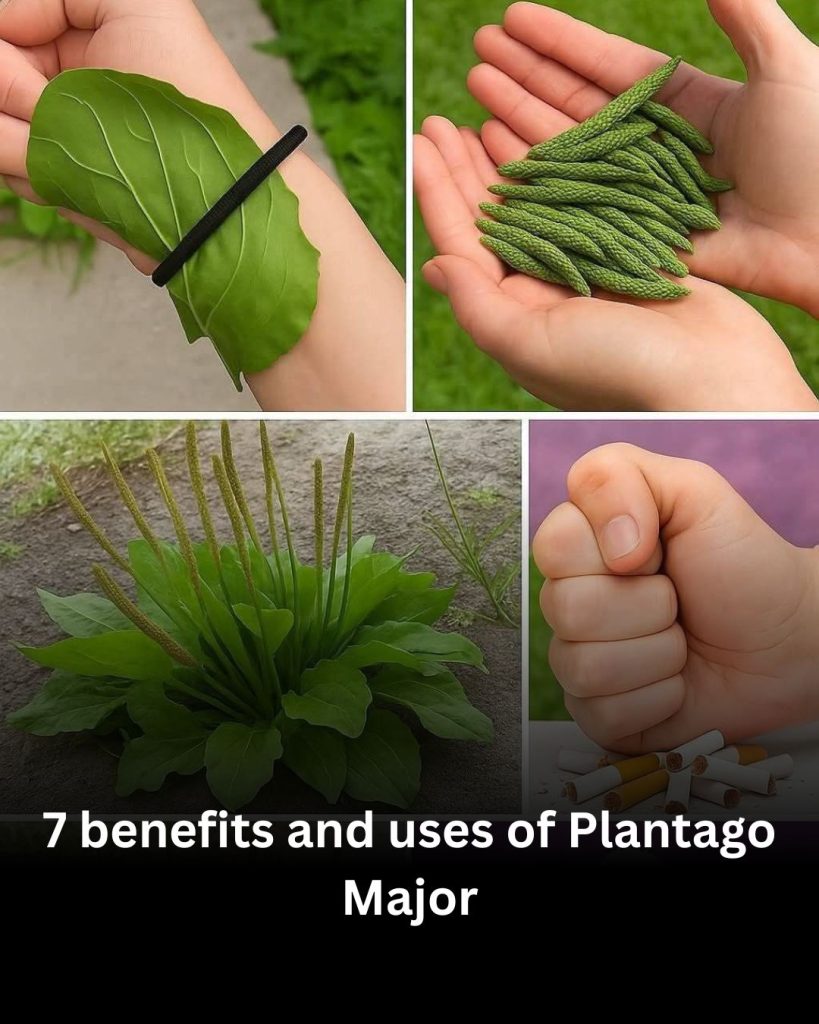

What Is Large Plantain?
Large plantain (Plantago major) is a perennial herb known for its resilience and adaptability, flourishing in temperate regions, including Vietnam’s diverse landscapes. Often mistaken for a weed, it is easily recognizable by its broad, oval leaves with prominent parallel veins that hug the ground in a rosette shape.
From the center, slender stalks rise, bearing tiny flowers and edible seeds. Valued in traditional medicine and cuisines across cultures—from Europe to Asia—large plantain is considered a nutritional and medicinal gem. Modern science highlights its bioactive compounds, such as aucubin and flavonoids, which contribute to its health benefits.
Identifying Large Plantain
Spotting large plantain is simple thanks to these distinctive features:
🍃 Leaves
Broad, oval, and leathery with 5–9 parallel veins, forming a low-growing rosette.
🌸 Flowers and Seeds
Long, upright stalks topped with dense clusters of small, greenish-white flowers that develop into edible seeds.
🌱 Growth Habit
Thrives in disturbed soils, lawns, and pathways, often in sunny or partially shaded areas.
These traits make large plantain easy to forage, but always harvest from clean, pesticide-free areas to ensure safety.
Nutritional and Medicinal Benefits
Large plantain is a nutritional powerhouse, packed with vitamins, minerals, and bioactive compounds that support overall health.
🧬 Rich in Nutrients
Contains vitamins A, C, and K, along with calcium, potassium, and iron, supporting immunity, bone health, and energy levels.
🌿 Antioxidant Power
Flavonoids and aucubin help combat oxidative stress, reduce inflammation, and protect against chronic diseases.
🩺 Anti-Inflammatory and Antimicrobial
Its natural compounds soothe inflammation and help fight bacteria, supporting wound healing and infection prevention.
Key Health Benefits of Large Plantain
Large plantain’s versatility and long history of use make it a staple in natural remedies.
❄️ Cooling and Diuretic Effects
Traditionally used to reduce internal heat and promote urination, supporting kidney and urinary health.
🌬️ Respiratory Relief
The mucilage in its leaves helps loosen phlegm and soothe respiratory irritation, easing cough and bronchitis symptoms.
🩹 Skin and Wound Healing
Crushed leaves applied topically may reduce inflammation, speed healing, and soothe insect bites or rashes.
🍵 Digestive Support
Its fiber and mucilage help support gut health and relieve mild digestive discomfort.
Culinary Uses of Large Plantain
Beyond medicine, large plantain is also a nutritious culinary ingredient.
🥗 Raw or Cooked
Young leaves, slightly bitter but tender, can be eaten raw in salads or sautéed with garlic as a spinach-like side.
🍵 Herbal Tea
Steep 5–6 fresh or dried leaves in hot water for 5–7 minutes for a soothing tea. Honey can be added for taste.
🥣 Soups and Stews
Add chopped leaves to soups or broths near the end of cooking for extra nutrition.
🌾 Edible Seeds
Dry and grind the seeds into flour or sprinkle them over dishes for a nutty flavor.
How to Harvest and Prepare Large Plantain
🌿 Harvest Young Leaves
Pick tender leaves in spring or early summer for the best flavor.
🧼 Clean Thoroughly
Rinse well to remove dirt trapped in the leaf texture.
🍳 Prepare for Cooking
Blanch for 1–2 minutes to soften and reduce bitterness.
🧊 Store Properly
Keep fresh leaves in a damp cloth in the refrigerator for up to a week, or dry them for long-term tea storage.
Precautions for Safe Use
Large plantain is generally safe, but consider the following:
🩺 Consult a Healthcare Provider
Pregnant or breastfeeding women and individuals taking diuretics or blood thinners should seek medical advice, as plantain may interact with medications.