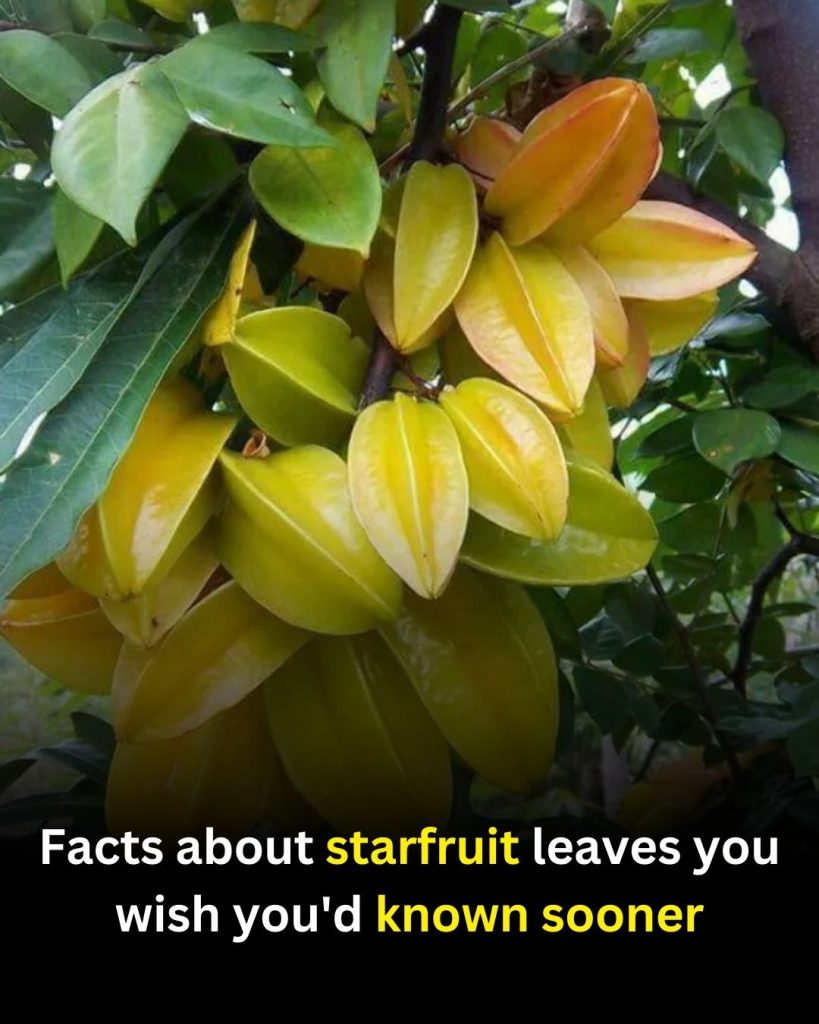

Introduction: The Lesser-Known Side of Star Fruit
Carambola, commonly known as star fruit, is loved for its crisp texture and sweet-tart flavor. But in many tropical regions, people have also paid attention to another part of the plant — the leaves.
Across parts of Asia, the Caribbean, and South America, carambola leaves have appeared in traditional home remedies for general comfort and wellness. While modern research on the leaves is still limited, early studies show they contain natural plant compounds such as:
- Antioxidants
- Polyphenols
- Vitamin C
- Naturally occurring anti-inflammatory compounds
These nutrients are found in many plants and are associated with supporting overall wellness when used responsibly.
🌿 Traditional Uses of Carambola Leaves
It’s important to note that these uses come from traditional practices, not medical guidelines. They are best viewed as cultural wellness habits rather than treatments.
💪 1. Comfort for Muscles and Body Tension
In folk traditions, carambola leaves are sometimes used externally as:
- Warm herbal baths
- Compresses
- Poultices
People traditionally use them after long workdays or physical effort to promote relaxation and comfort.
🌱 2. Digestive Comfort
Some cultures prepare mild leaf teas or decoctions for occasional stomach discomfort. The leaves contain tannins and plant fibers, which are commonly found in plants associated with digestive support.
This does not replace medical care, but reflects how communities historically used local plants.
❤️ 3. Circulation and General Wellness
Because carambola leaves contain antioxidants, some traditions consider them a supportive tonic for general vitality. Antioxidants are known to help protect cells from everyday oxidative stress.
However, any heart or circulation concerns should always be evaluated by a healthcare professional.
🍵 How Carambola Leaves Are Traditionally Prepared
A common traditional preparation is a decoction.
Ingredients
- 10–15 fresh, well-washed carambola leaves
- 1 liter of water
Method
- Bring water to a boil.
- Add leaves.
- Simmer gently for 20–30 minutes.
- Strain and let cool.
Traditional Use
- Small amounts, typically after meals
- Used occasionally rather than daily
🛀 External Use: Baths or Compresses
Herbal Bath
Add cooled decoction to warm bath water and soak for about 15–20 minutes for relaxation.
Poultice
Warm, crushed leaves wrapped in cloth may be placed on areas of tension for short periods.
These uses are part of traditional wellness culture.
🚨 Important Safety Note
Carambola (star fruit) naturally contains oxalates.
People with:
- Kidney disease
- Kidney stones
- Reduced kidney function
should avoid using carambola leaves or fruit without medical advice.
Even healthy individuals should avoid excessive intake.
🌱 A Balanced Perspective
Carambola leaves are an interesting example of how traditional cultures use local plants for everyday wellness. They may offer gentle supportive properties, but they are not a cure or medical treatment.
A healthy lifestyle, balanced diet, hydration, and proper medical care remain the foundation of good health.
✅ Final Thought
Nature offers many fascinating plants, and carambola leaves are part of that story. When used thoughtfully and safely, traditional practices can be appreciated as cultural knowledge — not medical solutions.
Sometimes the value lies in learning, respecting tradition, and using common sense.