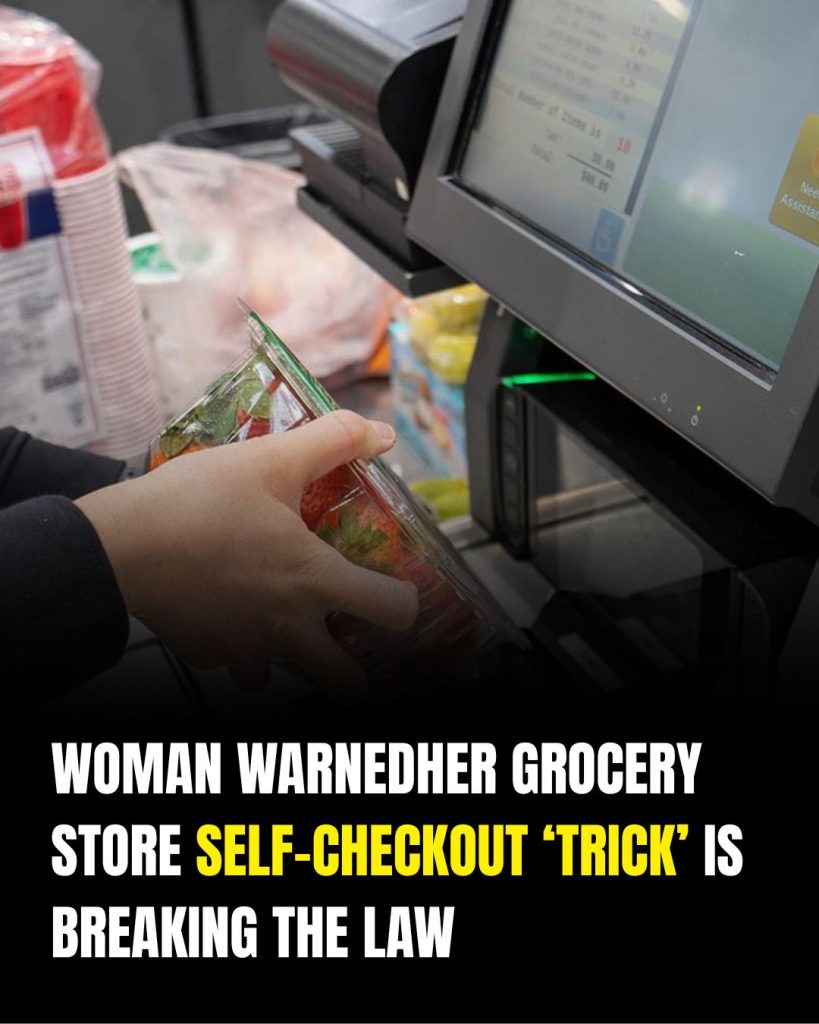

A shopper has gone viral after learning that a money-saving “trick” some people use at grocery store self-checkouts can actually be treated as theft under the law.
Self-checkout machines are now common in supermarkets around the world. Retailers say they help reduce wait times and operating costs, but many shoppers feel the systems shift more responsibility onto customers, who must scan, weigh, and bag their own items while being monitored by cameras and on-screen alerts.
Recently, online discussion grew after a woman shared that a friend regularly uses a shortcut at self-checkout to pay less for groceries. The revelation sparked debate, with some people surprised that the behavior could be illegal and others admitting they had seen similar actions before.
Online Reactions
The confession quickly spread on social media. Some commenters said they didn’t realize certain self-checkout behaviors could count as theft, while others noted that busy stores may not always catch mistakes or misuse.
However, legal professionals warn that intent matters. Deliberately entering the wrong product or price is not viewed the same as making an honest mistake.
Legal Perspective
According to legal experts Alison and Jillian Barrett, misuse of self-checkout systems has become a growing concern for retailers. They say losses linked to self-checkout theft contribute to higher operating costs, which can ultimately affect prices.
They also explain that store staff and security may intervene if they suspect intentional underpayment. Depending on local laws, they may check receipts or bags to confirm items were scanned correctly.
Claiming confusion or blaming the machine may not be a strong defense if there is evidence of deliberate action.
Possible Consequences
Penalties vary by jurisdiction, but they can include:
- Paying the difference or full value of goods
- Formal warnings or cautions
- Fines or community service in some cases
- Police involvement for repeated or higher-value incidents
Even smaller incidents can be recorded, which may matter if behavior is repeated.
The “Trick” in Question
The specific example discussed involved scanning a cheaper produce item instead of a more expensive one — for example, selecting a lower-priced vegetable code while weighing a higher-priced product.
Lawyers emphasize that this is considered dishonest because the customer is knowingly paying less than the true price.
Bottom Line
While grocery prices are a real concern for many households, experts say intentionally mis-scanning items is not a harmless workaround. It can carry legal and financial risks that outweigh any short-term savings.
Their advice is simple: if you make a genuine mistake at self-checkout, ask staff for help. Deliberate shortcuts, however, can lead to serious consequences.