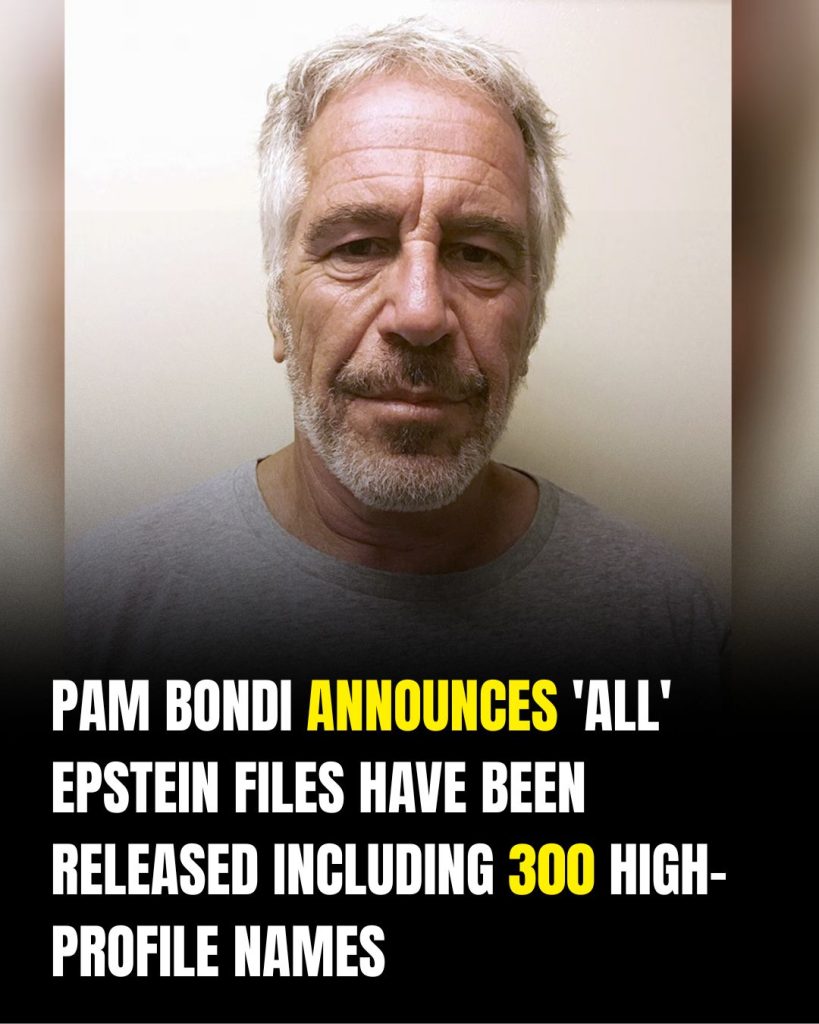

US Attorney General Pam Bondi has announced that federal authorities have completed the public release of materials related to the Jeffrey Epstein investigations, citing requirements under the Epstein Files Transparency Act.
In a letter dated February 14, Bondi explained that the Department of Justice has now made public all records that fall within the scope of the law. The correspondence, reportedly sent to members of Congress, outlined how the disclosures were handled and what categories of documents were included.
According to the letter, the department released records, documents, communications, and investigative materials in its possession that relate to the categories defined by the legislation and relevant court orders connected to the Epstein and Ghislaine Maxwell cases.
Bondi stated that redactions or withholdings were not made to avoid embarrassment or political sensitivity. She emphasized that decisions to limit disclosure were based only on lawful exemptions.
Why Some Information Was Withheld
The letter clarified that certain materials could legally remain partially or fully withheld. These limits apply in situations involving:
- Protection of victim privacy
- Child sexual abuse material
- Ongoing investigations
- Highly graphic content
- National security concerns
Bondi said these restrictions follow the specific guidelines laid out in the law.
Background on the Law
The Epstein Files Transparency Act requires the government to declassify and publish eligible records in a searchable format within a set timeframe. The measure was signed into law in November 2025 and established rules for what must be disclosed and what may remain protected.
Public Attention on Names in Documents
News coverage has highlighted that many public figures appear in the released records. Legal experts routinely note that a person’s name appearing in case files does not, by itself, imply wrongdoing, charges, or involvement in criminal activity. In large investigations, names can appear for many reasons, including contacts, references, or third-party mentions.
Congressional Tensions
Bondi’s announcement follows a recent appearance before the House Judiciary Committee, where discussions about the Epstein materials and disclosure process became tense. Lawmakers questioned how records were handled and whether the department met transparency obligations.
The Department of Justice has not announced further releases at this time, indicating that the current publication satisfies the requirements of the law.
Ongoing Public Interest
The Epstein case continues to draw significant public and media attention due to its scope and the number of high-profile individuals mentioned over the years. Officials maintain that the purpose of the law is to balance transparency with legal protections for victims and sensitive information.