For decades, gray hair was thought to be an irreversible sign of aging. However, recent research has discovered that in certain cases, gray hair is not permanent and, under specific conditions, can be reversed. This has opened a new field of study in the science of aging and hair health.
Why does gray hair appear?
Gray hair appears when melanocytes—cells responsible for producing melanin, the pigment that gives hair its color—stop functioning properly. This occurs mainly due to:
Natural aging: Over the years, melanocytes produce less melanin.
Chronic stress: Increases cellular wear and tear and accelerates color loss.
Genetic factors: Influence the age at which gray hair begins to appear.
Nutritional deficiencies: Low levels of vitamin B12, copper, or iron can contribute to its appearance.
The Scientific Discovery
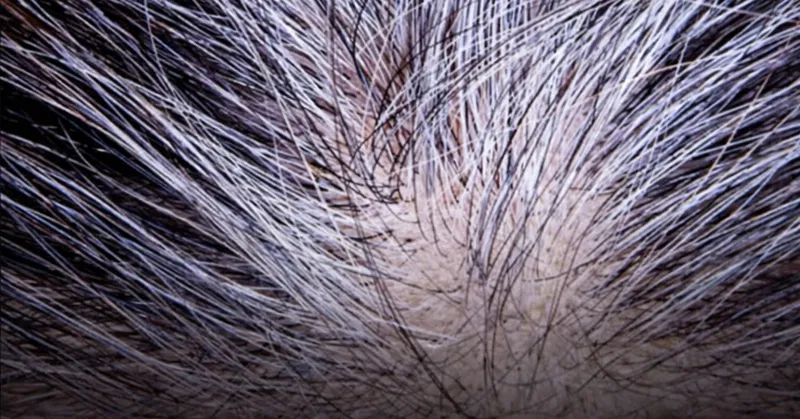
A study conducted by researchers at Columbia University (2021) analyzed human hair and found something surprising: some gray hairs could spontaneously regain their natural color.
The scientists observed that psychological stress plays a key role. In people who reduced their stress levels, several hairs that were already gray began to re-pigment.
This demonstrates that the process is not always permanent and may be more closely linked to the overall health of the body than previously thought.
Factors that Favor Gray Hair Reversal
Although there is still no guaranteed treatment, some habits and conditions seem to have a positive influence:
Stress reduction through practices such as mindfulness, meditation, or yoga.
A diet rich in antioxidants, including fruits, vegetables, turmeric, and green tea.
Essential vitamins and minerals (B12, copper, iron, zinc).
Restful sleep, essential for cell regeneration.
Regular physical exercise, which improves circulation and oxygenation of the hair follicle. Is it possible to reverse all gray hair?
Experts clarify that not all gray hair can be reversed. When the hair follicle has permanently lost its melanocytes, the process is irreversible. However, if the pigment loss is recent or associated with stress, there is a real possibility of recovery.
Conclusion
Science confirms that gray hair is not always permanent. Although genetics remains a key factor, a healthy lifestyle, stress reduction, and proper nutrition could promote natural repigmentation in some cases.
This finding not only changes how we view hair aging but also opens the door to future treatments that could delay or even reverse the appearance of gray hair.