Is Your Toilet Sitting Position Causing Constipation? Here’s How to Fix It Naturally
Constipation is becoming increasingly common, especially among young adults and people with sedentary lifestyles. While poor diet, lack of fiber, dehydration, and stress are often blamed, one important factor is frequently overlooked: the way we sit on the toilet. Surprisingly, your toilet posture can significantly affect how easily and comfortably you pass stool.

Why the Standard Sitting Position Can Cause Problems
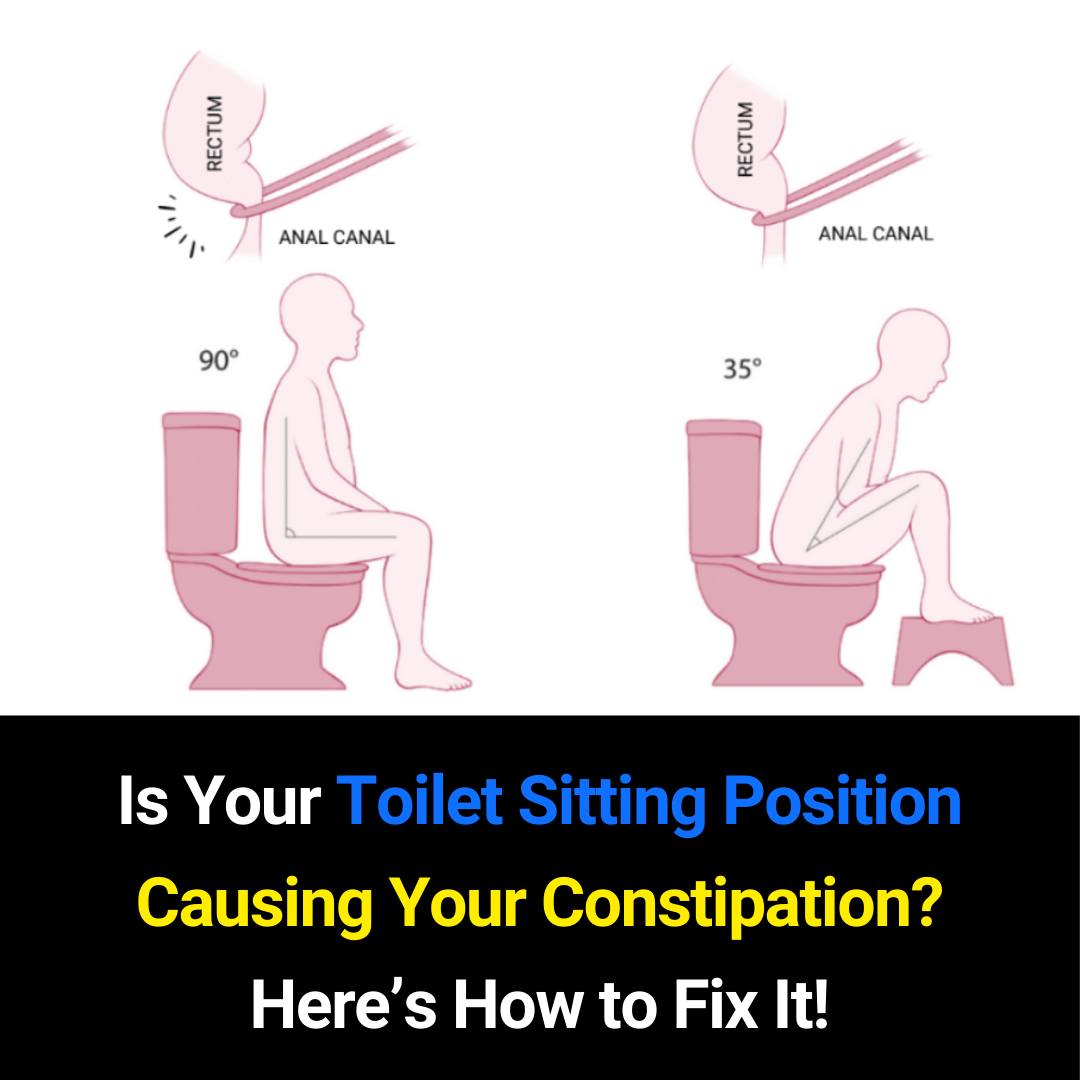
Most modern homes use Western-style toilets, which require sitting upright at a 90-degree angle, similar to sitting on a chair. Although this position feels natural and comfortable, it is not ideal for bowel movements from an anatomical perspective.
When the hips and knees are bent at 90 degrees, a muscle called the puborectalis partially tightens around the rectum. This creates a bend or “kink” in the rectal canal, making it harder for stool to pass through. As a result, you may need to strain or push harder, which can slow bowel movements and contribute to constipation over time.
Health Risks of Straining on the Toilet
Repeated straining does more than just cause discomfort. It increases pressure in the abdominal and pelvic areas, which may lead to several health issues, including:
-
Chronic constipation
-
Hemorrhoids
-
Anal fissures
-
Pelvic floor dysfunction
Some people try leaning forward while sitting, hoping it will help. However, leaning alone does not fully correct the rectal angle and may sometimes increase pressure on the abdomen, making bowel evacuation even more difficult.
The Healthier Squatting Position Explained
The more natural and healthier posture for bowel movements is a squatting position, where the body forms roughly a 35-degree angle between the torso and thighs. This position has been used for centuries in many cultures, especially with traditional squat toilets found in parts of Asia, the Middle East, and Africa.
When you squat, your knees are brought closer to your chest. This posture relaxes the puborectalis muscle and straightens the rectum, allowing stool to pass more smoothly. As a result, bowel movements require less effort, reduce straining, and feel more complete.
How to Squat Using a Western Toilet
If you do not have a squat toilet at home, there is a simple and effective solution. Using a small footstool in front of your toilet can raise your feet and mimic a squatting posture. This small adjustment helps recreate the natural angle needed for easier bowel movements.
Many people report noticeable improvements in digestion, reduced constipation, and less discomfort after making this simple change. It is an easy, low-cost habit that can support long-term digestive health.
Final Thoughts
Constipation does not always require medication or drastic lifestyle changes. Sometimes, a small adjustment—like improving your toilet sitting position—can make a big difference. By adopting a more natural squatting posture, you can support healthier bowel movements, reduce strain, and protect your digestive system.
Next time you use the toilet, try raising your feet and sitting differently. Your body may thank you for it.
Trusted Medical Sources
-
Cleveland Clinic – How Body Position Affects Bowel Movements
https://my.clevelandclinic.org -
National Institutes of Health (NIH) / PubMed – Anorectal angle and defecation mechanics
https://pubmed.ncbi.nlm.nih.gov -
Journal of Clinical Gastroenterology – Influence of body posture on defecation
-
Harvard Health Publishing – Constipation and healthy bowel habits
https://www.health.harvard.edu