
Slow cooker Irish potatoes are my weeknight answer to the kind of cozy, pub-style comfort you usually only get on a trip to Ireland or in a really good neighborhood bar. While there isn’t a single, official dish called “slow cooker Irish potatoes” in traditional Irish cooking, this recipe borrows from classic Irish flavors—think buttery potatoes, onions, a whisper of garlic, and plenty of fresh parsley—then lets the slow cooker do the work. It’s loosely inspired by colcannon and champ (two beloved Irish potato dishes), but streamlined for modern schedules. You get tender, creamy potatoes with minimal effort: no boiling, no fussing over a pot, and the house smells incredible for hours. It’s the kind of side that fits just as well with a Sunday roast as it does with simple grilled sausages or a pan-seared steak.
These slow cooker Irish potatoes are wonderfully versatile on the table. They’re a natural match for corned beef, pot roast, roast chicken, or pork loin—anything that gives you pan juices or gravy to spoon over the top. I like to pair them with a bright green vegetable to balance the richness: steamed green beans, roasted Brussels sprouts, or sautéed cabbage all work beautifully. For a more casual spread, serve them alongside grilled sausages or bangers, a simple green salad with a sharp vinaigrette, and some crusty bread to mop up any buttery goodness from the potatoes. If you’re leaning into an Irish-inspired menu, add braised cabbage, buttered peas, and a mustard-forward pan sauce, and you’ve got a complete, pub-worthy plate at home.
Slow Cooker Irish Potatoes
Ingredients
3 pounds Yukon Gold potatoes, peeled and cut into 1 1/2-inch chunks
1 medium yellow onion, thinly sliced
3 cloves garlic, minced
1/2 cup (1 stick) unsalted butter, cut into pieces
1 cup low-sodium chicken or vegetable broth
1 teaspoon kosher salt, plus more to taste
1/2 teaspoon freshly ground black pepper
1/2 teaspoon dried thyme (optional, but adds a nice herbal note)
1/2 cup whole milk or half-and-half, warmed
1/4 cup sour cream (optional, for extra creaminess)
1/4 cup chopped fresh parsley
2 green onions, thinly sliced (green parts only), for garnish
Directions
Prepare the potatoes: Peel the potatoes and cut them into roughly 1 1/2-inch chunks so they cook evenly. Rinse briefly under cold water to remove excess surface starch, then drain well.
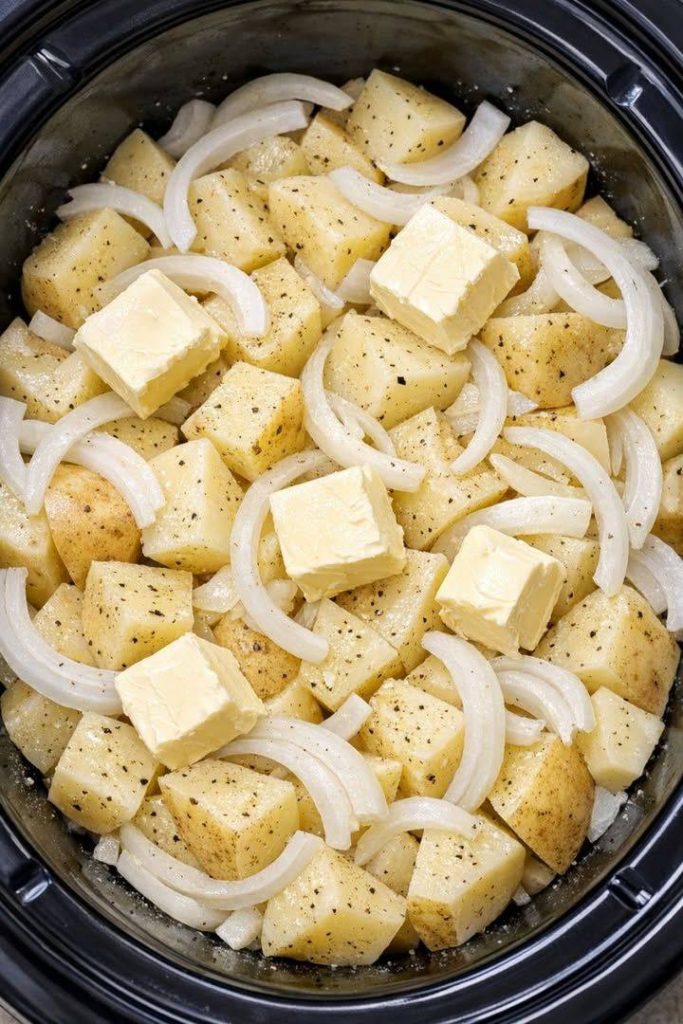
Layer in the slow cooker: Place the sliced onion and minced garlic in the bottom of a 5- to 6-quart slow cooker. Add the potato chunks on top. Scatter the butter pieces over the potatoes.
Season and add liquid: Sprinkle the salt, pepper, and dried thyme (if using) over the potatoes. Pour the broth evenly over everything. The potatoes won’t be fully submerged; that’s fine, as they’ll steam and soften as they cook.
Cook until tender: Cover and cook on LOW for 5–6 hours or on HIGH for 3–4 hours, until the potatoes are very tender when pierced with a fork.
Mash in the slow cooker: Once the potatoes are tender, switch the slow cooker to WARM. Add the warmed milk or half-and-half and the sour cream (if using). Using a potato masher, mash the potatoes right in the slow cooker to your preferred texture—rustic with some chunks, or smoother if you prefer.
Finish with herbs and adjust seasoning: Stir in the chopped fresh parsley. Taste and adjust with additional salt and pepper as needed. If the potatoes seem too thick, add a splash more warm milk until they reach your desired consistency.
Garnish and serve: Sprinkle the sliced green onions over the top just before serving. Keep the potatoes on the WARM setting for up to 1–2 hours, stirring occasionally, until ready to serve.
Variations & Tips
For a more traditional nod to Irish champ, stir in 3–4 finely sliced green onions (white and green parts) along with the parsley and skip the sour cream for a lighter, more classic flavor. If you love colcannon, fold in 2 cups of finely shredded, sautéed cabbage or kale at the mashing stage for extra texture and a bit of earthiness. To make the dish vegetarian, simply use vegetable broth and ensure your butter is not blended with any animal fats; for a richer, almost gratin-like version, replace half the broth with heavy cream and add 1 cup of shredded Irish cheddar during mashing. You can also play with aromatics: a bay leaf tossed in at the beginning adds subtle depth (just remember to remove it before mashing), and a pinch of nutmeg gives a gentle warmth that flatters potatoes. If you’re cooking ahead, the potatoes reheat well; just loosen them with a splash of warm milk and stir over low heat or on the slow cooker’s WARM setting until smooth again.