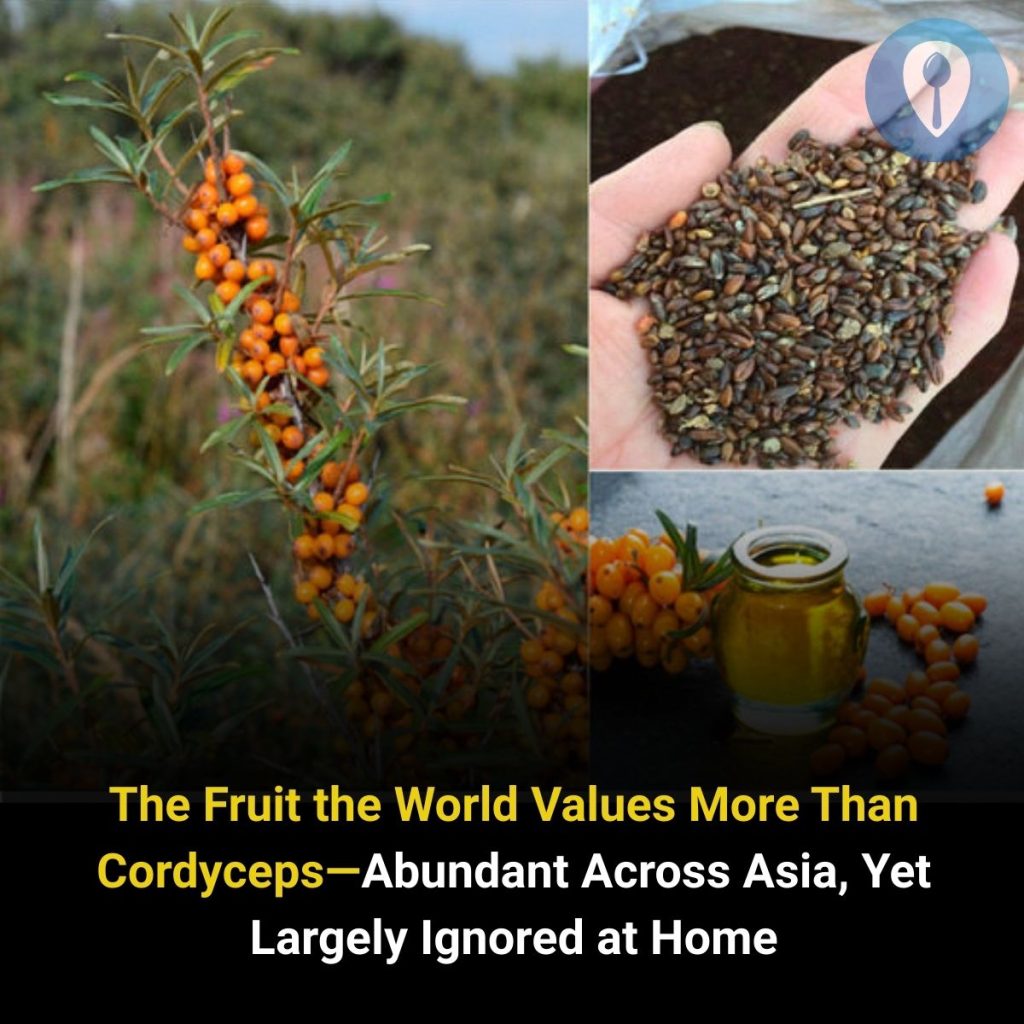

The Fruit the World Values More Than Cordyceps—Abundant Across Asia, Yet Largely Ignored at Home
For decades, cordyceps has been treated as a gold-standard superfood in Asia, prized for its rarity and sky-high price. Yet quietly, another natural powerhouse has been gaining even greater respect in global nutrition circles—sea buckthorn, a small, bright orange fruit that grows widely across Asia but is still overlooked on local tables.
In Europe, sea buckthorn is often called “liquid gold.” In wellness markets in Germany, Scandinavia, and Canada, its oil is sold at prices that rival or even exceed premium cordyceps products. Cosmetic brands use it as a hero ingredient. Medical researchers study it intensively. Meanwhile, in many Asian regions where the plant grows naturally, the fruit is dismissed as too sour, too wild, or simply unfamiliar.
Why the world is obsessed with sea buckthorn
Sea buckthorn’s reputation is built on hard data, not hype. Few fruits on Earth contain such a dense concentration of bioactive compounds. It delivers:

-
Vitamin C levels up to 10 times higher than oranges
-
Rare omega-7 fatty acids, critical for skin, blood vessels, and mucous membranes
-
Powerful antioxidants such as flavonoids and carotenoids
-
Vitamin E, vitamin A, and plant sterols that support cellular repair
This unique nutritional profile makes sea buckthorn valuable not only as a food, but as a functional medicine ingredient. In clinical research, it has been linked to improved cardiovascular health, reduced inflammation, enhanced skin regeneration, and better metabolic balance.
Some European nutritionists now openly state that, gram for gram, sea buckthorn offers broader systemic benefits than cordyceps, especially for long-term daily use.
From battlefield medicine to modern superfood
Historically, sea buckthorn was not trendy—it was strategic. Ancient texts describe its use by Mongol and Tibetan healers to restore strength, heal wounds, and support endurance. Soldiers reportedly used sea buckthorn oil to accelerate recovery after injuries. Even horses fed with its leaves and berries were noted for their strength and glossy coats—hence the plant’s Latin name Hippophae, meaning “shining horse.”
Modern science is now confirming what traditional knowledge hinted at centuries ago.

The irony: Asia grows it, the West profits from it
Sea buckthorn thrives in harsh conditions—cold climates, poor soil, high altitudes. It grows naturally across China, Mongolia, Central Asia, and parts of the Himalayas. Yet much of the harvest is exported or left unused.
In contrast, Western markets process it into:
-
High-end cold-pressed oils
-
Immune-boosting supplements
-
Anti-aging serums
-
Functional beverages sold at premium prices
A small bottle of sea buckthorn oil in Europe can cost more than a week’s groceries for an average Asian household—despite originating from Asian soil.
Why locals don’t eat it
The reasons are surprisingly simple. Sea buckthorn is intensely sour. It lacks the immediate sweetness people associate with fruit. It is rarely promoted in mainstream food culture. And unlike cordyceps, it never benefited from luxury branding or mythology tied to status and wealth.
As a result, a fruit with exceptional preventive health value remains invisible to the very communities that could benefit from it most.
Not a miracle—but a missed opportunity
Experts are careful to clarify: sea buckthorn is not a miracle cure. No single food is. But as part of a balanced diet, its impact on inflammation, skin aging, cardiovascular resilience, and gut health is difficult to ignore.
What shocks nutrition researchers is not what sea buckthorn does—but how long it took the world to notice, and how many people living next to it still don’t.
A quiet lesson in modern health
The story of sea buckthorn exposes a bigger truth about modern nutrition. Value is often decided by marketing, not biology. Foods that look exotic or expensive gain status, while equally powerful natural resources are ignored simply because they feel ordinary.
In this case, Asia has been sitting on a global superfruit—one now prized more highly than cordyceps in many parts of the world—without realizing what it already had.
Sometimes, the most powerful medicine isn’t rare. It’s just unfamiliar.