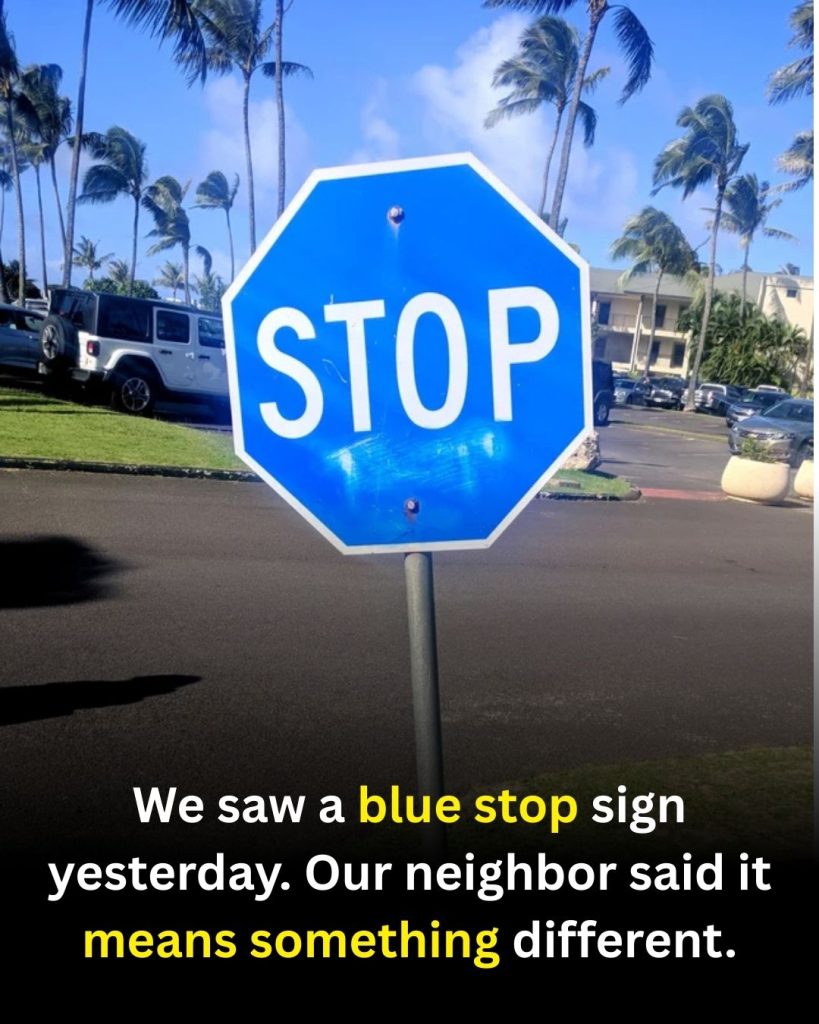

Seeing a blue stop sign can be surprising, since most drivers are used to the classic red octagon that clearly signals “stop.” When a different color appears, it’s natural to wonder if the rule has changed or if it means something special. The short answer is that a blue stop sign usually does not carry the same legal meaning as a standard red one, and its purpose often depends on where you see it.
On public roads in many countries, including the United States, official stop signs are regulated and must be red with white lettering. This standard comes from traffic safety guidelines designed to keep signage consistent so drivers can react quickly without confusion. If a sign doesn’t match those standards, it’s typically not an official traffic control device for public streets.
So where do blue stop signs show up? Most commonly on private property. You might see them in parking lots, private communities, campuses, industrial sites, or large business complexes. In these places, the sign is more of a request or instruction from the property owner rather than a government-enforced traffic law. Drivers are still expected to stop for safety, but enforcement works differently than on public roads.
Blue signs in general are widely used for information, not commands. On highways, blue usually points to services like gas stations, rest areas, hospitals, or lodging. Because drivers associate blue with helpful information, a blue stop sign stands out as unusual and can feel confusing at first glance.
Sometimes, blue stop signs are used for design or visibility reasons. A private facility might choose a different color to match branding, improve contrast in a specific environment, or fit a themed location like a resort or park. In rare cases, they may also be used as part of internal safety systems in warehouses or controlled sites.
It’s also possible to encounter novelty or decorative signs. Some people purchase non-standard signs for decoration, collections, or playful neighborhood use. These aren’t official and shouldn’t be treated as legal traffic devices on public roads.
If you ever see a blue stop sign, the safest response is simple: treat it as a signal to slow down and stop if needed, especially in private areas where pedestrians or vehicles may cross. Even if it’s not legally standard, it’s usually placed there to improve safety.
In the end, a blue stop sign isn’t a new secret rule of the road. It’s most often a private, informational, or stylistic sign rather than a government-mandated one. Knowing this can remove the mystery and help you respond calmly and safely if you spot one again.