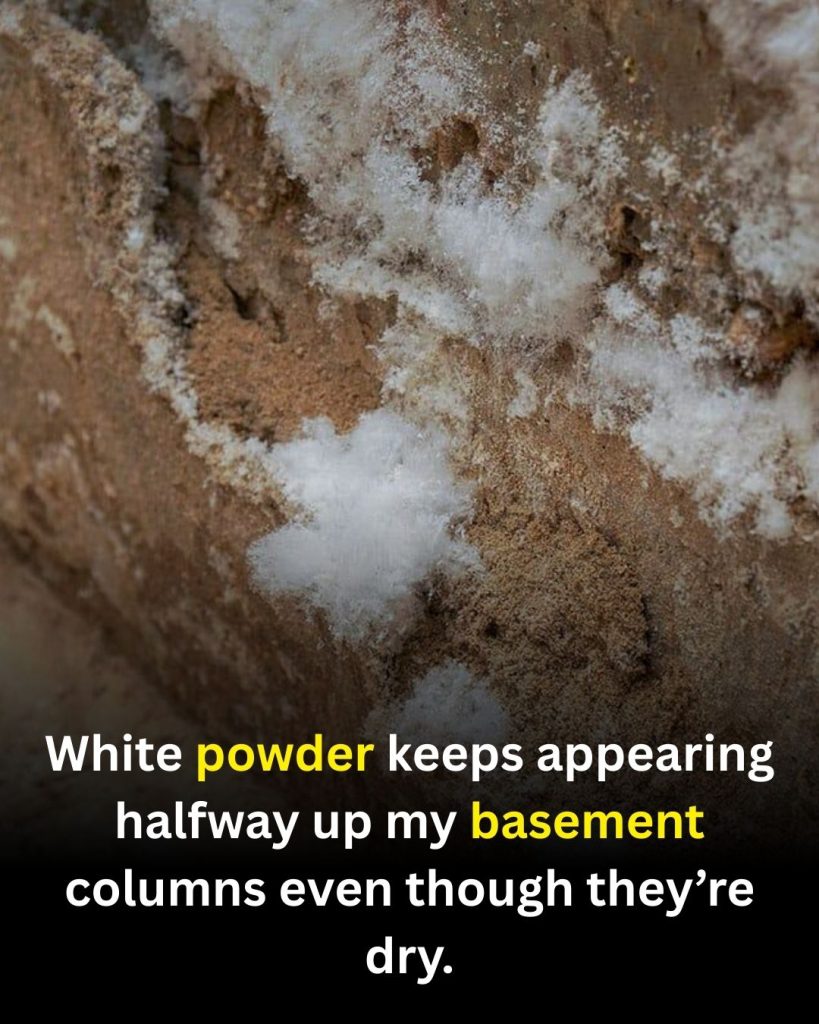

Finding a white, powdery substance on your basement columns can be confusing—especially when the surface feels completely dry. Many homeowners assume it’s just dust, but when it keeps coming back, it’s usually something else. The good news is that this issue is common and, in most cases, manageable once you understand what’s happening.
Here’s what causes that white residue, how to confirm it, and what you can do to reduce or prevent it.
It’s Likely Efflorescence, Not Dust
That white powder is most often efflorescence. This is a natural deposit of mineral salts left behind when moisture moves through concrete, brick, or masonry and then evaporates. The water carries dissolved salts to the surface, and when the water disappears, the salts remain as a chalky or crystalline powder. Unlike household dust, efflorescence comes from inside the material, not the surrounding air.
Why Basement Columns Get It
Basements are more exposed to moisture than other parts of a home. Ground humidity, minor seepage, and temperature differences all create conditions where moisture can travel through building materials. Concrete columns are porous, which means they can absorb and move water internally. Even if the outside feels dry, tiny amounts of moisture can still be moving inside the column and bringing salts to the surface.
How Moisture Moves Without Feeling Wet
Concrete contains microscopic pores that allow water to travel through capillary action. This movement can be slow and invisible. Steel columns can also contribute indirectly because temperature differences can create condensation nearby. So a column can look and feel dry while still supporting salt deposits on the surface.
Where the Salts Come From
The minerals behind efflorescence can originate from the concrete mix, mortar, or even the surrounding soil. Natural compounds like calcium-based salts are common in building materials. When moisture dissolves these minerals and carries them outward, they appear as white marks.
Why the Powder Shows Up Mid-Column
A white ring halfway up a column often marks the zone where moisture is evaporating most actively. Below that point, moisture may still be present inside the material. Above it, conditions may be drier. That “line” can actually help indicate how moisture is moving in your basement.
Environmental Triggers
High humidity, seasonal temperature swings, and limited airflow can all increase the chances of efflorescence. Warm, humid air meeting cooler basement surfaces encourages condensation, which feeds the cycle.
How to Tell It Apart From Mold or Damage
Efflorescence is dry, powdery, and typically bright white. Mold often looks fuzzy or discolored and may have a musty smell. Rust is reddish-brown, and paint failure shows peeling or bubbling. One simple check: if the white powder dissolves easily in water, it’s likely efflorescence.
Simple Confirmation Tests
Dissolving a small sample in water is an easy test—efflorescence will dissolve clearly. A small drop of vinegar may also cause mild fizzing because it reacts with mineral salts.
Safe Cleaning Methods
Start with a dry brush or vacuum to remove loose residue. For heavier buildup, use water with mild detergent and a soft brush, then rinse and dry. Diluted vinegar or a store-bought efflorescence cleaner can help with stubborn areas. Always test a small spot first and avoid harsh scrubbing.
Stopping It From Coming Back
The key is moisture control. Improve drainage around your home’s foundation, seal cracks, and consider waterproof coatings where appropriate. Good ventilation and a dehumidifier can make a big difference in basements. Keeping humidity lower reduces the moisture that drives efflorescence.
When to Look Deeper
If the powder returns quickly or keeps spreading, it could signal ongoing water intrusion. In those cases, a foundation or waterproofing professional can help identify leaks or structural concerns. While efflorescence itself isn’t dangerous, the moisture behind it deserves attention.
In most homes, this white powder is more of a moisture clue than a serious threat. By managing humidity and water pathways, you can usually keep it under control and protect your basement over time.