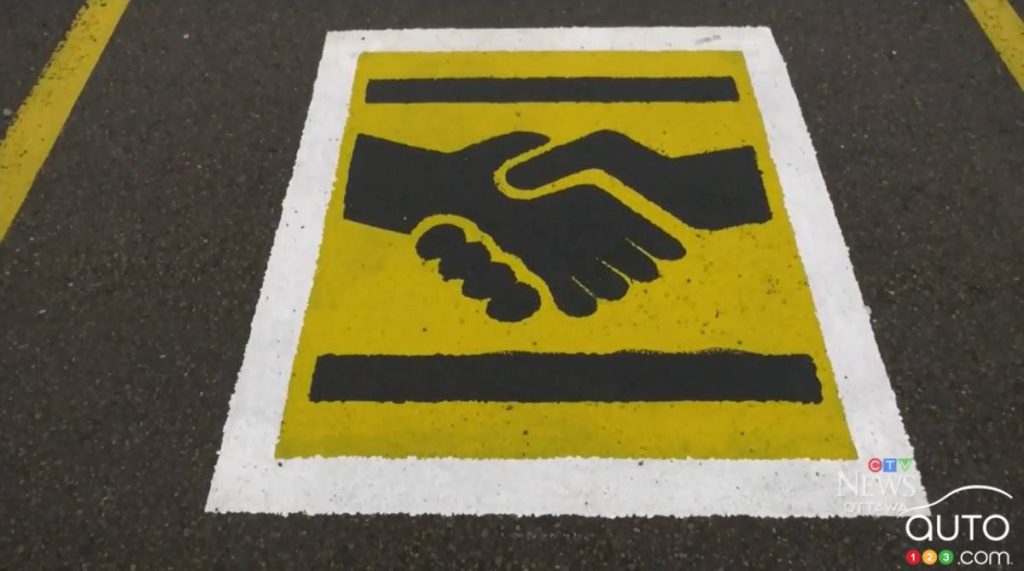

Most drivers are familiar with the usual parking space symbols. The wheelchair icon clearly marks accessible parking, while other signs may reserve spaces for electric vehicles, parents with children, or short-term loading. But every now and then, people notice a different symbol painted on the pavement: a handshake.
At first, it can be a little confusing. It does not look like a standard accessible parking symbol, and it is not always explained with a nearby sign. Yet this simple image can carry an important message about courtesy, support, and shared responsibility.
So what does the handshake symbol on a parking space actually mean?
A Symbol Linked to Help and Cooperation
In many cases, the handshake symbol is used to show a parking area connected to assistance, courtesy, or shared accessibility. While it is not as universally standardized as the wheelchair symbol, it is generally associated with spaces meant for people who may need extra help getting in or out of a vehicle.
These spaces may be intended for individuals who rely on a companion, elderly visitors who need additional support, caregivers helping patients, or people recovering from temporary injuries.
Unlike traditional accessible parking, which is usually protected by law and requires a permit, handshake-marked spaces may be based more on awareness and consideration.
How It Differs From Standard Accessible Parking
The wheelchair symbol is widely recognized and legally enforced in many countries. Those spaces are specifically reserved for people with qualifying disabilities and official permits.
The handshake symbol often points to something slightly different. It may suggest a need for cooperation rather than strict legal restriction. In other words, it is less about formal eligibility and more about giving priority to those who may benefit from extra room, time, or support.
That difference matters because many people have mobility challenges that are temporary, less visible, or not covered by official parking permits.
Where You Might See It
Handshake symbols are more likely to appear in places where people may need additional assistance, such as hospitals, rehabilitation centers, senior care communities, shopping areas, airports, and transportation hubs.
These are settings where visitors may be dealing with surgery recovery, age-related movement difficulties, or caregiving responsibilities. A symbol like this helps acknowledge those real-life situations.
Why It Matters
This symbol reflects a broader shift toward inclusive design. Public spaces are no longer being planned only around fixed categories. More attention is being given to the many different ways people move, recover, and depend on others.
The handshake symbol reminds drivers that not every need is visible, permanent, or easy to label.
A Reminder to Choose Respect
Even when these spaces are not strictly enforced, they are still meant to serve a purpose. Parking there without need can make things harder for someone who truly depends on that extra support.
At its heart, the handshake symbol stands for empathy, courtesy, and shared responsibility. It is a small marking with a meaningful message: leave room for those who may need a helping hand.
Final Thoughts
The handshake symbol on a parking space may not be as well known as other road markings, but its meaning is important. It represents a more thoughtful approach to accessibility and encourages people to think beyond convenience.
The next time you spot it in a parking lot, take a moment to consider what it stands for. Sometimes, the smallest symbols carry the strongest message.