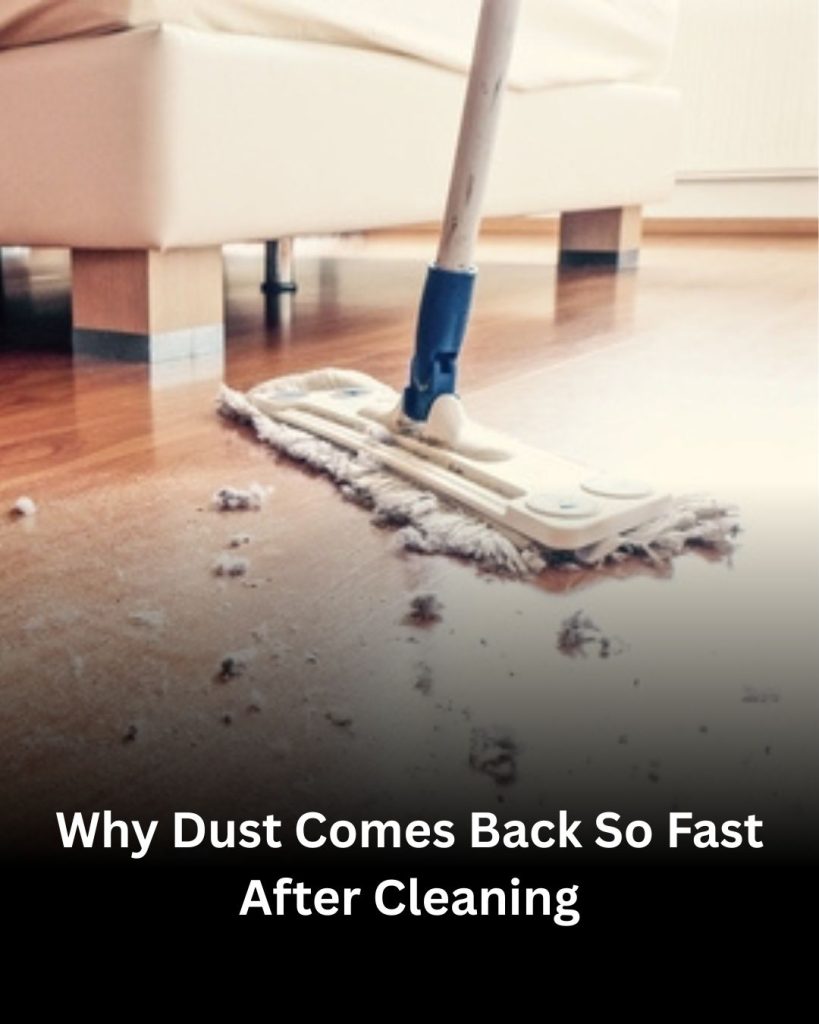

You wipe the shelves, vacuum the floor, and enjoy that fresh, clean feeling—only to notice a thin layer of dust returning a day or two later. If it feels like a never-ending battle, you’re not alone. Dust buildup is one of the most common frustrations in any home, and the reason it returns so quickly is rooted in everyday life and basic science.
What Is Dust Made Of?
Many people think dust is just dirt from outside, but it’s actually a mix of tiny particles. Household dust can include dead skin cells, fabric fibers, pet dander, pollen, soil tracked in from outdoors, and even microscopic plastic particles. Every time you move, sit on furniture, or open a door or window, you release or invite more of these particles into your space.
Humans themselves are a major source. We naturally shed thousands of skin cells every hour. In a closed environment like a home, those particles settle on surfaces and become part of the dust you see.
Air Movement Plays a Big Role
Dust doesn’t just fall and stay put. It constantly moves through the air. Walking across a room, fluffing pillows, or turning on a fan can send settled dust back into circulation. Heating and cooling systems also push air—and dust—throughout the home. If air filters are dirty or low quality, they may recirculate particles instead of trapping them.
Open windows are another factor. Fresh air is great, but it carries pollen, pollution, and fine outdoor particles that quickly settle indoors.
Your Home Is Full of Dust Sources
Soft materials like carpets, curtains, bedding, and upholstered furniture trap and release dust easily. Each time they’re used, small fibers and particles are released. Clutter also gives dust more places to collect and hide, making it harder to fully remove.
Even electronics contribute. Devices like TVs and computers can attract dust due to static electricity, causing surfaces around them to get dusty faster.
How to Slow Dust Down
While you can’t eliminate dust completely, you can reduce how fast it returns:
-
Use high-quality air filters and change them regularly
-
Vacuum with a HEPA filter
-
Wash bedding weekly in hot water
-
Reduce clutter and fabric-heavy decor
-
Use damp cloths for dusting instead of dry ones
-
Keep windows closed on high-pollen or windy days
The Reality
Some dust is unavoidable because it’s a natural result of living in a space. The goal isn’t perfection—it’s control. Understanding where dust comes from helps set realistic expectations and smarter cleaning habits.
In the end, if dust keeps coming back, it doesn’t mean you cleaned wrong—it just means your home is lived in. And that’s not such a bad thing.