
At first, it sounds wrong.
Bread belongs on the counter.
Or maybe in a bread box.
Definitely not in the freezer… right?
Yet millions of people store bread in the freezer on purpose — and once you understand why, it stops sounding strange and starts sounding smart.
The Real Enemy of Bread Isn’t Cold — It’s Time
Bread goes bad for two main reasons:
-
Mold growth
-
Staling
Most people think refrigeration causes bread to dry out — and they’re right. The fridge accelerates starch crystallization, which makes bread stale faster.
But the freezer is different.
Freezing pauses time.
At freezer temperatures, mold spores can’t grow, and the chemical processes that cause staling slow almost to a stop.
That’s why frozen bread can taste nearly fresh weeks later.
Why the Freezer Beats the Counter
On the counter, bread is exposed to:
-
Warm air
-
Humidity
-
Mold spores
Even in sealed bags, mold can develop quickly — especially in warm kitchens.
In the freezer:
-
Mold growth stops
-
Moisture stays locked in
-
Texture is preserved
That’s why people who buy bread in bulk freeze part of it immediately.
They’re not being cautious.
They’re being efficient.
The Slice-As-You-Go Advantage
One of the biggest benefits is flexibility.
Frozen bread doesn’t need to thaw completely.
Slices can be:
-
Toasted straight from frozen
-
Thawed in minutes
-
Used for sandwiches almost immediately
This means no more rushing to finish a loaf before it goes bad.
You use what you need.
The rest stays preserved.
Why Toast Tastes Better From Frozen Bread
This surprises a lot of people.
Frozen bread often toasts better than fresh bread.
Why?
Because freezing redistributes moisture. When bread goes directly from freezer to toaster, the outside crisps while the inside warms evenly — producing better texture.
That’s why many cafés and restaurants store bread frozen and toast on demand.
You’ve probably enjoyed frozen bread without realizing it.
The Health Angle People Don’t Expect
Here’s an interesting bonus.
Freezing bread changes how starch behaves.
After freezing and thawing, some starch becomes resistant starch, which the body digests more slowly. This can lead to:
-
Lower blood sugar spikes
-
Better satiety
It doesn’t turn bread into a health food — but it does slightly change how your body processes it.
That’s one reason some nutrition experts recommend freezing bread before eating it.
The Mistakes That Ruin Frozen Bread
Freezing works — but only if done properly.
Common mistakes include:
-
Freezing bread unsealed
-
Letting air reach the loaf
-
Repeated thawing and refreezing
For best results:
-
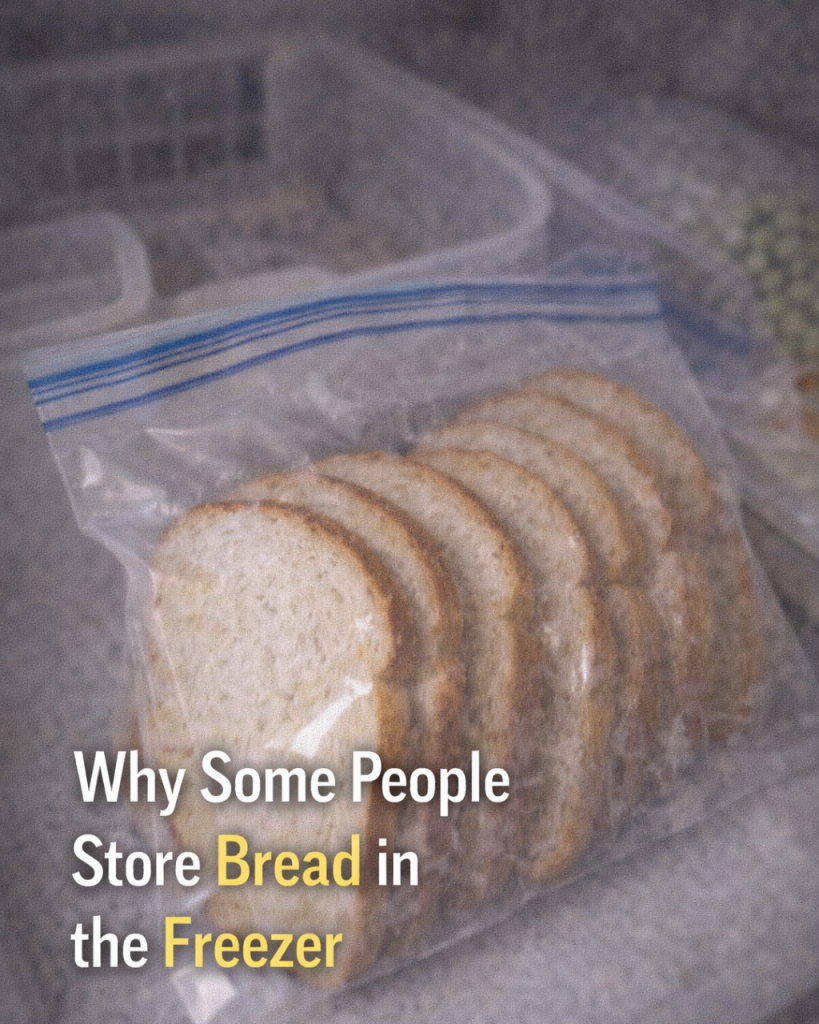
Use airtight freezer bags
-
Slice bread before freezing
-
Remove only what you need
Air exposure causes freezer burn, which ruins texture and flavor.
What Types of Bread Freeze Best
Most breads freeze well, including:
-
White bread
-
Whole grain
-
Sourdough
-
Rye
-
Sandwich loaves
Very crusty artisan bread may lose some crunch — but toasting restores it surprisingly well.
Bread with fillings or spreads freezes less predictably.
Why This Habit Saves Money
Food waste adds up.
Throwing away half a loaf every week costs more than people realize. Freezing bread:
-
Extends shelf life
-
Reduces waste
-
Saves grocery money
That’s why families, restaurants, and bakeries rely on freezing as a standard practice.
The Bottom Line
Storing bread in the freezer isn’t a trick.
It’s a solution.
It preserves freshness, prevents mold, improves toasting, and reduces waste — all without changing how you eat bread day to day.
The next time you buy a loaf, try this:
Freeze half immediately.
Weeks later, when it tastes just as good as day one, you’ll understand why this habit quietly spread — one freezer at a time.