
If you’ve ever fried food at home, you know the moment.
You add food to hot oil — and suddenly it starts popping, bubbling, and splattering everywhere. Oil jumps onto the stove, the counter, sometimes even your hand.
Then someone says something that sounds ridiculous:
“Put a spoon in the oil.”
Surprisingly… it works.
And it’s not a myth.
The Real Problem With Hot Oil
Oil splatters for one main reason: water.
Even a tiny amount of moisture on food instantly turns into steam when it hits hot oil. That steam expands rapidly and pushes oil outward — causing the violent bubbling and popping.
The hotter the oil, the more aggressive the reaction.
This isn’t about oil being “too hot.”
It’s about how moisture behaves at high temperatures.
What the Spoon Actually Does
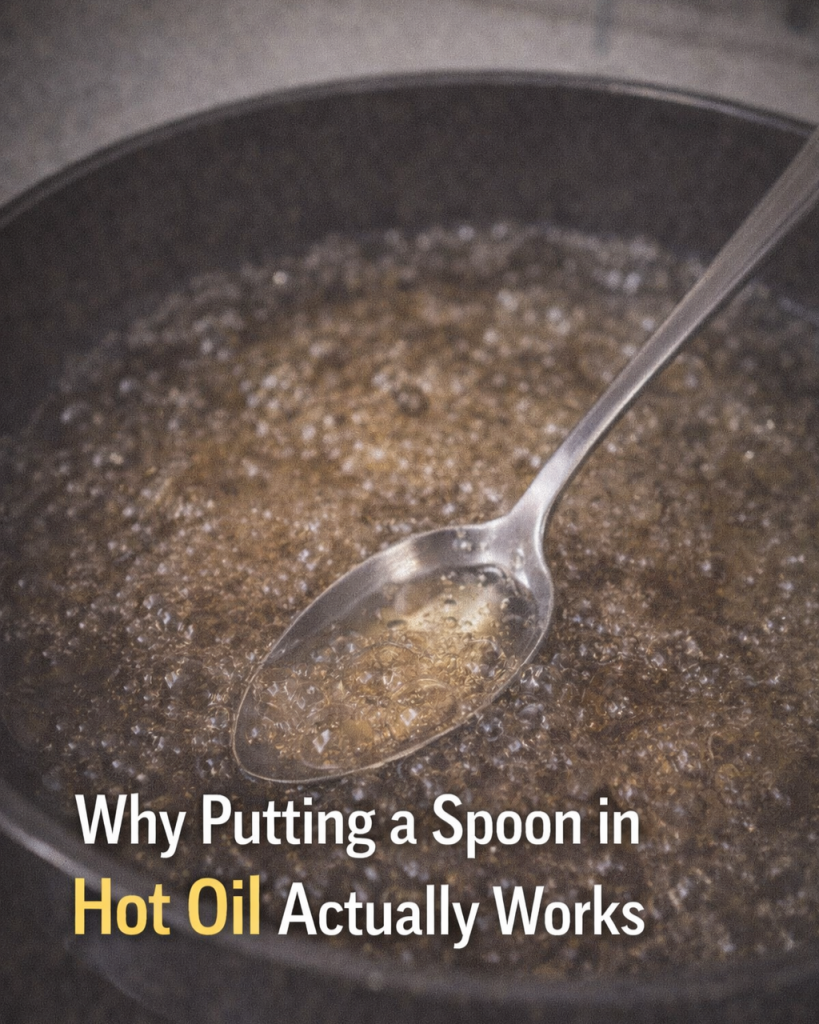
When you place a metal spoon into hot oil, it changes how heat and moisture interact.
Here’s what happens:
-
The spoon conducts heat quickly
-
It creates a stable hot surface inside the oil
-
Steam bubbles are drawn toward the spoon instead of exploding outward
In simple terms, the spoon acts like a pressure release point.
Steam rises along the metal surface in a more controlled way instead of violently escaping across the pan.
Less pressure = less splatter.
Why Metal Matters
This trick only works with metal spoons.
Wooden or plastic utensils don’t conduct heat efficiently. They stay cooler and don’t influence steam behavior the same way.
Metal heats up fast and stays hot — exactly what’s needed to calm the reaction inside the oil.
That’s also why professional kitchens often use metal tools around fryers.
Why It’s More Effective With Shallow Frying
This trick works best when:
-
Shallow frying
-
Pan frying
-
Sautéing
In deep fryers, oil volume and temperature control already manage splatter more effectively.
But in home kitchens, where oil depth is limited, the spoon trick becomes surprisingly useful.
What the Spoon Does Not Do
Let’s be clear.
The spoon does not:
-
Cool the oil
-
Absorb oil
-
Prevent all splatter
It simply reduces the intensity by managing steam release.
If food is soaking wet, oil will still react. The spoon helps — it doesn’t perform miracles.
The Biggest Mistake People Make
People often misunderstand when to use this trick.
The spoon should be placed before or as the food goes in — not after oil is already splashing.
Once steam explosions begin, the reaction is already underway.
Timing matters.
A Better Version of the Trick
Experienced cooks often combine this with another habit:
-
Pat food dry before frying
-
Lower food gently into oil
-
Add a metal spoon at the edge of the pan
This triple approach dramatically reduces mess and risk.
It also keeps oil temperature more stable, which improves cooking results.
Why This Trick Isn’t Widely Known
Because it sounds too simple.
Most people assume oil splatter is unavoidable — just part of cooking. They invest in splatter screens or clean afterward without questioning the cause.
But professional kitchens rely on physics, not gadgets.
Once you understand steam behavior, the spoon trick makes perfect sense.
Is It Safe?
Yes — when done correctly.
-
Use a heat-resistant metal spoon
-
Keep the handle angled away from you
-
Don’t drop the spoon into oil — place it gently
Never use plastic or coated utensils.
Why Old-School Cooking Tricks Last
This trick has been passed down for generations because it works consistently, costs nothing, and reduces risk.
No batteries.
No tools.
No purchases.
Just understanding how heat behaves.
The next time you cook with hot oil, try it.
Place a metal spoon in the pan and watch the difference.
The smartest kitchen hacks aren’t about buying more equipment.
They’re about knowing why things behave the way they do — and using that knowledge to your advantage.