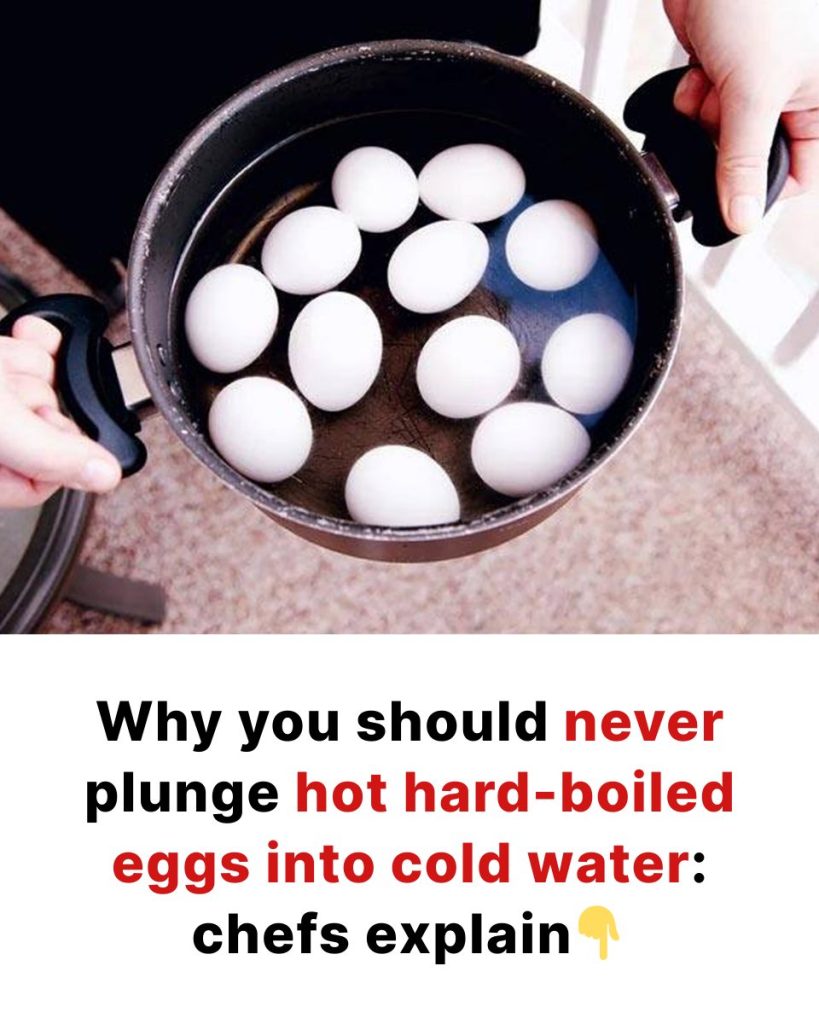

You might recognize this little habit yourself: once your eggs are cooked, straight under cold water to cool them down quickly.
It’s convenient, and we often think it makes peeling easier… yet according to many chefs, this step actually damages their texture. The whites can turn rubbery, the yolks lose their delicacy, and small cracks may even appear. So what really happens when eggs are cooled this way?
Why you should avoid thermal shock
This gesture may seem harmless, but the sudden contrast between a scorching-hot egg and icy water causes the proteins to react too quickly. As a result, the egg white tightens excessively, giving it a tough, less pleasant texture. The yolk, meanwhile, can take on a slight grayish color and lose its softness, as if it had been overcooked.
Another often overlooked effect: the shell can crack in places. Water then seeps in, which can affect the flavor and sometimes give the egg a slightly watery taste. Nothing dangerous, but clearly not ideal when you want beautiful hard-boiled eggs for a salad, a picnic, or gourmet toast.
The chefs’ method for perfect eggs
Fortunately, there’s a very simple way to preserve their texture. The key? Gentleness. No rough handling or sudden temperature changes — you let the egg cool the way you would a delicate preparation.
Here’s the method used in professional kitchens:
- Remove the saucepan from the heat once cooking is complete.
- Leave the eggs in the hot water for 2 to 3 minutes without touching them.
- Drain part of the water, then replace it with lukewarm water to start a gradual cooling process.
- Gradually add cold water until the eggs are completely cool.
With this technique, rubbery whites and dull yolks are a thing of the past. Everything stays flavorful, even, and glossy — and as a bonus, peeling becomes much easier thanks to controlled cooling.
A little-known storage tip
It’s not widely known, but the way you store eggs in the refrigerator can also affect their freshness. Chefs recommend placing them pointy end down. Why? Because the small air pocket is located at the wider end of the egg.
Kept facing upward, it stays stable, which slows its natural expansion and helps the egg stay fresh longer. A simple yet remarkably effective trick!
With a gentle approach and the right techniques, you can rediscover the pleasure of perfectly cooked hard-boiled eggs — tender, clean, and deliciously satisfying.