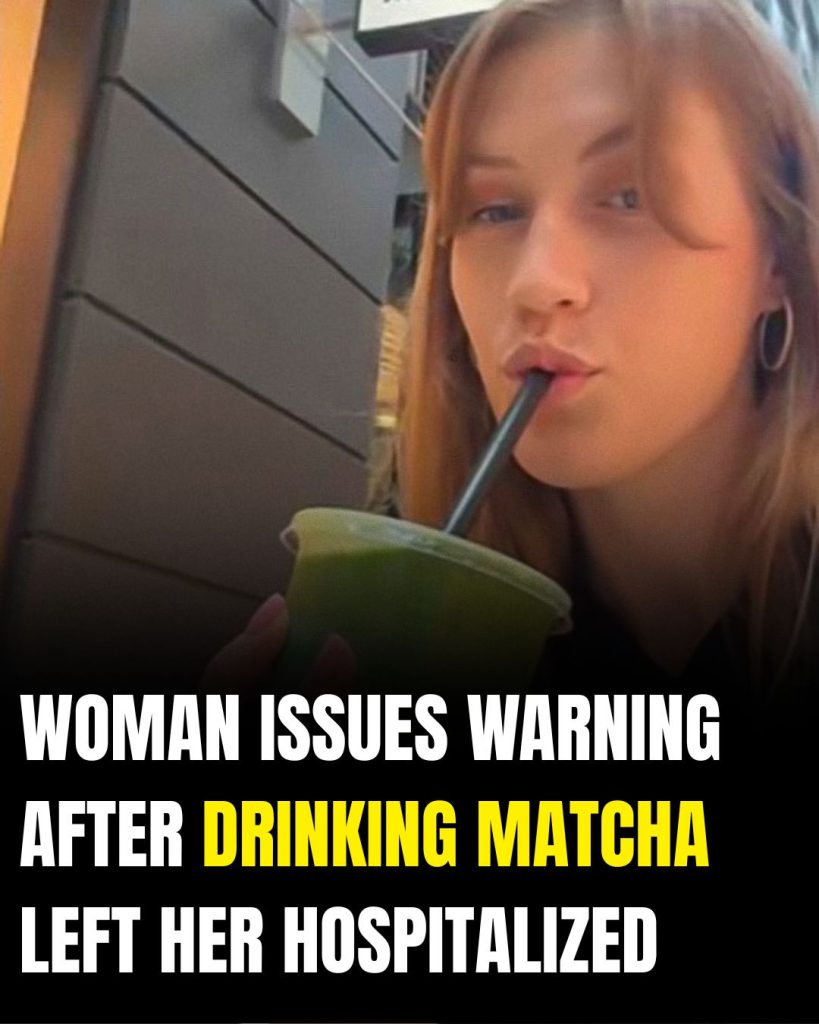

A woman has issued an urgent warning after drinking matcha that left her bruised and hospitalized.
If you have spent any amount of time scrolling through social media lately, chances are you have come across the vibrant green drink that seems to be everywhere.
Matcha, once a niche ingredient tucked away in specialty health food stores, has exploded into the mainstream, becoming one of the most talked-about beverages of the year.
The hashtag ‘Matcha Tok’ has racked up tens of millions of views on TikTok alone, and the drink now appears in nearly every coffee shop, café, and convenience store across the globe.
Fans of the trendy beverage swear by its supposed health benefits, praising it as a cleaner, more wellness-friendly alternative to coffee.
It has spawned an entire ecosystem of products, from matcha iced lattes and matcha donuts to matcha-flavoured everything.
But for one woman, her love affair with matcha took a serious and unexpected turn: one that landed her in hospital and left her body riddled with bruises.
Where matcha comes from
Before diving into Laura Mae’s story, it helps to understand exactly what matcha is.
Matcha is a bright green powder made from ground, shade-grown green tea leaves, the BBC explains.
Originating from Japan, where it has been used in traditional tea ceremonies for centuries, the drink is cultivated from the tea plant Camellia sinensis.
What sets matcha apart from other green teas is how it is grown; the plants are kept under the shade of bamboo mats, which encourages the development of extra chlorophyll. This is the reason behind its striking emerald color and its distinctly earthy, grassy flavor.
Matcha is also packed with antioxidants, particularly a group called catechins, which studies have suggested may help lower blood pressure and cholesterol.
It contains an amino acid called L-theanine, which has been linked to improved focus and calm alertness. It also provides a modest amount of Vitamin C.
On paper, it sounds like the perfect superfood, and for a long time, that is exactly how it was marketed.
But there is a lesser-known side to matcha that experts say deserves far more attention.
Laura Mae hospitalized
Laura Mae, a 28-year-old marketing professional from Sydney, Australia, considers herself a health-conscious person.
When matcha started trending on her social media feeds, it felt like a natural fit. She doesn’t drink coffee, so matcha offered her a trendy, supposedly healthier way to enjoy a caffeinated beverage on the go.
“It was so trendy and popular online, I don’t drink coffee so it was a great alternative to going out for coffee and Pilates in the morning, grabbing a matcha instead,” Laura explained.
At first, everything seemed fine – Laura enjoyed experimenting with different flavors and felt good about what she was putting into her body.
But after roughly six months of regular matcha consumption, she began noticing something was seriously wrong.
“The telling signs were my nails were getting really brittle, weren’t growing in the speed they normally do, I was shedding a lot of hair, I got super bad headaches if I worked out or got up too quickly,” she recalled. “I was bruising super easy and I had really cold feet.”
Laura, who has Crohn’s disease, initially assumed her symptoms were simply a flare-up related to her existing condition.
The bruising, in particular, became alarming – she had recently started playing volleyball, and the marks on her arms were severe and far worse than anything she had experienced before.
It wasn’t until a routine six-month check-up with her doctor that the real cause was uncovered. Her iron levels had dropped dangerously low.
Her GP wasted no time. “He was like let’s get you an iron infusion because supplements won’t help at this stage,” Laura recalled.
She spent two to three hours at the hospital receiving the infusion – a sobering reality check for someone who had been drinking matcha under the impression it was doing her body good.
What went wrong?
Laura’s matcha intake, while not unusual by today’s social media standards, turned out to be more than enough to cause serious harm in her case. She was consuming matcha at least once a day, and sometimes twice.
“I was having one a day, sometimes two a day. I made it at home and bought it outside. I got very addicted to it,” Laura said.
“I was a matcha addict for sure. I wanted to try all the flavours, whether it was strawberry, mango, blueberry.”
She added: “You hear all the health benefits and that it’s a much healthier option than having coffee. I love to try any type of wellness health products, that’s why I was really drawn to it.”

The problem, as Laura eventually discovered through her own research, was not simply about how much matcha she was drinking, it was about how matcha interacted with the rest of her diet.
Laura does not eat much red meat, instead relying on plant-based sources like spinach, lentils, leafy greens, and tofu to meet her iron needs.
“I don’t eat a lot of red meat, it’s not my cup of tea so I rely on plant-based foods for my iron nutrients but I guess I’ve been counteracting that by having matcha,” she said.
Research suggests that matcha, like other teas, contains high levels of polyphenols, which can bind to the iron found in plant-based foods and prevent the body from absorbing it.
As matcha is made from the entire ground leaf rather than just a steeping liquid, it is thought to have even higher levels of these compounds than a standard cup of green tea.
A 2014 study on a group of women in the UK found that consuming tea within one hour of an iron-rich meal significantly reduced iron absorption.
For someone like Laura, who was already relying on plant-based iron and living with a chronic digestive condition, the effects were amplified.
The warning
Since her hospitalisation, Laura has dramatically scaled back her matcha consumption and wants other fans of the drink to take notice.
“I’ve totally cut down, it’s on occasion, I’m very mindful,” she said. “Apparently if you have your matcha two hours away from food it doesn’t cause an issue.”
Laura’s advice to others is simple but heartfelt: pay attention to what your body is telling you.
“Listen to your body, you know when something is off, that’s why I went to investigate a little bit further and found the solution to it,” she continued.
“I feel better after I cut down and got the iron infusion.”
Laura’s story serves as an important reminder that not everything marketed as a health trend is automatically safe for everyone.
While matcha does offer genuine nutritional benefits when consumed in moderation, those with pre-existing conditions, low iron levels, or plant-based diets may want to be especially cautious, and, crucially, talk to a healthcare professional before making it a daily habit.
Matcha may still be one of the most popular drinks on the planet – but as Laura’s experience shows, popularity and safety are not always the same thing.